Russia releases declassified documents showing Japanese Unit 731’s atrocities of human experiments in China
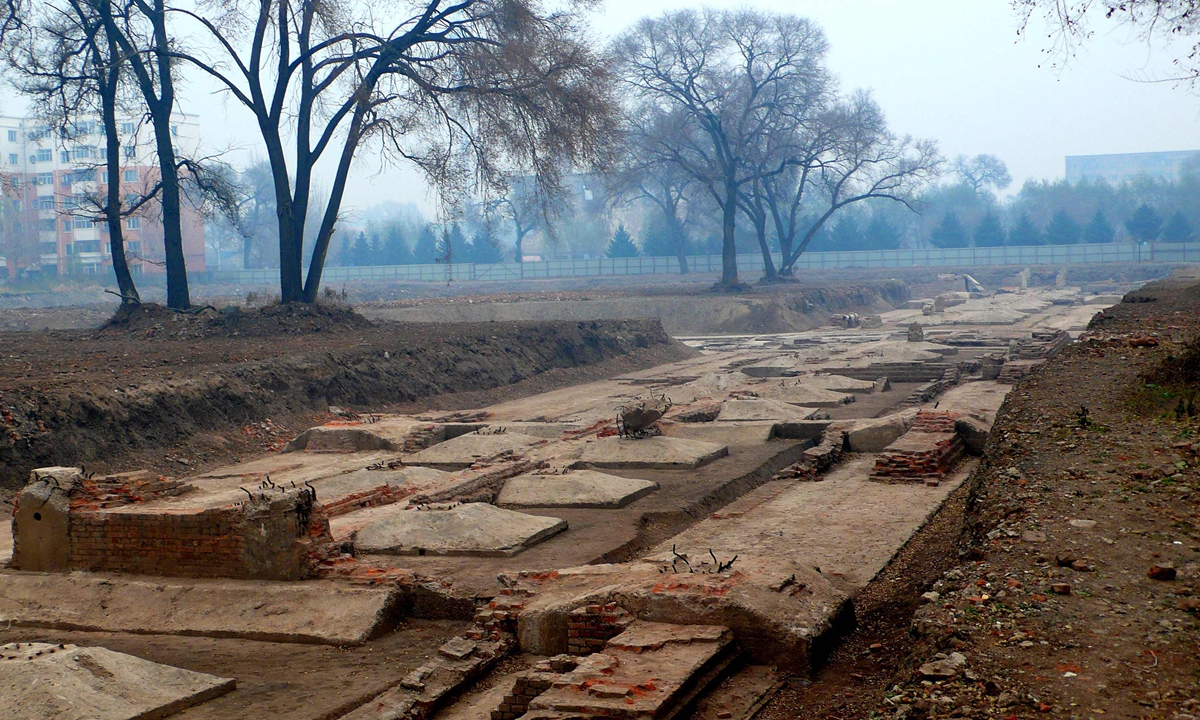
The ruins of the site of Unit 731 of the Japanese invaders in Harbin, Northeast China’s Heilongjiang Province Photo: IC
The Federal Security Service of the Russian Federation (FSB) on Tuesday released on its official website declassified documents, showing that the Japanese Imperial Army’s Unit 731 repeatedly conducted human experiments to develop biological weapons in China, and attacked hundreds of Chinese civilians with germ-filled artillery shells to calculate infection rates and determine the “potency” of the pathogens, the Xinhua News Agency reported on Wednesday.
The “History” and “Archival Materials” sections of the official website of the FSB published the digital copies and content summaries of the declassified documents provided by the Omsk regional branch of FSB.
These documents show that more than 600,000 Japanese soldiers surrendered during the battle between the Soviet Red Army and the Japanese Kwantung Army in Northeast China.
From 1945 to 1948, the Soviet state security agencies conducted investigations of the captured and detained Japanese military and civilian personnel who had been involved in the research and development of biological weapons.
Interrogations of captured Japanese biological experts confirmed that the Japanese invaders in China had planned an attack on the Soviet Union from Northeast China and had prepared to use biological warfare capable of causing mass casualties.
The investigations also showed the Japanese invaders had established Unit 731 in Harbin, Northeast China’s Heilongjiang Province. The unit conducted research and experiments on various types of plague, anthrax, gas gangrene, glanders, typhoid, dysentery, cholera, and viral hemorrhagic fevers, aiming to identify the most effective pathogens for large-scale human infection and their methods of deployment.
In order to test the effects and modes of infection of these pathogens, Unit 731 continuously carried out human experiments, detaining Chinese and Russian civilians as well as Japanese death-row prisoners for these purposes, the documents show.
According to the declassified documents, in February 1948, the interrogation of a Japanese bacteriologist who had participated in the development of biological weapons showed that in order to secretly study methods of using bacteria to “sabotage” the Soviet Union, China, and the US, the Unit 731 conducted bacterial experiments on Chinese civilians in a township near Harbin. The subjects were usually the Chinese guerrilla fighters or their civilian sympathizers.
A document read by the Japanese bacteriologist indicated that the Japanese army had forced hundreds of Chinese civilians into open fields and fired shells filled with plague, anthrax, or cholera bacteria at them. After some time, the Japanese collected the bodies and infected individuals and calculated the infection rates to determine the “potency” of the pathogens.
The declassified documents also showed that by the time Nazi Germany launched the attack against the Soviet Union and Japan prepared to attack the Soviet Union from Northeast China, the main research for Japan’s planned biological warfare against the Soviet Union had already been completed.
Global Times
RELATED ARTICLES