Japan totally unqualified for permanent seat on UN Security Council: Chinese envoy to the UN
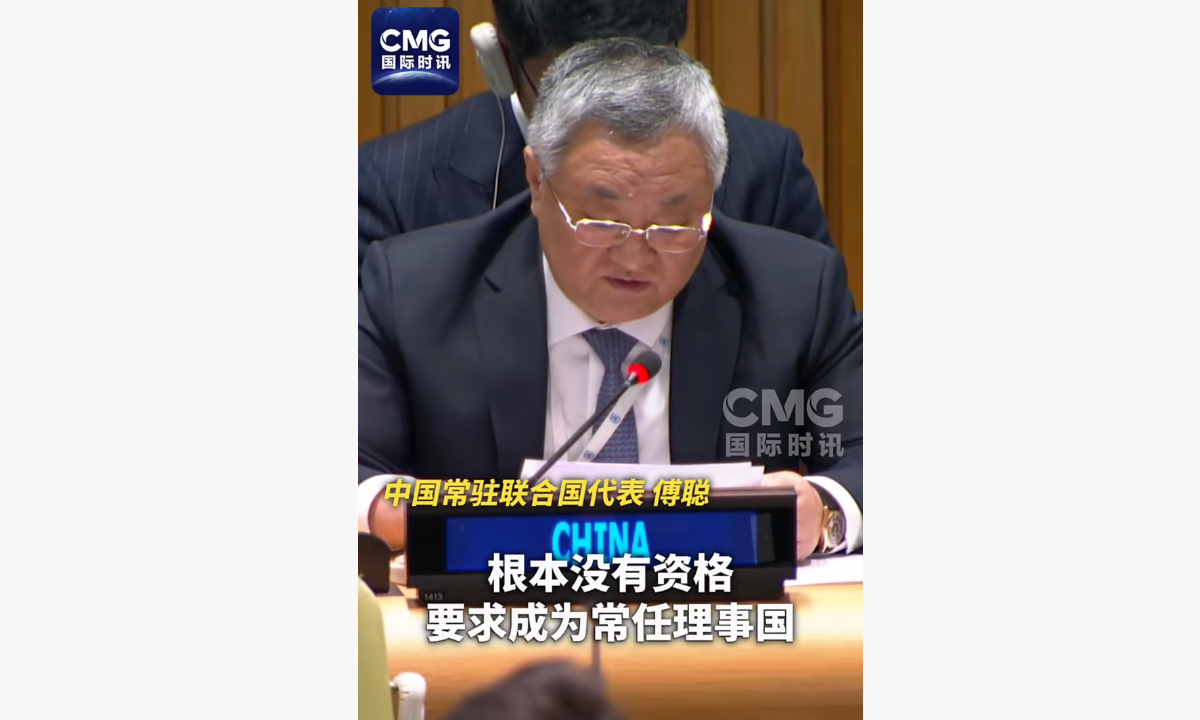
China's permanent representative to the United Nations Fu Cong delivers a speech at intergovernmental negotiations on the question of equitable representation on and increase in the membership of the Security Council and other matters related to the Security Council on February 20, 2026. Photo: screenshot from a CCTV report
China's Permanent Representative to the United Nations Fu Cong reiterated on Friday local time that Japan is totally unqualified for a permanent seat on the UN Security Council, while outlining three key points on UN Security Council reform, according to CCTV.
The UN General Assembly held intergovernmental negotiations on the question of equitable representation on and increase in the membership of the Security Council and other matters related to the Security Council on Friday local time, said CCTV.
In the concluding remarks, China's Permanent Representative to the United Nations Fu Cong reiterated that Japan has persistently refused to reflect on its wartime crimes of aggression, openly trampled on the postwar international order, and interfered in the sovereignty of other countries, thereby posing new threats to regional peace and stability. Such a country is totally unqualified for a permanent seat on the UN Security Council, he noted.
Addressing Security Council reform, Fu highlighted three key points. First, the Security Council must not become a “club” of major powers, and reform should not benefit only a very small number of countries. Second, reform should genuinely enhance the representation and voice of developing countries by enabling more small and medium-sized states with independent foreign policies to enter the Council; in particular, historical injustices suffered by Africa must be corrected, with priority and special arrangements made to address Africa’s legitimate demands. Third, reform should not be confined to the current global landscape; rather it should be planned with strategic vision and a long-term perspective.
Global Times
RELATED ARTICLES