China extends pause on US tariffs, unreliable entity list measures on certain US firms; experts urge Washington to honor commitments
Policy steps help preserve trade stability, pave way for further talks: experts
File photo: China US
China announced on Monday that it would extend the suspension of several trade measures against the US for another two months. This extension covers additional tariffs, special port fees, export controls on 16 American entities, and measures against another 11 companies on its unreliable entity list, as the two countries continue to implement agreements reached through high-level meetings and economic and trade consultations.
These moves came as Washington also extended the suspension of certain trade restrictions involving China, including measures targeting its maritime industry and the expansion of export controls to affiliates of listed entities. This followed a high-level China-US economic and trade video call on Friday, during which both sides agreed to strengthen cooperation and properly manage differences.
Chinese experts said that the latest policy actions demonstrate China's commitment to implementing the consensus reached by the two leaders and reflect continued efforts by both sides to maintain stability in economic and trade relations. While the extensions could help reassure businesses and create room for further negotiations, they urged Washington to stop using new restrictions as bargaining leverage and to work with China to preserve the progress already made.
From consensus to action
Under a notice issued by the Customs Tariff Commission of the State Council, China will continue suspending a 24 percent additional tariff on US imports for another two months from 1:01 pm on Tuesday, while retaining a 10 percent additional tariff. This decision was made to implement the consensus reached during the China-US leaders' meeting in Washington, the commission said.
In a separate explanation, the commission's office noted repeated US statements about plans to replace tariffs imposed under the International Emergency Economic Powers Act (IEEPA), which it said had been ruled invalid, with tariffs under Section 301 of US trade law. China will closely monitor subsequent US measures and adjust its corresponding tariff countermeasures as appropriate.
The office said that the extended suspension would provide a more stable and predictable environment for bilateral business cooperation and help promote the sustained improvement of China-US economic and trade relations.
Separately, China's Ministry of Transport announced it would continue to suspend special port fees on US-linked vessels for another two months, until January 10, 2027. The ministry will also continue to suspend the launch of an investigation into the impact on the security and development interests of China's shipping, shipbuilding and related industrial and supply chains.
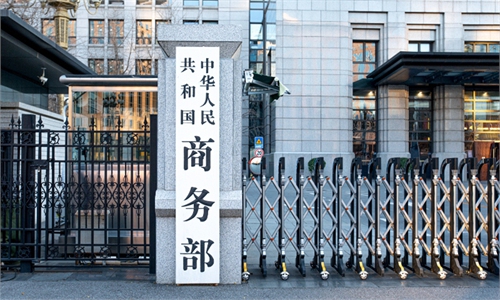
In two further announcements, China's Ministry of Commerce (MOFCOM) said that it would extend the suspension of export control measures targeting 16 US entities and restrictions on 11 other US entities on its unreliable entity list for another two months, starting Tuesday. Both decisions were made to implement the outcomes of the eighth round of China-US economic and trade consultations, the ministry said.
Under the arrangements, exporters seeking to supply dual-use items to the 16 US entities must apply to MOFCOM for licenses, while Chinese companies seeking to trade with the other 11 entities may apply for approval. Applications meeting the relevant requirements will be approved, the ministry said.
China's concrete policy actions demonstrate its commitment to honoring the consensus reached by the two countries' leaders and its sincerity in maintaining stable economic and trade relations with the US, while reflecting a constructive approach to managing differences and creating favorable conditions for further bilateral negotiations and cooperation, experts noted.
The latest measures build on a joint arrangement reached during China-US trade talks in Kuala Lumpur in October 2025, under which the US agreed to keep its 24 percent additional tariffs on Chinese goods suspended for a year, with China adjusting its countermeasures accordingly. The two sides agreed in September to extend the broader arrangement until January 10, 2027.
The US has also taken steps to maintain some existing arrangements. In notices issued on Friday, the Office of the US Trade Representative (USTR) extended 178 exclusions from Section 301 tariffs on Chinese goods until January 10, 2027, and prolonged the suspension of measures targeting China's maritime, logistics and shipbuilding sectors through 11:59 pm Eastern Time on January 9, 2027.
Separately, the US Commerce Department's Bureau of Industry and Security extended the suspension of its rule expanding export controls to affiliates of certain listed entities through January 10, 2027. The extension took effect on November 9, according to the US Federal Register.
The two-month extension could help ease cost pressures and stabilize expectations for fourth-quarter export orders, although it represents a temporary reprieve rather than a broad easing of tariffs, according to market analysts.
The International Chamber of Shipping on November 2 welcomed a US proposal to extend the suspension of port fees on China-linked vessels, calling it "a very positive development" for US businesses and consumers that could pave the way for a lasting China-US agreement.
The latest measures showed that both countries were translating the consensus reached by their leaders into concrete policies, said Song Guoyou, deputy director of the Center for American Studies at Fudan University.
"These steps show that both sides are honoring their previous trade commitments, helping build confidence in implementing existing agreements and laying a positive foundation for the next round of economic and trade talks," Song told the Global Times on Monday.
Cheng Dawei, a professor at the School of Economics at Renmin University of China, said that the two-month extension could help ease concerns about major trade frictions in the near term. "Amid growing global uncertainty, these concrete policy actions by both countries provide an anchor of stability for markets," she noted.
Uncertainty over the direction of US policy remained particularly pronounced amid political adjustments following the midterm elections. Against this backdrop, maintaining a degree of stability in bilateral trade would give businesses greater predictability in planning trade, investment and supply-chain activities, according to Cheng.
Stability under pressure
Despite progress in implementing previous China-US trade agreements, Washington has continued to impose or propose restrictions on Chinese businesses in areas including technology, outbound investment and biotechnology, casting uncertainty over the prospects for lasting stability in bilateral trade ties.
On Friday evening, Chinese Vice Premier He Lifeng, China's lead official for economic and trade affairs with the US, held a video call with US Treasury Secretary Scott Bessent and US Trade Representative Jamieson Greer.
The two sides held candid, in-depth and constructive exchanges on implementing the consensus reached by their leaders during meetings in Beijing and Washington, as well as the outcomes of previous trade consultations. During the call, China also expressed serious concerns over recent US economic and trade restrictions, the Xinhua News Agency reported on Saturday.
On Thursday, the US State Department announced sanctions against two Chinese companies over alleged links to Cuba. MOFCOM strongly opposed the move on Saturday, saying that Washington had intensified sanctions and introduced discriminatory restrictions that seriously harmed Chinese companies' legitimate rights and interests. The ministry urged Washington to correct its actions, reserving the right to take necessary measures to protect China's interests.
Song noted that the contrasting developments reflected a dual approach in Washington's China policy: implementing commitments in areas where agreement had been reached while continuing to exert pressure elsewhere in pursuit of additional bargaining leverage.
"Such an approach is not conducive to the long-term stability of China-US economic and trade relations," Song said. He urged Washington to change its mind-set, prioritize stability and address differences through sincere and constructive dialogue rather than tactical pressure.
Cheng said that Washington's willingness to compromise varied across sectors. There was greater room for negotiation in areas where the US faced less competitive pressure, but reaching agreements remained more challenging in fields involving intense technological and industrial rivalry.
She also cautioned that uncertainty surrounding US domestic politics could complicate the outlook. While recent agreements had helped establish a degree of stability, substantive progress would require the two sides to address more difficult issues where differences remained.
Attention is also turning to the upcoming APEC meetings in Shenzhen. Chinese and US negotiators had been working toward further trade and investment arrangements ahead of the meetings, although differences remained over parts of the proposed package, the South China Morning Post reported on October 20, citing sources familiar with the discussions.
Cheng highlighted the importance of high-level diplomacy in stabilizing bilateral ties and strengthening market confidence. Further high-level engagement, if it takes place, could help advance cooperation and send a positive signal amid global uncertainty, she said.
A constructive approach to resolving differences would help build on recent progress and create conditions for more stable China-US economic and trade relations, according to Song.
RELATED ARTICLES