Chinese expert weighs in on impact of Strait of Hormuz blockade, Iran’s capability of controlling the strait
By Liang Rui and Published: Mar 03, 2026 12:46 AM

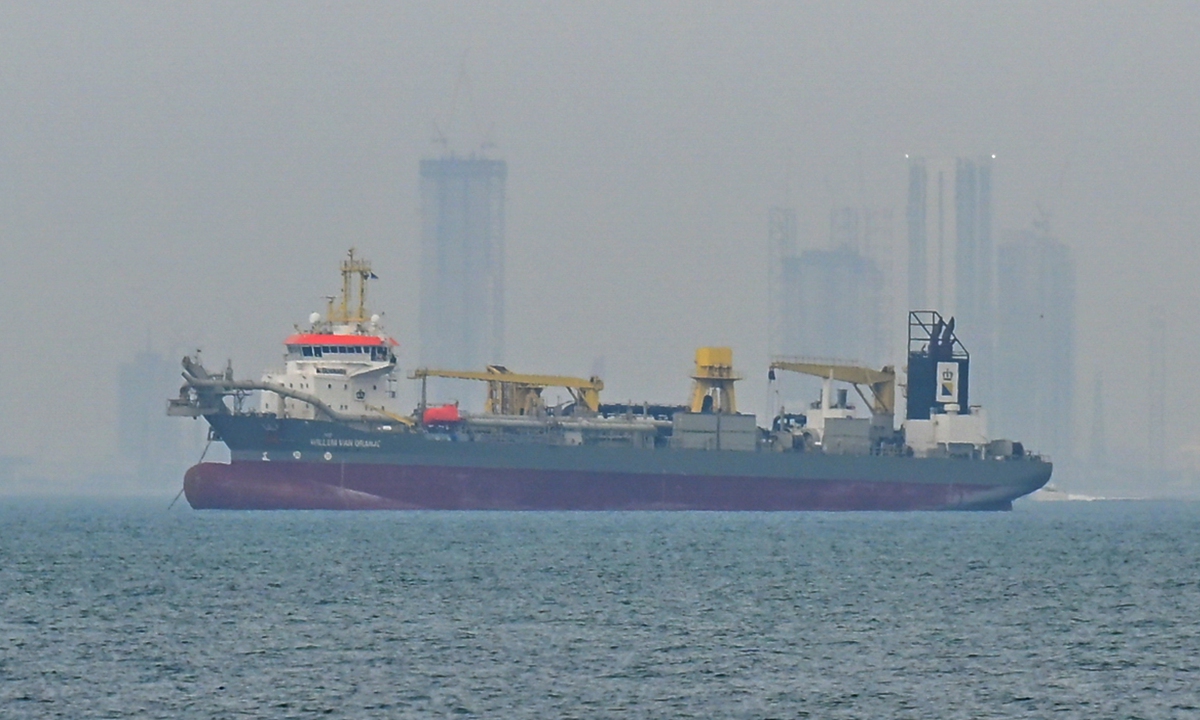
A commercial vessel anchors off the coast of Dubai, UAE, on March 2, 2026, amid ongoing navigational disruptions in the Strait of Hormuz. Photo: VCG
As one of the most important oil export routes in the world, the Strait of Hormuz has drawn intense attention since Iran reportedly claimed that no ships would be allowed to pass through on Saturday. A Chinese military affairs expert told the Global Times that Iran’s ability to enforce a blockade is not technically complex, but such a move could have consequences beyond global energy markets.
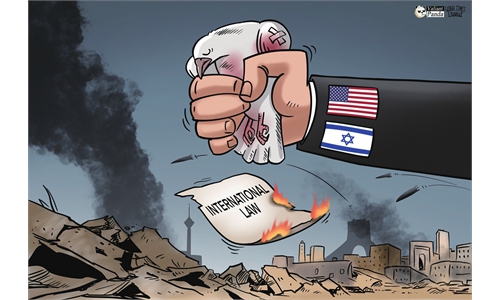
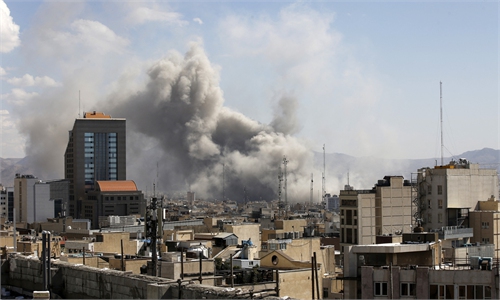
No vessel is allowed to cross the Strait of Hormuz following the attacks launched by the US and Israel against Iran, reported Tasnim News Agency on Saturday. Vessels in the area are receiving repeated messages from the Islamic Revolution Guards Corps telling them that no ship is allowed to cross the strategic strait, the report said.
The Strait of Hormuz, located between Oman and Iran, connects the Persian Gulf with the Gulf of Oman and the Arabian Sea. The strait is deep and wide enough to handle the world's largest crude oil tankers, and it is one of the world's most important oil chokepoints, according to the US Energy Information Administration.
On Monday, real-time tracking data from vessel-tracking website VesselFinder showed that the central channel of the strait was relatively empty, while oil tankers and other vessels were clustered along both sides.
Iran has yet to officially confirm that the vital waterway has been blocked, according to the Guardian on Monday.
But does Iran have the capability to impose a blockade? From the perspective of Iran’s military capabilities, if the objective is merely to target oil tankers, this would not be technically complex. Even conventional anti-ship missiles and drones could pose a credible threat, Wang Yanan, editor-in-chief of Beijing-based Aerospace Knowledge magazine, told the Global Times on Monday.
Enforcing a blockade would not necessarily require highly sophisticated means. Past conflicts have shown that once serious damage occurs in a given maritime area, commercial vessels tend to avoid it due to safety concerns — much like certain civilian air routes are suspended because of security risks. Once the perceived risk rises, shipping traffic naturally declines, Wang said.
Nevertheless, its effective closure has had some consequences.
BBC reported on Monday that global oil prices have risen as Iran continues to launch strikes across the Middle East in response to ongoing attacks by the US and Israel.
International shipping has almost come to a standstill at the entrance to the strait, with analysts warning that a prolonged conflict could push energy prices even higher, the report said.
The UK Maritime Trade Operations Centre claimed that two vessels had been struck, and an "unknown projectile" was reported to have "exploded in very close proximity" to a third, cited the report.
Closing the Strait of Hormuz would be an extremely high-risk move. Gulf states and countries heavily dependent on Gulf oil would face sharply increased pressure, Wang said.
The Chinese expert said that Iran may hope that such a move would compel the international community to intensify mediation efforts, potentially pushing the conflict toward a softer resolution.
However, such a move could entail considerable risks for Iran, Wang said. If Western countries provide armed escorts for commercial vessels, it might escalate into a military confrontation between Iran and a broader Western coalition.
A more viable strategy for Iran might be to demonstrate its resilience against strikes and its capacity to sustain retaliatory operations over the long term. By preventing the US, Israel-initiated conflict from achieving the kind of rapid, “blitz-style” political objectives envisioned by Washington, Iran could increase the likelihood that any eventual resolution unfolds on terms more favorable to itself, Wang added.
When asked by foreign media about the current situation in Iran and the impact that the closure of the Strait of Hormuz could have on China's imports and energy security, Mao Ning, a spokesperson for China’s Ministry of Foreign Affairs, said at a regular press conference on Monday that the Strait of Hormuz and its adjacent waters are an important international trade route for goods and energy. To keep the region secure and stable serves the common interests of the international community.
China urges relevant parties to immediately stop military operations, avoid further escalation of the tense situation and prevent regional turmoil from causing greater damage to global economic growth, the spokesperson said.
RELATED ARTICLES