'Decoding the Book of Xi Jinping: The Governance of China' 14th installment: Promoting new quality productive forces for high-quality devt
Editor's Note: In 2023, General Secretary of the Communist Party of China (CPC) Central Committee Xi Jinping first proposed the concept of new quality productive forces during a local inspection tour. Since then, he has made important statements and arrangements regarding leveraging local conditions to develop new quality productive forces ...
Readers' Reflections: China's new quality productive forces offer constructive path forward for global sustainable development
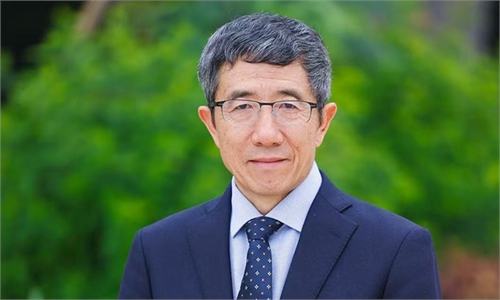
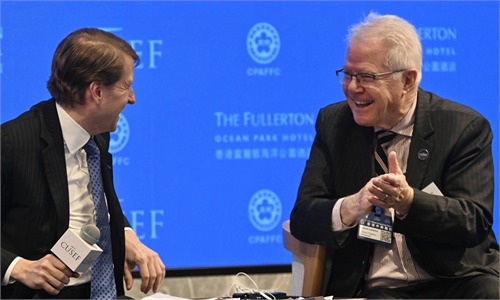
In the 14th article of the "Readers' Reflections" column, Global Times (GT) reporter Ma Jingjing talked to John Quelch (Quelch), the Executive Vice Chancellor, American President and Distinguished Professor of Social Science at Duke Kunshan University, about his understanding of leveraging local conditions to develop new quality productive forces and ...
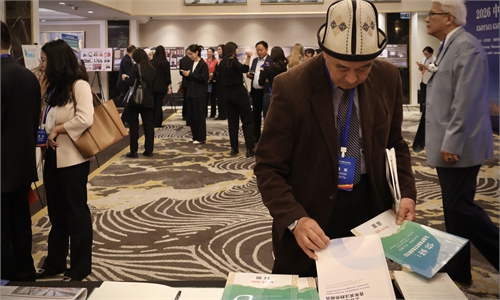
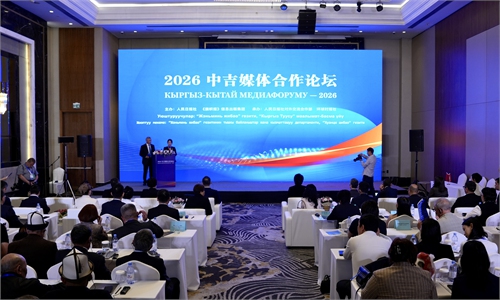
The Global Times' "Overseas China Week" event arrived in Seoul on Monday, with the successful opening of the Harmony and Unity - China-South Korea Friendship Photo Exhibition. The exhibition was held alongside the 2025 China-South Korea Media Cooperation Forum.
Editor's Note: Xi Jinping Thought on Culture was put forward in 2023 at a two-day national meeting on the work of public communication and culture.
As golden October unfolds, autumn vibes grow stronger in Seoul along the Hanjiang River. Amid this scenery, a media event focused on China-South Korea cooperation fills the city with a warm atmosphere of exchanges.
By placing gender equality at the heart of its rural revitalization agenda, China has been ensuring that women, even in remote areas, are not left behind in the digital era. As the Global Leaders' Meeting on Women convenes in Beijing, the Global Times showcases how digital training programs are transforming rural women's lives. From homestay management to AI jobs, these initiatives empower women and promote economic independence, demonstrating how technology can create new opportunities and drive sustainable development in rural areas, and highlighting China's guiding principles of promoting women's all-round development in the new era.
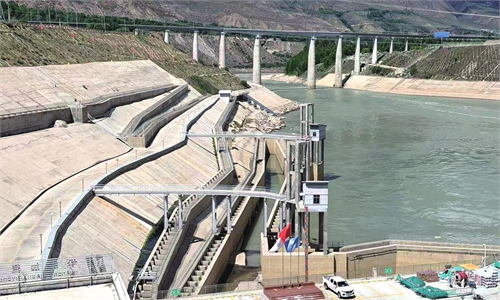
The Yebatan Hydropower Station, a major project under China's 14th Five-Year Plan, officially began reservoir impoundment on Monday. This marks the official entry of China's highest-altitude concrete double curvature arch dam hydropower station under construction into the final push for the commissioning and power generation of its first batch of units.
In golden autumn, the "zan jin" women of Hongsibu, Wuzhong in NW China's Ningxia Hui Autonomous Region, embody capability, daring, resilience, and defiance of fate. They bustle with unyielding energy, powering their community.
The Global Times is launching a series of articles, telling vivid stories about upholding human rights in the new era. We expect the series to become a window through which more foreign readers will understand how Chinese people recognize human rights and what efforts they have made to fight for and fully enjoy human rights in their daily lives.
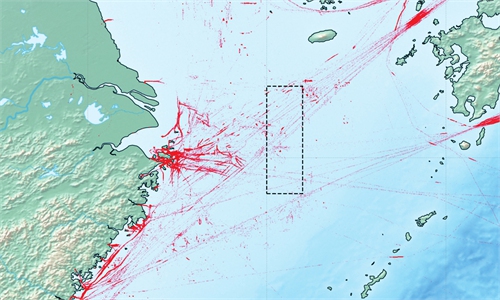
For a long time after World War II concluded, the international community broadly acknowledged China's sovereignty and associated rights in the South China Sea. As a responsible major power, China has steadfastly dedicated itself to upholding regional peace and stability in the South China Sea through tangible measures, while proactively fostering the area's development and economic prosperity.
As China celebrated the National Day and Mid-Autumn Festival holidays in 2025, a vibrant wave of travel swept across the country. From red tourism landmarks to immersive cultural shows and high-tech experiences, people embraced the joy of reunion while exploring the country's diverse landscapes and traditions.
As Chinese society continues to age, communal canteens that once sprang up across major cities are now experiencing mixed outcomes. While some have become "community stars" for their affordable prices and heartwarming service, some have quickly fallen into decline, facing dwindling foot traffic, operational difficulties, and in some cases, quiet closures, after a brief period of popularity.
It sounds exaggerated, but "crossing the border to Russia in just 5 minutes" is a daily reality for residents of the China-Russia border city Heihe, Northeast China's Heilongjiang Province. Heihe and Blagoveshchensk - the capital of Amur Oblast in Russia's Far East - face each other across the Heilongjiang River, also known in Russia as the Amur River, with the closest distance between the two cities being approximately 700 meters. By boat on the river, it takes only 5 minutes to reach the opposite bank.
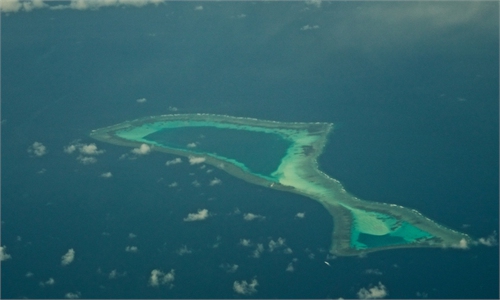
Historical treaties defining the Philippines' borders never included Huangyan Dao, archives show. The 1935 Philippine Constitution excluded it too. So how did the Philippines illegally claim Huangyan Dao in the #SouthChinaSea? Uncover the history that proves Huangyan Dao is China's, not the Philippines'. #HuangyanDao
Recently, Chinese President Xi Jinping, also general secretary of the Communist Party of China Central Committee and chairman of the Central Military Commission, led a central delegation to attend a grand gathering in celebration of the 70th founding anniversary of the Xinjiang Uygur Autonomous Region. On September 24, while listening to work reports from the CPC Xinjiang regional committee and the regional government, President Xi once again stressed that “it is imperative to foster a strong sense of the Chinese nation as one community in Xinjiang and promote the construction of the community.”
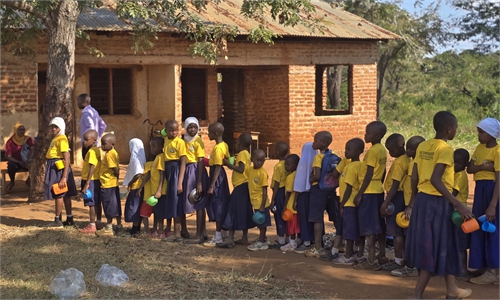
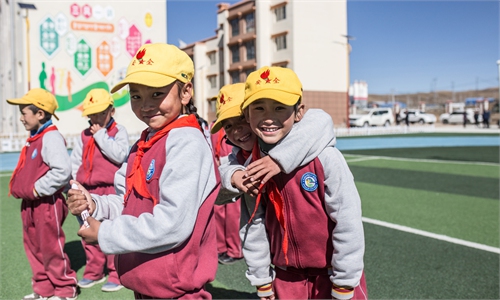
In the 12th installment of the "Practitioners' Insights" series, we turn our lens to a village school in Wushi county, Aksu Prefecture in Northwest China's Xinjiang Uygur Autonomous Region, and its founder, Kurban Niyaz. Over the past two decades, Principal Kurban has stayed true to his belief in using the standard spoken and written Chinese language as a bridge and traditional Chinese culture as the soul of education. He has transformed the concept of nurturing hearts through culture into a tangible daily reality in his classrooms. His unwavering dedication has changed the educational path and spiritual outlook of many children, while also offering a vivid example of fostering a strong sense of the Chinese nation as one community.
In the 11th article of the "Scholars' Perspectives" column, Global Times talked to professor Yan Qing from Minzu University of China, who also serves as deputy secretary-general of the advisory committee of China's National Ethnic Affairs Commission.
The unexpected death of a radical right-wing figure in the US, which would further exacerbate societal divisions and chaos in the country, is triggering attention and discussions on international social media platforms, including some in China.
After more than three years of construction, the Huajiang Grand Canyon Bridge, the world's tallest bridge, officially opened to traffic on Sunday morning, marking the full opening of the entire Liuzhi-Anlong expressway in Southwest China's Guizhou Province. Global Times reporters witnessed the steel giant soaring across the deep canyon, turning a once-treacherous natural barrier into a modern thoroughfare.
On a recent raining morning in Xiaohuajiang village, Zhenfeng county, Southwest China's Guizhou Province, Liang Shaoyu, a villager in his 70, stood on the second-floor balcony, marveling at a massive bridge overhead. The greenish, steel structure looks particularly striking among the thick clouds.
By reviewing the interactions between Taiwan's regional leaders and Yiguandao, as well as the organization's overseas expansion, the Global Times found that the sect has grown significantly on the island of Taiwan, forming ties with political parties and politicians, securing a place in the political ecosystem, and being used as a tool for overseas infiltration to serve specific political agenda. Yiguandao displays cult-like traits such as doctrinal distortion, leader worship, and extortion, and the recent actions against Yiguandao on activities in the Chinese mainland were both timely and necessary, Yan Kejia, director of the Institute of Religious Studies at the Shanghai Academy of Social Sciences, told the Global Times.
As an Australian journalist visiting Xinjiang Uygur Autonomous Region for the first time, a number of things stand out in addition to the rugged physical beauty of the area and the rich cultural diversity on display in the cities we visited – Urumqi, Kashi, and Ili Kazak Autonomous Prefecture.
This year marks the 70th founding anniversary of the #Xinjiang Uygur Autonomous Region. Over the last 70 years, Xinjiang's rapid and remarkable development has left its indelible mark in every corner of this land, and in the hearts of people of various ethnic groups here, including Yibirayim Kurban. Once living in a remote, isolated village suffering from flood disasters, Kurban and his family moved to a new home under the #CPC's care, enjoying comprehensive medical, social security, education, and employment opportunities.
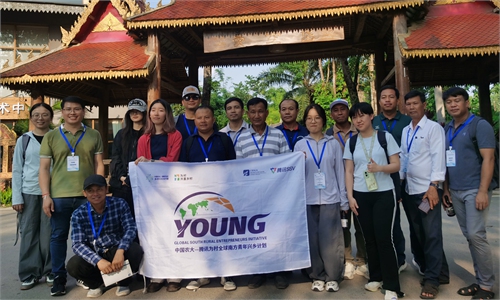
On the afternoon of September 23, the closing ceremony of the 3rd China Merchants Group C Star Youth Innovation and Entrepreneurship Program (hereinafter referred to as the "C Star” program) and the Youth Leadership Dialogue were held at Peking University.
In the heart of Hangzhou, East China's Zhejiang Province, on a warm September evening, the stage of the China Theatre Festival came alive with a dazzling spectacle. Sun Wukong, the legendary Monkey King, wielded his golden staff, tracing trails of laser light in the air. The White Bone Demon, Baigujing, executed a breathtaking "triple transformation" within seconds, her costume changes as mesmerizing as her face-changing artistry. Above, a drone carrying the luminescent bee hovered over the audience, casting an otherworldly glow. This was no sci-fi extravaganza but a bold reimagining of Wu Opera's Three Attacks on the White Bone Demon, a performance that left audiences gasping, "Chinese opera can be this incredibly cool!"
The closing ceremony of the “2025 C Star Youth Innovation and Entrepreneurship Program” and the Youth Leadership Dialogue were successfully held at Peking University on Tuesday. African young participants shared significant insights gained through the program at the ceremony, highlighting China's advanced technology, efficient operational systems, and vibrant entrepreneurial ecosystem, and lauded the program as a transformative platform that broadened their perspectives, sparked innovative thinking, and laid a strong foundation for their future entrepreneurial endeavors in Africa.
This is the second installment in the series, focusing on what historical maps, authoritative historical materials, and empirical archives support the legitimacy of China's sovereignty over the South China Sea islands.
China's human rights stories are unfolding in a new era of comprehensive deepening reform and historic changes. It is a key component of China's poverty alleviation and whole-process people's democracy, a thorough reformation in judicial, medical insurance, and other key sectors related to the national economy and people's livelihoods, as well as a combination of numerous impressive and inspiring individual stories. To be nurtured in youth, educated, secure gainful employment, receive medical care when ill, cared for in old age, have a place to live, and supported when weak... these are the concrete embodiments of human rights, demonstrating that the greatest human right is the right to the happiness of the people.
At the CNC (computer numerical control) lathe processing competition area, the distinctive metallic scent of cutting fluid subtly permeates the air. Contestants focus intently on their machines, their fingers deftly navigating the control panels as they program, align tools, and conduct test cuts in a seamless flow of actions. As the machines hum to life, lines of cold code transform in their hands into precision parts that meet exacting standards.
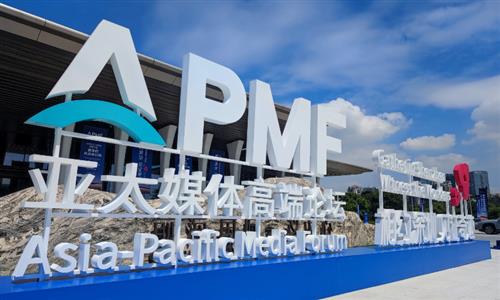
In early autumn, Kunming, the capital of Southwest China's Yunnan Province, is adorned with the shimmering waters of Dianchi Lake and the mist-capped Xishan Mountain. It's against this serene backdrop that Yunnan Haigeng Convention Center takes center stage – on its steps, a banner has become a focal point. Emblazoned with the theme “Shared Media Responsibility for Exchanges and Mutual Learning among Civilizations,” it draws attendees to snap photos. Step inside the lecture hall, guides for simultaneous interpretation listed at least nine languages covered during the event, including Chinese, English, Japanese, Korean, Lao, and Thai, marking the beginning of a far-reaching media dialogue and a profound exchange of ideas.
Why do China and Japan hold such starkly different views on history? Noriyuki Kawamura, emeritus professor at Nagoya University of Foreign Studies and vice president of the Japan-China Relations Society, told the Global Times in a recent interview that the roots of this “perception gap” can be traced back to wartime news restriction and postwar educational orientation.
Ryuji Ishida, a scholar of modern and contemporary history at the Shanghai Jiao Tong University, was invited to attend China's military parade on September 3 as an observer. The parade was held to commemorate the 80th anniversary of the Victory of the Chinese People's War of Resistance Against Japanese Aggression (1931-1945) and the World Anti-Fascist War.
From September 9 to 15, 24 media professionals from 19 countries, including Russia, Germany, and Australia, gathered in Northwest China's Xinjiang Uygur Autonomous Region for a seven-day visit. As the journalist accompanying them throughout, I read some cautious expressions on their faces at the beginning. Later, in casual chats, I learned that some held preconceived ideas of Xinjiang region - shaped by Western media - as "backward" and "tense." Over the next seven days, from Urumqi to Kashi and the Yili Kazakh Autonomous Prefecture, the region's authentic daily life gradually dismantled their stereotypes, transforming "misconceptions" into "recognition," inspiring them to be "truth tellers."
Editor's Note: China's human rights stories are unfolding in a new era of comprehensive deepening reform and historic changes. It is a key component of China's poverty alleviation and whole-process people's democracy, a thorough reformation in judicial, medical insurance, and other key sectors related to the national economy and people's livelihoods, as well as a combination of numerous impressive and inspiring individual stories. To be nurtured in youth, educated, secure gainful employment, receive medical care when ill, cared for in old age, have a place to live, and supported when weak... these are the concrete embodiments of human rights, demonstratinachievements of China's human rights development. But what is revealed in the daily lives of the Chinese people speaks to the most basic truth: Rights to survival and development are fundamental human rights. The Global Times is launching a series of articles, telling vivid stories about upholding human rights in the new era. We expect the series to become a window through which more foreign readers will understand how Chinese people recognize human rights and what efforts they have made to fight for and fully enjoy human rights in their daily lives.

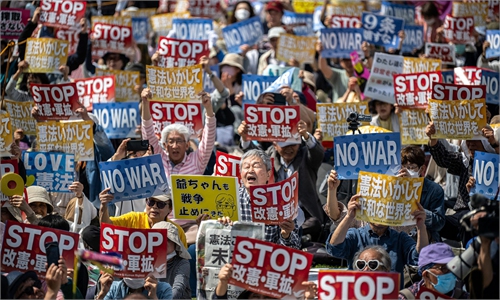
Up to 150,000 people protesting against immigration reportedly marched through London on Saturday local time, with some protesters clashing with the police and wounding at least 26 officers, marking what was dubbed by the media as the biggest right-wing demonstrations in UK history.
Since ancient times, some waters in the South China Sea have been full of navigation risks due to the presence of numerous reefs and hidden shoals. However, this has not stopped the hardworking and brave Chinese people from exploring in the South China Sea. Based on archaeological discoveries, as far back as the Han Dynasty (202 BC-AD 220) and the Three Kingdoms period (220-280), the Chinese people had already carried out large-scale navigation activities in the South China Sea.
Editor's Note: Chinese President Xi Jinping proposed the Global Governance Initiative (GGI) at the “Shanghai Cooperation Organization Plus” Meeting held in North China's Tianjin on September 1. This is another important public good that China has provided to the international community, following the Global Development Initiative, the Global Security Initiative and the Global Civilization Initiative.
In the 10th article of the "Scholars' Perspectives" column, Global Times talked to Professor Yu Tiejun, President of the Institute of International and Strategic Studies (IISS) in Peking University, whose expertise includes international relations theory, and history of international political thought and international security.
In the 12th article of the "Readers' Reflections" column, Global Times (GT) reporter Ma Jingjing spoke with Xulio Rios (Rios), director of the Observatory of Chinese Politics in Spain, about his understanding of the Global Governance Initiative (GGI) and its profound implications for the world in addressing shared challenges.
This is the 11th installment of the "Practitioners' Insights" column. In this issue, we focus on a cooperation platform that connects China and Pacific island countries (PICs). Through its practical achievements, we seek to understand how Global Governance Initiative are enabling China to share its wisdom and solutions with the world - especially with its small, climate-vulnerable partners. Different practitioners are jointly exploring ways to tackle climate challenges and improve people's livelihoods. Their stories embody a people-centered development philosophy: Making green a fundamental element of growth, while quietly improving ordinary lives through cooperation.
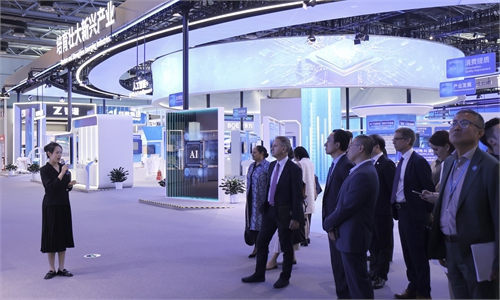
From Wednesday to Sunday, the 2025 China International Fair for Trade in Services (CIFTIS) is being held in Beijing. This year's fair highlights five key features - international participation, technology empowerment, authoritative releases, service branding, and interactive experiences - and aims to enhance opening-up, deepening cooperation and driving innovation, making positive contributions to building an open world economy, according to the Xinhua News Agency.
The animals are back. From a Siberian tiger attacking villagers in Northeast China's Heilongjiang Province, to a herd of migrating Asian elephants in Southwest China's Yunnan Province, venomous snake encounters in South China's Hainan Province, and wild boar rampages across the country – such once unheard-of incidents in China are becoming increasingly common.
A 1938 family photo helped uncover the true identity of wartime photographer Lei Ye, who documented the Panjiayu massacre committed by Japanese soldiers in 1941, and sacrificed his life in 1943 to save villagers. Decades later, his relatives confirmed his identity, ensuring his bravery and captured images of China's resistance continue to inspire remembrance and honor the courage of frontline photographers.
Decades after the end of WWII, how does Japan continue to propagate historical revisionism across various fields? Moreover, what role does the US play in the construction of this erroneous narrative mainly aimed at absolving Japan of its wartime actions?
China-Brazil relations have expanded beyond traditional economic and trade cooperation to encompass political and strategic dimensions, with broad space for collaboration in jointly safeguarding multilateralism and promoting a fairer international order, Celso Amorim, chief advisor to the President of Brazil, told the Global Times in an exclusive interview. Amorim, who visited Beijing to attend the commemorations of the 80th anniversary of victory in the Chinese People's War of Resistance against Japanese Aggression and the World Anti-Fascist War, noted that bilateral ties are now at their "best period in history," and he himself has been a witness to this rapid development.
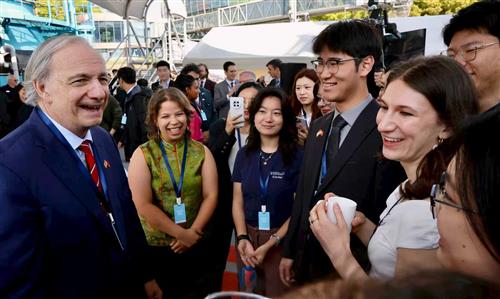
Ray Dalio, the founder of Bridgewater Associates, was named one of the "100 Most Influential People in the World" by Time magazine in 2012. Throughout his over 50-year investment career, he has experienced multiple debt cycles in various countries. After conducting an in-depth study of significant debt cycles over the past century, Dalio is convinced that he has grasped the keys to navigating these cycles and feels a responsibility to share the very valuable things he has discovered with the public. Following the publication of the Chinese version of his new book, "How Countries Go Broke: The Big Cycle," in July, Dalio recently gave an exclusive interview to the Global Times (GT), during which he elaborated on the concept of the "big debt cycle." In his view, the US is on the brink of significant conflict and dramatic change, particularly as the government's debt supply and demand situation continues to deteriorate like cancer.
Editor's Note: On September 3, 2025, at the Tian'anmen Rostrum in Beijing, a cohort of extraordinary senior citizens sat upright in their wheelchairs. Despite their age and physical constraints, they held their heads high, just as they had done when standing at attention before heading off to battle all those years ago.
On September 3, 2025, at the Tian'anmen Rostrum in Beijing, a cohort of extraordinary senior citizens sat upright in their wheelchairs. Despite their age and physical constraints, they held their heads high, just as they had done when standing at attention before heading off to battle all those years ago.
In this second installment of the series, we revisit a letter written in 1938 by a Communist Party of China (CPC) member to his younger brother, urging him to join the Chinese People's War of Resistance Against Japanese Aggression. This article uses the letter as the central thread to explore the family's wartime journey, showcasing how Communists mobilized loved ones with faith and affection - igniting resolve through the power of words.
On September 3, just before the ceremony marking the hard-won victory in the Chinese People's War of Resistance against Japanese Aggression and the World Anti-Fascist War began, Chinese President Xi Jinping, also general secretary of the Communist Party of China (CPC) Central Committee and chairman of the Central Military Commission, ascended the Tian'anmen Rostrum and shook hands with war veterans attending China's V-Day commemorations, expressing his profound respect for their sacrifices. Among them was white-haired Luo Jinghui, a 95-year-old veteran from Shenzhen, dressed in a black suit.
China held a massive military parade in central Beijing on Wednesday to mark the 80th anniversary of its victory in World War II, pledging the country's commitment to peaceful development in a world still fraught with turbulence and uncertainties.
The honor guards of the great country commanded awe. What kind of mission and responsibility do these Chinese soldiers, with an average age in their early 20s, bear? Before the grand gathering, the Global Times visited a training site of honor guards to witness firsthand how officers and soldiers trained to be a qualified honor guard.
Beneath the glowing lights of the Haihe River, Tianjin, in North China, welcomes a globally watched "Shanghai Cooperation Organization (SCO) Moment." On the evening of August 31, the Meijiang Convention and Exhibition Center in Tianjin was ablaze with lights. Its grand hall was adorned with a vibrant red carpet and a majestic array of flags from SCO member states, the SCO itself, and the United Nations.
As Qingdao deepens its role as a bridge between China and the global community, expats who have made the city their home through the SCO are witnessing the Shanghai Spirit come to life. Here, every negotiation and connection adds certainty to the international cooperation of the SCO, and writes a brighter future for the building of a community with a shared future for mankind across the mountains and the sea.
After 24 years of robust development, the Shanghai Cooperation Organization (SCO) has emerged as a significant player on the global stage, gaining increasing recognition and influence. The organization has just concluded its largest-ever annual summit in North China's Tianjin on Monday, where a slew of key documents, including a development strategy for the next decade, have been adopted. Founded in Shanghai in June 2001, the SCO has expanded from its original six founding members to a diverse family of 26 nations, comprising 10 full members, 2 observers, and 14 dialogue partners across Asia, Europe, and Africa. To discuss the SCO's growing importance and China's pivotal role within this platform, Global Times reporter Xie Wenting (GT) recently sat down with Muhammad Asif Noor (Noor), secretary general of the Pakistan-SCO Friendship Forum and executive director of the Institute of Peace and Diplomatic Studies.
In the ninth article of the "Scholars' Perspectives" column, Global Times talked to Professor Hu Dekun, Honorary President of Chinese Institute for History of the World War II and former Vice President of Wuhan University.
This is the 10th installment in the "Practitioners' Insights" series, where Global Times reporters interviewed Flying Tigers veterans Harry Moyer and Melvin McMullen, as well as Jeff Greene, chairman of the Sino-American Aviation Heritage Foundation, the "memory guardian" of this history. The Flying Tigers, officially known as the American Volunteer Group of the Chinese Air Force, fought against fascism alongside the Chinese people during the Chinese People's War of Resistance Against Japanese Aggression and the World Anti-Fascist War. This is not only a history of the mutual support between Chinese and American civilians in wartime, but also serves as a profound call for peace and an earnest hope for the young generation today.
Robert Koopman, former WTO chief economist, argued that protectionism is an ineffective tool for addressing US-China trade imbalances in a recent exclusive interview with the Global Times. The expert, who has long been studying US' tariff policies and the broader commercial relationship between China and the US, criticized the current US tariff strategy as a significant departure from historical trade practices, misdiagnosing economic challenges and risking reduced growth and innovation without policies to foster competition.
Shanghai, a city renowned for its openness and inclusiveness, hosted both the 1st and the 6th Shanghai Cooperation Organization #SCO summits in 2001 and 2006, respectively. Over the years, the city has not only witnessed the evolution of the SCO but has also grown alongside it.
The Shanghai Cooperation Organization (SCO) Summit 2025 will take place in Tianjin from August 31 to September 1. This year has been designated as the “SCO Year of Sustainable Development.” In this installment, we focus on the energy cooperation between China and SCO member states over the years, highlighting efforts to promote a green and sustainable future.
In light of this, the Global Times presents two investigative stories aimed at exposing and analyzing how Japan and some of its allies have continued to wage a cognitive war to invert truth, promote historical revisionism, and manipulate public opinion in Japan and beyond. In the first installment, we focus on the emergence and spread of historical revisionism in Japan from the end of WWII until the early 1990s, as well as Japan's internal and external forces that sought to absolve fascism and its lingering effects.
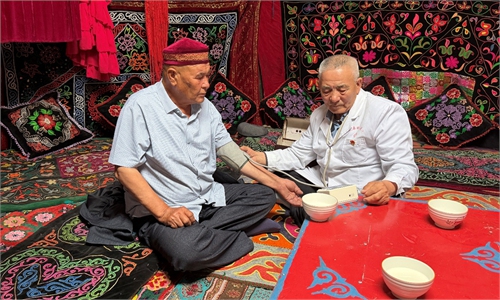
From once struggling to see a doctor, to receiving quality treatment close to home, Northwest China's #Xinjiang Uygur Autonomous Region has benefited enormously from the continuous deployment of medical professionals by partner provinces and municipalities. Through visits to some hospitals across Xinjiang, the Global Times documented how China's deepening team-based aid has strengthened medical talent training and discipline development, all while continually innovating to protect the health of Xinjiang residents.
For nearly five years, Chen Fengqiong, honorary president of the Chinese Women's Association in India, has done much the same thing on her phone almost every day: Scrolling through news apps and industry chat groups, all in search of one key phrase: "Chinese Mainland-India Direct Flights."
Economists and the semiconductor industry in the Philippines have expressed pubic alarm over the US' recent proposal to slap 100 percent tariffs on Philippine semiconductor exports to the US, warning of potentially devastating consequences. Speaking with Philippine scholars and industry observers, the Global Times found that the US tariff threat has sparked widespread concern over its impact on the sector. Representatives from industry associations, experts, and scholars have issued serious risk warnings, while expressing disappointment at the “backstabbing” by their “once-trusted ally” – the US. They worry that, faced with US government's tariff pressure, Philippine chip manufacturers with Japanese and South Korean investment, along with other firms, may relocate production lines to the US, dealing a “fundamental blow” to the Philippines' relevant industries by undermining core capacity, according to Philippine observers reached by the Global Times.
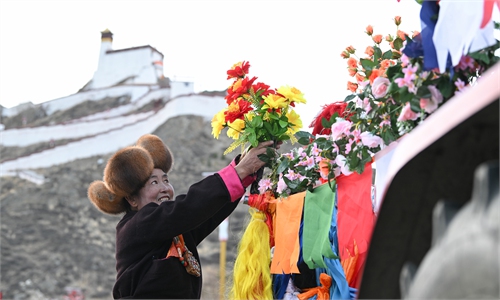
Festive cheers filled every corner of Southwest China's Xizang Autonomous Region in recent days. On Thursday morning, some 20,000 residents from all walks of life gathered at Potala Palace Square in Lhasa to mark the 60th anniversary of the founding of the autonomous region.
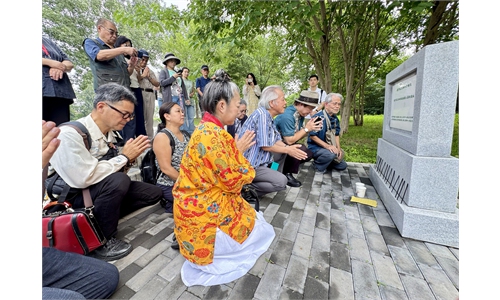
More than a dozen descendants of POWs from the WWII Lisbon Maru shipwreck gathered at the unveiling ceremony of a memorial being built for the Dongji fishermen in the Dongji Islands archipelago on May 20. The day's overcast skies, with the salty sea breeze caressing the rocky shores amid gentle sound of waves lapping against the coast, belied a tumultuous history.
Recently, factors including the tariff war, geopolitical differences, the resonance of domestic populism and clashes in diplomatic styles have pushed US-India relations to a low point. This rift is not accidental; it is an inevitable outcome of the fierce collision between the US “transaction-first” diplomatic logic and India's great-power ambition of “strategic autonomy.”
This year marks the 20th anniversary of the establishment of a representative office of the International Committee of the Red Cross (ICRC) in Beijing. Over the past two decades, China has increasingly become involved in the global humanitarian cause, transitioning from receiving aid to actively providing aid and support abroad. During this process, the ICRC has forged a close collaboration with China in promoting a more peaceful and humanitarian world order. How does the ICRC view China's participation in the global humanitarian cause? Why does China's role carry great significance in today's era? Global Times reporter Xie Wenting (GT) recently sat down with Balthasar Staehelin (Staehelin), the head of Regional Delegation for East Asia of the ICRC, to discuss these topics and more.
Previous research shows that some 400,000 women in Asia were forced to be "#comfortwomen" – sexual slaves for the Japanese army during #WorldWarII. Today, even as the world commemorates 80 years since fascism's defeat, there are still those who try to diminish, distort or deny what happened. The Global Times spoke with some young activists across Asia dedicated to helping survivors defend their rights, spread historical truth and demand a formal apology and compensation from the Japanese government, ensuring the “comfort women” system is remembered accurately and publicly.
Are India-US relations at a “crossroads?” Will the escalation of tensions between the two countries make it more difficult for Washington to enlist New Delhi in its plans to contain China? Regarding these questions, the Global Times (GT) recently conducted an exclusive interview with Indian scholar Sudheendra Kulkarni (Kulkarni), a close aide to former Indian prime minister Atal Bihari Vajpayee and the founder of the Forum for a New South Asia.
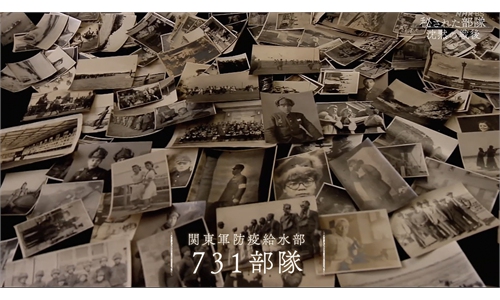
Seiya Matsuno, a researcher at Meiji Gakuin University's International Peace Research Institute, was born in 1974 and has been conducting self-funded research on historical topics including the Japanese military's chemical and biological warfare during its invasion of China for over 30 years. He has exposed, with irrefutable evidence, the Japanese government's long-term concealment of historical materials related to Unit 731, and has donated some of his findings to China to help complete comprehensive research on the crimes committed by the Japanese military during the war.
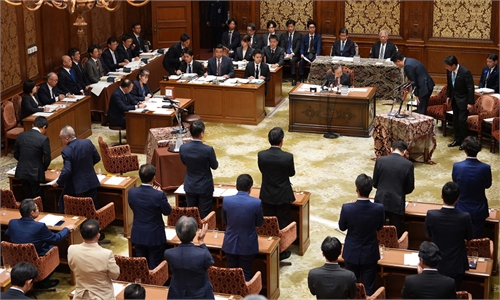
In March, Japanese Communist Party and House of Councillors member Taku Yamazoe publicly presented historical documents at the National Diet proving that Unit 731, part of the Japanese invading forces, conducted live human experiments in China, urging the Japanese government to face up to history and acknowledge the truth. This marked the first instance of a Japanese lawmaker exposing such documents in the Diet, denouncing the Japanese government's decades-long concealment of evidence of its wartime crimes. Why did Yamazoe raise these questions at the time as a Diet member? Behind the Japanese government's deliberate concealment of historical truth, is it out of fear of bearing war responsibility, or indulgence in historical revisionism? And where will this prolonged concealment lead Japan's future? With these questions in mind, Global Times (GT) reporters recently visited the House of Councillors building in Nagatacho, Tokyo for an exclusive interview with Yamazoe.
The Iida City Peace Memorial Museum in Nagano Prefecture, Japan, is located on the third floor of the Iida Community Center and permanently exhibits evidence related to Unit 731's human experiments in China. The center is open to the public free of charge every day, so it is often crowded with office workers and students. However, during random interviews, Global Times reporters found that not only had none of these Japanese citizens ever visited the memorial museum in the same building, but some were completely unaware of its existence.
In March 1945, Hideo Shimizu, not yet 15 years old then, was sent to Harbin as one of the last teenage recruits of the Japanese Imperial Army's Unit 731. Seventy-nine years later, the 94-year-old Shimizu returned to Harbin to repent and apologize in 2024. This was his first trip abroad and his first return to China since World War II. Yet, his public testimony about historical truths has subjected him to immense pressure. Numerous Japanese right-wingers have attacked him, calling him a "liar," "traitor," and "manipulated." His once-close daughters have severed ties with him. Shimizu told the Global Times that many Japanese politicians would prefer he stay silent. but "I don't regret apologizing! Because I've always believed it was something I had to do!"
This is the 9th installment in the "Practitioner's insights" series. We trace back to Yucun village in Anji, East China's Zhejiang Province - the birthplace of the concept of "lucid waters and lush mountains are invaluable assets," and speak with a former village official who witnessed the proposal and implementation of this vision, as well as a young entrepreneur who has chosen to settle and build her careers in Anji. Over the past two decades, Yucun has developed green economy driving coordinated revitalization in surrounding areas. This journey vividly demonstrates how the "two mountains" concept took root in a small mountain village and evolved into tangible productive forces across industries, delivering visible benefits to the people.
In the 10th article of the "Readers' Reflections" column, Global Times (GT) reporter Ma Jingjing talked to Helge Muenkel (Muenkel), Chief Sustainability Officer of Singapore-based DBS Bank, who profoundly perceived China's rapid strides in ecological development and green technology and the global value of the concept that "lucid waters and lush mountains are invaluable assets." According to Muenkel, China's green technology innovation and industrial development experience have provided strong support for the global energy green transition, while providing new opportunities for global partners and foreign enterprises with the country's high-quality development.
The Global Times launches the "Uncovering Evidence in Japan" series, engaging in direct dialogue with those involved through exclusive interviews with firsthand witnesses, using the truth as a blade to slice through the silence. Only by confronting and remembering history can we safeguard the peace of the future.
In light of this, the Global Times has launched the "AI empowers industry and improves people's livelihoods" series, showcasing the tremendous energy and broad prospects that AI brings to every aspect of society. This is the ninth installment in this series, exploring the current applications and potential future role of AI technology in weight management among people in China.
Editor's Note: This year marks the 80th anniversary of the victory of the Chinese People's War of Resistance against Japanese Aggression (1931-1945) and the World Anti-Fascist War. Winning the war is a great victory of the national spirit with patriotism at its core, a great victory achieved with the Communist Party of China (CPC) fighting as the central pillar, a great victory fought by the whole nation through solidarity and bravery, and a great victory for the Chinese people, anti-fascist allies, and people around the world who fought shoulder-to-shoulder.
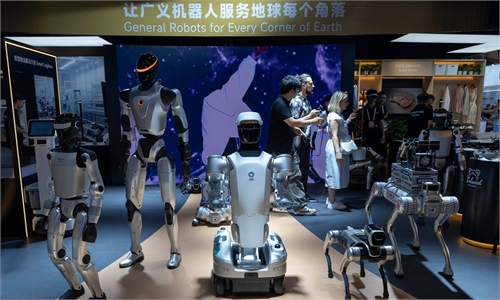
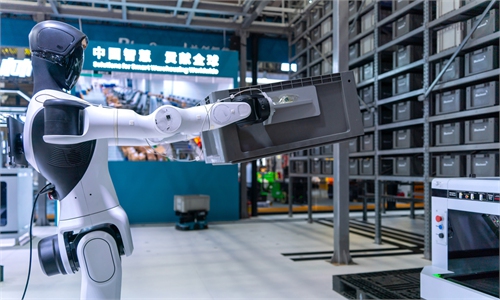
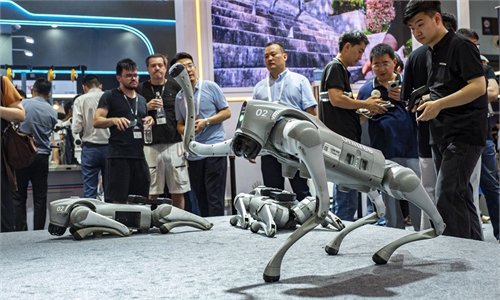
The rapid advancement of AI and robotics has made robot waiters, dancers, marathon runners, and even combatants commonplace. But beyond these eye-catching displays, what roles can robots truly play in our daily lives and workplaces? At the 2025 World Robot Conference (WRC), which opened in Beijing on Friday, Global Times reporters witnessed firsthand how robots with diverse skills transitioning from the stage into daily life, poised to increasingly transform future.
The 2025 World Robot Conference (WRC), which launched on Friday in Beijing, highlighted the direction of future development in embodied intelligent robots - with a focus on areas like cognition, decision-making, and safety - while featuring more than 200 top domestic and international robotics firms.
As scorching temperatures sweep across China and meteorological departments issue wave after wave of heat alerts, many cities have entered what netizens jokingly call "barbecue mode."
This summer, China's stand-up comedy scene has once again been ignited by two hit variety shows. This time, one notable phenomenon has drawn widespread attention and discussion: more female comedians have stepped onto the competitive stage. Talk Show and Its Friends features 21 female participants, accounting for 36 percent of the total contestants, while The King of Stand-up Comedy also has 21 female performers, making up 42 percent of its lineup. Both shows have seen an increase in female participation compared with the first season last year.
In today's digital age, some young Chinese are idolizing historical figures with the fervor once reserved for pop stars. Through fan creations, tomb visits, and social media, they reinterpret the past in emotional and participatory ways. This emerging trend blends entertainment, scholarship, and cultural identity, offering a new model for transmitting Chinese culture, and prompting both enthusiasm and debate over how to balance reverence with reinvention.
Editor's Note: The year 2025 marks the 80th anniversary of the victory in the Chinese People's War of Resistance Against Japanese Aggression and the World Anti-Fascist War. Though the smoke and flame of war has long faded, the memory of that chapter in history remains vivid. This special series, titled “Witness: War Relics Etch the Memory of Victory,” traces the stories behind old photographs, battlefield relics, handwritten letters, and other precious artifacts and documents imbued with the spirit of the era.
Editor's Note: The youth are the vanguards of our time, showcasing boundless energy and vibrant personalities. Gen Zers not only represent the makers of the future but also serve as agents of change in the present. With an open mindset and an international outlook, they actively integrate into the currents of globalization, engaging in deep exchanges, and collaborating with youth from around the world to explore pathways and strategies to address global challenges. The Global Times has launched the “Voice from Gen Z” series, which focuses on the proactive actions and innovative achievements of young people in areas such as global governance, cultural exchange, environmental protection, and technological innovation. Through this series, we aim to showcase the unique charm and future leadership of global Gen Zers.
In the peak of summer, all things thrive and are in full bloom. Enthusiasm among the Chinese people for friendly exchanges with people from around the world surges like the mighty waters of the Yellow River.
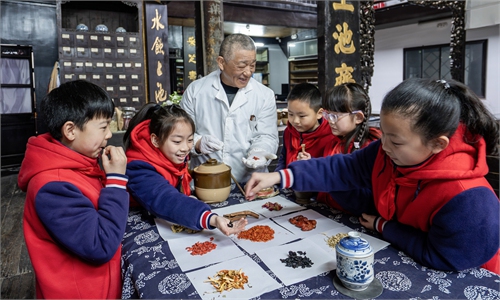
As public interest in traditional Chinese medicine (TCM) continues to grow, especially amid this year's humid weather, a variety of TCM-themed summer activities have seen a surge in popularity across China. These events blend traditional healing with modern lifestyles, drawing not only elderly people but also an increasing number of young people and international participants, turning TCM into a vibrant part of the season's cultural life.
This is the eighth installment in the "Practitioner's Insights" series. The Global Times spoke with Chinese peacekeeper and military doctor Li Dongdong, who shared how China's "Blue Helmets" use scalpels to fulfill their peace mission, showcasing the Chinese military's global responsibility on the world stage.
In the eighth article of the "Scholars' Perspectives" column, Global Times talked to Lieutenant General He Lei, former vice president of the Academy of Military Sciences of the People's Liberation Army (PLA).
These bears are beloved around the world for their playful, gluttonous, lazy, and peaceful demeanor. However, some individuals are attempting to disrupt this tranquility under the guise of "loving pandas."
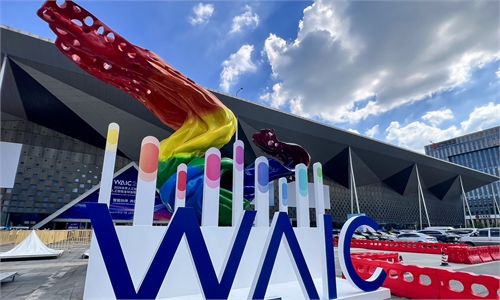
The 2025 World AI Conference (WAIC) concluded on Monday in Shanghai, featuring four themed pavilions spanning over 70,000 square meters for the first time, with more than 800 enterprises showcasing over 3,000 cutting-edge exhibits and more than 100 global and China-first launches.
Another Chinese artificial intelligence (AI) large language model is now open-source: Chinese AI company Zhipu AI, which was once named by OpenAI as a "global competitor," launched its new-generation flagship model, the GLM-4.5, on Monday evening. Designed as a foundational model for agent applications, the GLM-4.5 has achieved technical breakthroughs by integrating capabilities like complex reasoning, code generation, and agent interaction, leading global rankings in comprehensive test performance, the Global Times learned from the company on Monday.
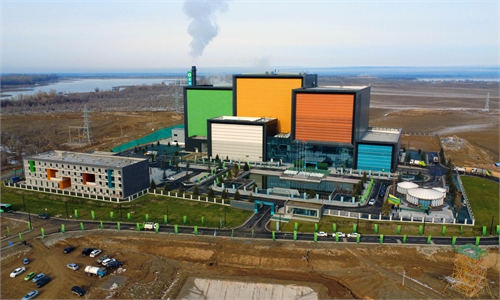
Under Xi's thought on ecological civilization, China is leading the world in waste-to-energy innovation — transforming household waste into green power, cutting emissions, and cooperating with many BRI partner countries.
On July 27, 2024, "Beijing Central Axis: A Building Ensemble Exhibiting the Ideal Order of the Chinese Capital" was inscribed on the UNESCO World Heritage List. Now marking its first anniversary, experts involved in the bid highlight the significance of interpreting its status as a global cultural treasure. They pointed out that "sustainable tourism" has emerged as a key factor for the Beijing Central Axis' future when communicating with UNESCO officials and overseas scholars. After speaking with experts and the public from all walks of life, the Global Times found the answer that key strategies identified for sustainable development include technology-enhanced conservation, immersive heritage experiences, and community-driven stewardship. Those are also the approaches that have already reshaped the Beijing Central Axis over the past year, renewing the heritage site's glamour in the new era.
In 2025, a series of high-profile technology conferences in China, including the International Advanced Air Mobility Expo and the 2025 World AI Conference and High-Level Meeting on Global AI Governance, have drawn significant attention from global media, attracting numerous foreign delegates and exhibitors eager to explore China's advancements in AI and the burgeoning low-altitude economy.
How do you feed tens of thousands senior residents in remote mountain villages? In Yiyuan county of East China's Shandong Province, senior dining halls, smart care platforms, and village-run orchards are redefining rural aging – with dignity, warmth, and grassroots innovation. #HumanRights
Bringing manufacturing back to the US and restoring millions of jobs - this was a key economic policy championed by the Trump administration during its first term. Now, some media outlets suggest the pursuit of this goal has grown even more fervent and "obsessive." A recent article by The New York Times claimed that the US has "gambled" on launching a global trade war, assuming that imposing tariffs on foreign goods would lead to a dramatic return of factories to American soil. However, the reality is that the US currently faces a stubborn gap of 400,000 to 500,000 unfilled manufacturing jobs, presenting a major obstacle to reviving domestic production. How do Americans truly view the reshoring of manufacturing? Will labor shortages hinder this effort? The Global Times conducted interviews and investigations into these questions.
In this installment, 71-year-old Chinese actress Song Xiaoying, who recently received a reply letter from Xi alongside seven other veteran Chinese film artists, shares her perspective on her decades-long career, widely known and cherished fine cinematic works creation, and her wish to remain rooted in real life, uphold virtue, and pursue artistic excellence.
After a full day of work, Li Yiran's efforts are far from over. She continues developing a website product focused on AI programming. The 26-year-old graduated from University College London in 2024 currently works at a private firm in a position related to her economics major in Shanghai. The position, which took her quite a bit of effort to secure, offers decent pay, but it falls short of the expectations she once held for someone with her academic background. Now, she is exploring other paths.
At 98, veteran Fan Chaoqun sits proudly on his sofa in Guiyang, the capital city of Southwest China's Guizhou Province, with sashes meticulously pinned to his chest. A table brimming with candies stands nearby as he warmly welcomes reporters. "He woke up early asking me to prepare sweets for you," his daughter shared with the Global Times.
Inside a weathered red-brick walk-up typical of old Chinese neighborhoods — six flights of concrete stairs with no elevator - 98-year-old Zhang Zhenxin's modest apartment is filled with this WWII veteran's memories. Here, meticulously polished military medals gleam beside fading banners that proclaim him a "National Hero" and a "Pillar of China." But when asked to choose his most cherished honor, the soldier's hand reaches decisively for a crimson-and-gold medal: "This one," Zhang told the Global Times, holding up his "50 Years of Glorious Party Membership" medal. His choice bridges eight decades of service and sacrifice.
As the "China Travel" trend continues to draw international attention, a growing number of foreign visitors are discovering a new dimension of the country - its thriving healthcare system.
Australian Prime Minister Anthony Albanese kicked off his official visit to China on July 12 and it is set to conclude on July 18, 2025. The visit is viewed as an opportunity to strengthen communication, enhance mutual trust, expand practical cooperation, and advance the comprehensive strategic partnership between the two countries. As the Chinese and Australian economies are highly complementary, Albanese said in Beijing that Australia looks forward to deepening mutually beneficial cooperation in areas such as trade, agriculture, tourism, and culture, and enhancing people-to-people exchanges in education, civil society, and youth sectors, the Xinhua News Agency reported. What's the significance of Albanese's visit to China? What's the general sentiment of Australians toward China? How should Australia promote a fair and non-discriminatory business environment for Chinese enterprises in Australia? Global Times reporter Xie Wenting (GT) conducted an exclusive interview with Australian historian author John Queripel (Queripel) on these topics and more.
In this installment, villagers from a picturesque mountain village in Southwest China's Xizang Autonomous Region received a reply letter from Xi. In recent years, the village has stood out for its achievements in tourism, a collective economy, and ethnic unity, and Xi's words have further strengthened their resolve to build a better life in the new era.
In Southwest #China's Yunnan Province, “birding sites” are gaining traction as an innovative model to balance environmental protection with economic growth. Meanwhile, other regions across China are also exploring diverse approaches to protect bird habitats. These efforts not only safeguard biodiversity, but also enable more people to immerse themselves in nature, fostering new economic development opportunities.
Editor's Note: Since 2012, China has witnessed an extraordinary economic transition, with historic achievements in all aspects of the economy from its size to quality. Such an unparalleled feat does not just happen, especially during a tumultuous period in the global geo-economic landscape and a tough phase in China's economic transformation and upgrading process. It was Xi Jinping Thought on Socialism with Chinese Characteristics for a New Era that guided the country in overcoming various risks and challenges, and in keeping the China economic miracle alive. As China embarked on the quest to become a great modern socialist country amid global changes unseen in a century, Xi's economic thought has been and will continue to be the guiding principle for development in China for years to come, and have great significance for the world. What is Xi's economic thought? What does it mean for China and the world? To answer these questions, the Global Times has launched this special coverage on Xi's major economic speeches and policies, and how they are put into practice to boost development in China and around the world.
The US' artificial intelligence (AI) company OpenAI recently put a spotlight on a Chinese AI startup that it believes is on the "front line" of "China's race to lead the world in AI," the CNBC reported. The Chinese company is portrayed to "represent a threat to OpenAI, which has received Washington's support to promote its foundational models as the world's go-to AI offering," according to the report. In a blog post published on June 25, the company wrote that the Zhipu AI has made "notable progress" in the AI race, as global competition ramps up.
The Global Civilizations Dialogue Ministerial Meeting convened in Beijing last week, drawing more than 600 guests from 140 countries and regions to discuss the importance of cultural exchange amid ongoing global turbulence. Participants shared personal stories and insights that underscored the urgency of fostering dialogue, highlighting China's efforts and the Global Civilization Initiative in building bridges across cultures – facilitating mutual understanding, reducing misconceptions, and promoting shared prosperity.
In the eighth article of the “Translators' Voices” column, Global Times reporter Ma Tong interviews Olga Migunova, (Chinese name: Mu Fengling), a renowned Russian translator, sinologist, and head of the Center for China and Asia-Pacific Studies at St. Petersburg State University of Economics. Migunova is one of the translators of the Russian edition of Xi Jinping: The Governance of China.
This is the seventh story of the "Practitioner's Insights" column, in which, the Global Times visited China National Offshore Oil Corp (CNOOC) Petroleum Brasil Ltda to experience how Chinese enterprises blend with the local community, setting an example for oil and gas exploration and cooperation in the Global South countries.
In the eighth article of the “Readers' Reflections” column, Global Times (GT) reporters talked to Ahmed Moustafa (Mustafa), President of the Asia Center for Studies and Translation, who shared his thoughts on the significance of BRICS for Global South cooperation.
Every summer, China enters what many call "panda birthday season," as a curious quirk of nature has led to many of the country's beloved giant pandas being born during the warmer months. To mark these joyful occasions, zoos across the country - and around the world - are throwing elaborate parties for these national treasures, drawing legions of fans and generating buzz for the "panda economy."
In 1999, during the NATO aggression on the Federal Republic of Yugoslavia, Serbia's 250th Air Defense Missile Brigade, then part of the Yugoslav air defense forces, gained global fame by using a second-generation S-125 missile to shoot down a US F-117A stealth aircraft of NATO – the first recorded instance of a stealth aircraft being downed by an air defense missile. Over two decades later, this well-known Serbian unit has again drawn international attention by showcasing its newly acquired Chinese air defense missile systems, at a time when China's made-for-export equipment such as the J-10CE fighter jet has recently scored outstanding performances in recent foreign combat operations.
The Ministry of Commerce announced on Wednesday that it has added 8 entities from China's Taiwan region to the export control list, as these companies have deliberately cooperated with the “Taiwan independence” separatist forces. Experts told the Global Times that this move sends a strong political signal that the Chinese mainland will take firm countermeasures against the Lai Ching-te administration's actions aimed at “seeking independence through military buildup,” and will also take actions against entities that assist or serve as accomplices in those efforts.
This is the fifth installment of the “Guardians of Memory” series, the Global Times spoke with several Chinese veterans of the War of Resistance Against Japanese Aggression. The veterans, now in their nineties, shared their experiences of joining the Chinese military and bravely fighting Japanese invaders on the front lines decades ago. They are the witnesses to those turbulent years of war, and the living heroes who safeguarded national dignity with their own flesh and blood.
Editor's Note: This year marks the 80th anniversary of the victory of the Chinese People's War of Resistance against Japanese Aggression (1931-1945) and the World Anti-Fascist War. Winning the war is a great victory of the national spirit with patriotism at its core, a great victory achieved with the Communist Party of China (CPC) fighting as the central pillar, a great victory fought by the whole nation through solidarity and bravery, and a great victory for the Chinese people, anti-fascist allies, and people around the world who fought shoulder-to-shoulder.
This is the fifth installment of the “Guardians of Memory” series, in which, the Global Times spoke with several Chinese veterans who fought in the Chinese People's War of Resistance Against Japanese Aggression. The veterans, now in their nineties, shared their experiences of joining the Chinese military and bravely fighting Japanese invaders on the front lines decades ago. They are the witnesses to those turbulent years of war, and the living heroes who safeguarded national dignity with their own flesh and blood.
On the evening of July 5 local time in Brazil, officials from China and Brazil signed a series of cooperation documents - including a memorandum of understanding (MoU) on the second phase of development strategy alignment and collaboration in artificial intelligence - witnessed by the leaders of both countries. The MoU outlines plans to strengthen pragmatic cooperation in infrastructure, pharmaceuticals, new energy, and other sectors, according to a statement released by China's National Development and Reform Commission (NDRC) on its website on Monday.
Daniel Filmus, former Minister of Science and Technology in Argentina and Director of the CIICTI, attended the opening ceremony of the photo exhibition and held a book launch for the Chinese version of "The Voice of Latin America." At the event, Global Times reporters (GT) interviewed the seasoned politician and scholar, who has interviewed dozens of presidents from Latin American countries and has maintained keen insights into the modernization processes of these nations, to share his views on the Chinese model. In Filmus's opinion, China's practice demonstrates that economic growth and inclusive sharing can be balanced, and the global vision proposed by China is crucial for Latin American countries.
In Buenos Aires, the Global Times interviewed Patricio Conejero Ortiz, director of Latin America-China Observatory (OLAC) at the University of Buenos Aires (UBA), who shared his view on the evolving role of Global South nations - particularly BRICS members - in reshaping multilateral frameworks and the significance of deepening cooperation with China.
The 17th BRICS Summit convenes in Rio de Janeiro, Brazil from July 6-7, 2025 - a pivotal moment for Global South cooperation. Before the summit, the "Global Times Overseas China Week and Global South Dialogue" series arrived in the Latin America and the Caribbean (LAC) from June 22-28 local time, setting the stage for meaningful engagement. In partnership with local institutions, the series included key events including the "Seminar on Relations between China and LAC Countries, and the Mutual Perception of Public Opinion" in Buenos Aires, Argentina, and the "Roundtable Forum of China-LAC Countries" at the BRICS Summit hosted city Rio de Janeiro. These gatherings brought together dozens of eminent figures from politics, academic, media, and business across China and the LAC, fostering candid dialogues and profound exchanges.
Editor's Note: In recent years, China-Latin America and Caribbean (LAC) relations have entered a new phase of equality, mutual benefit, innovation, openness, and people-centered development.
At nearly 30 hours and 20,000 kilometers away from Beijing, Buenos Aires in Argentina is one of the furthest destinations in the world from the Chinese capital. In a popular 2024 stand-up comedy show, Yan Hexiang, a Chinese actor and crosstalk performer, humorously pointed out that the antipodal point to Beijing is located in the Pampas grasslands of Argentina. However, the distance between Argentina and China doesn't seem so far. Just about 38 kilometers from Ministro Pistarini International Airport in Buenos Aires, is a largely commercial section about five blocks long in the district of Belgrano, where a towering Chinese-style archway greets you, inscribed with the words “China Town.”
From Beijing's bike-sharing to Argentina's low-carbon soybean oil, and Brazil's green mobility, the “Global Times Overseas China Week” photo exhibition spotlighted growing China-Latin America sustainable cooperation through showcases in Buenos Aries and Rio de Janeiro this past week.
In the seventh article of the “Readers' Reflections” column, Global Times (GT) reporters Ma Jingjing and Qi Xijia talked to Jack Perry Junior (Perry), chairman of the 48 Group Club to listen to his family's story of connections with the CPC in the span over 70 years. For over 70 years, three generations of the Perry family have been engaged in in-depth interactions with China and the CPC, and witnessed the miracle of China's development.
This is the sixth article of the "Scholars' Perspectives" column, which features Xu Bin, director of the Marxist Institutional Theory Research Center of Beijing Normal University, also a professor of the School of Marxism at the university.
This is the sixth story of the "Practitioner's Insights" column, in which, the Global Times visited the Henan Jiao Yulu Executive Leadership Academy in Lankao county, Central China's Henan Province, a Party spirit education institute named after the late grassroots Party official Jiao Yulu (1922-64).
Editor's Note: Large models, robots, intelligent manufacturing, autonomous driving... In recent years, artificial intelligence (AI) has made headlines around the world. In real life, AI has permeated all aspects of human society, helping with scientific research in laboratories, assisting in the restoration of mysterious ancient scrolls at archaeological sites, and helping to find abducted children in the vast sea of humanity. The development of technology has also brought challenges in various aspects in ethics and law. Many experts advocate that humans should see technology as a tool created for the ultimate purpose of serving humanity, making life and work more efficient and comfortable. In light of this, the Global Times has launched the "AI empowers industry and improves people's livelihoods" series, showcasing the tremendous energy and broad prospects that AI brings across every aspect of society. This is the eighth installment in this series, featuring the practical involvement of AI tech in China's river management.
Kevin Kelly, the founding executive editor of the US magazine Wired, introduces the concept of "Cool China 2049" in his new book. Speaking to the Global Times, Kelly highlighted the significance of 2049 as a pivotal moment to imagine China's technological breakthroughs, global role, and creative exports, predicting a "cool China" could export AR, gaming, music, and art and set trends worldwide. #FutureTech #China
Although 18,000 kilometers away, China and Latin America came together in Rio de Janeiro for a high-level roundtable, fostering dialogue on cultural exchange, green development, and Global South cooperation—deepening mutual understanding and building a shared future. #ChinaLAC
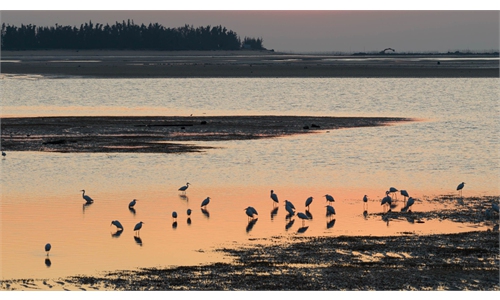
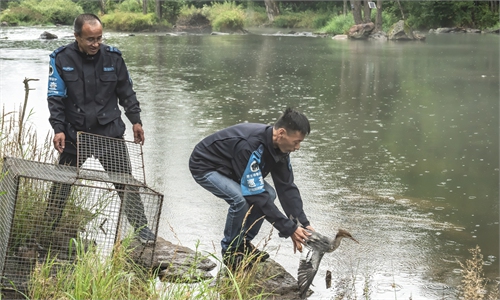
Editor's Note: Xi Jinping, general secretary of the Communist Party of China (CPC) Central Committee, Chinese president, and chairman of the Central Military Commission, has stressed that the environment concerns the well-being of people in all countries. During his inspections, Xi has always paid great attention to ecosystems, spanning from cities to rural areas, and from enterprises to communities. Under the guidance of Chinese President Xi Jinping's thought on ecological civilization, China has been advancing the green transition of its economy over the last decade. Regions across the country are actively promoting the construction of ecological civilization and advancing Chinese modernization featuring harmony between humanity and nature. These efforts are creating a "Beautiful China." The coming five years will be critical to the building of a "Beautiful China." The Global Times is launching a series of stories to explore the progress of ecological civilization projects that Xi is concerned with, delving into the positive environmental changes occurring now, and offering valuable insights and references for both national and global efforts. From these practical examples, we can see how Xi's thought on ecological civilization is put into practice and further inspires public action. In this installment, we turn our eyes to the northeast regions of China. Under the guidance of Xi Jinping Thought on Ecological Civilization, they have persisted for decades in evolving their approaches to bird conservation, demonstrating how grassroots efforts form an indispensable foundation for China's ecological stewardship.
The “Global Times Overseas China Week and Global South Dialogue: Seminar on Relations between China and Latin America and the Caribbean (LAC) countries, and the Mutual Perception of Public Opinion” were held in Buenos Aires, the capital of Argentina, on Monday local time. Political, business, academic, think tank, and media circle representatives from China and Argentina gathered to engage in in-depth exchanges on deepening mutual understanding, strengthening the public support foundation, and promoting mutual learning among civilizations between China and LAC countries.
In the midst of the escalating Iran-Israel conflict, some Chinese nationals in these regions have chosen to stay rather than evacuate. They've witnessed local efforts to keep life running and felt the warmth of local support. Their stories show shared pain and a longing for peace.
On June 21, 2025, the summer solstice bathes Mohe - China's northernmost city nestled at the northern tip of China's "rooster-shaped" map in Heilongjiang Province - in over 21 hours of daylight. Tucked beneath the northern slopes of the Great Khingan Mountains, this region - China's northernmost and highest-latitude borderland, encompassing Mohe and six other counties - boasts the unique allure of being the "Arctic of China" or "the city of extreme cold."
Cultural artifacts are more than historical remnants; they embody the spirit of a nation and a civilization. In recent years, some countries have not only stepped up cultural preservation efforts, but also worked actively to recover artifacts looted during colonial times. Recently, the Global Times interviewed officials in Egypt and Nigeria, as well as representatives from civil groups in Japan and other countries, to learn how those looted treasures are making their way home.
As the Global Times reporters journeyed through Kazakhstan to uncover its growing bond with China, we were struck by the vibrant wave of “Chinese fever” sweeping this Central Asian nation. Walking the streets of Astana, reporters often meet locals warmly greeting with a hearty “ni hao” – “hello.” Learning Chinese language has become a passion here – look no further than the Confucius Institute at L.N. Gumilyov Eurasian National University, where over 15,000 students have eagerly embraced the language, building bridges to a shared future.
Near the international airport in Astana, the capital of Kazakhstan, a light rail train, painted in the deep blue of Kazakh national flag, hangs on the newly built elevated tracks, its car bodies freshly hoisted into place. A Chinese engineer pauses, tools in hand, feeling a quiet pride in this nearly complete milestone – Central Asia's first light rail. Nearby, a Kazakh family stops to look, their eyes bright with anticipation, envisioning the day this still train will glide, linking their city to a future full of promise.
In the evening, a Global Times reporter entered a soybean greenhouse at the Oilseed institute. Upon entering, the interior was bright as day, as if the sun were hanging directly overhead, and the temperature was about 5 C higher than outside. After a moment of adjustment, the reporter could see that the less than 10-square-meter greenhouse resembled a small field, filled with lush green soybean plants, some of which had already formed green pods. The ceiling simulated natural light, covered with dotted light strips. Additionally, some shorter soybean varieties were on shelves against the wall, receiving light primarily from blue light lamps, which are said to promote soybean growth.
The fourth ministerial meeting of the China-CELAC (Community of Latin American and Caribbean States) Forum, which concluded in May, marked a significant milestone in China-CELAC cooperation and further enhanced the momentum for future development. In recent years, China and LAC countries have deepened cooperation under the GDI, the GSI, and the GCI. In this issue, we focus on the LAC region to explore how years of fruitful cooperation have yielded benefits in areas such as the economy, security, and fostering connections across the ocean under the three global initiatives.
TCM is winning over hearts in Kazakhstan! At the China-Kazakhstan Traditional Medicine Center in Astana, locals rave about instant relief & "China speed." More than 38,000 patients have been served. How are these ancient Chinese healing tricks becoming a hit in Astana? The piece reveals answers.
A Kazakh traditional Chinese medicine TCM doctor praised by President Xi hopes to bring the health benefits and professional training of TCM to more Kazakhs, calling TCM a global gift.
In a recent exclusive written interview with Global Times reporters Hu Yuwei and Zhao Juecheng (GT), Kazakhstan's Ambassador to China, Shakhrat Nuryshev (Nuryshev), expressed his belief that the first China-Central Asia Summit, held in Xi'an in 2023, pioneered a new model of regional collaboration. He expressed confidence that the second summit, held in Astana, will further enhance China-Central Asia cooperation with significant momentum. Nuryshev also highly praised the current China-Kazakhstan relationship, describing it as a model of neighborly friendship, mutual respect, and shared development.
The fifth article of the “Scholars' Perspectives” column features an interview with Dong Yu, executive vice dean of the China Institute for Development Planning at Tsinghua University. Dong is one of the participants in the formulation of several recent five-year plans and has also witnessed the central economic policy-making and implementation since the 18th CPC National Congress.
This is the fifth story of the "Practitioner's Insights" column, in which, a Global Times reporter traveled to Jiaxing, East China's Zhejiang Province, to speak with local drivers, passengers, and transportation officials about the urban-rural bus Route 101, which is hailed as a model for the national urban-rural public transportation integration reform. Over the past two decades, this route has steadfastly adhered to the "nail" spirit and the perseverance of "keeping working on it, one administration after another," to anchor the principle of "following a good blueprint through to the end" and "making it a success."
In the sixth article of the "Readers' Reflections" column, Global Times (GT) reporters Ma Jingjing, Qi Xijia and Chen Xia talked to Denis Depoux (Depoux), global managing director of consulting firm Roland Berger, about how China's five-year plans bring historic transformation to the country, and how China translates long-term goals into every five-year plan and resolutely implements them.
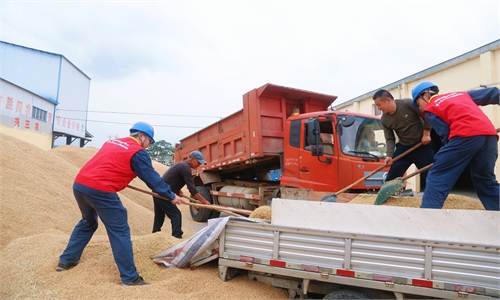
As summer unfolds across China, the busy farming season, involving summer harvests, planting, and management, is in full swing.
The second China-Central Asia Summit is set to take place in Astana between June 16-18, with Chinese President Xi Jinping and leaders from the five Central Asian countries in attendance, a Chinese foreign ministry spokesperson announced on Friday. What are the expectations of diplomats and scholars from Central Asian nations for this summit? What tangible changes and outcomes have been achieved since the inaugural summit in North China's Xi'an in 2023? Global Times (GT) reporters Hu Yuwei, Zhao Juecheng and Xue Ke interviewed Bolat Nurgaliyev (Nurgaliyev) in Astana, who served as secretary-general of the Shanghai Cooperation Organisation (SCO) from 2007 to 2009 and currently chairs the Board of the Foreign Policy Research Institute under Kazakhstan's Ministry of Foreign Affairs. He shared his insights on the unique significance of the second summit for China-Central Asia relations.
Global Times reporters interviewed several industry insiders to review the global competition surrounding the key single crop - soybean, as well as the role of foreign investment in this invisible soybean war and the experiences China has explored.
In this issue, Global Times reporters Xu Liuliu and Liu Yang (GT) spoke with Colombian Ambassador to China, Sergio Cabrera Cardenas (Cabrera), about bilateral cooperation and exchanges, as well as his insights on the GDI, the GCI, and the GSI.
Editor's Note: This year marks the 80th anniversary of the victory of the Chinese People's War of Resistance against Japanese Aggression (1931-1945) and the World Anti-Fascist War. Winning the war is a great victory of the national spirit with patriotism at its core, a great victory achieved with the Communist Party of China (CPC) fighting as the central pillar, a great victory fought by the whole nation through solidarity and bravery, and a great victory for the Chinese people, anti-fascist allies and people around the world who fought shoulder-to-shoulder.
Amid the trade frictions the US has sparked with multiple countries, soybeans have emerged as a key point of contention. This crop, originally from China, is now one of the US' main exports to China. However, due to tariffs and trade uncertainties, China is accelerating its soybean purchases from South American countries such as Brazil and Argentina.
Dubbed "a train-forged city," Suifenhe, located in Northeast China's Heilongjiang Province, was originally established in the late 19th century when Russians built train maintenance workshops and other facilities there following the construction of the Chinese Eastern Railway in 1903.
China's national college entrance examination, or gaokao, will take place as scheduled across the country from June 7 to 9.
In 1962, after an eight-year struggle, the Algerian people overthrew French colonial rule and achieved national independence. In 1958, at a difficult and crucial stage of Algeria's independence revolution, China became the first non-Arab country to recognize the Algerian Provisional Government.
Editor's Note: Large models, robots, intelligent manufacturing, autonomous driving... In recent years, artificial intelligence (AI) has made headlines around the world. In real life, AI has permeated all aspects of human society, helping with scientific research in laboratories, assisting in the restoration of mysterious ancient scrolls at archaeological sites, and helping to find abducted children in the vast sea of humanity. The development of technology has also brought challenges in various aspects in ethics and law. Many experts advocate that humans should see technology as a tool created for the ultimate purpose of serving humanity, making life and work more efficient and comfortable.
Later this June, a Chinese research team that developed the world's first-ever full-process onboard carbon capture and storage system will collaborate with conduct the world's first ship-to-ship liquid carbon dioxide unloading operation and achieve a complete closed loop for the reuse of LCO2. This will set an example for further promotion the establishment of industry standards in the field of carbon capture and accelerating the industrialization and application promotion of ship-based carbon capture equipment, the Global Times learned.
A 22-year-old university student from Shenzhen, China, Xu Yang, recently broke a Guinness World Record in the field with a self-structured first-person view (FPV) drone, and open-sourced the entire design process and data. Weighing just 247 grams, this drone even surpasses the speed of a high-speed train at full throttle. Fueled by passion and relentless refinement, Chinese enthusiasts like Xu have formed online communities where they exchange knowledge and support each other, leveraging their expertise to take solid strides in advancing innovation within China's drone industry.
In the fifth article of the "Readers' Reflections" column, Global Times (GT) reporter Ma Tong talked to Fabio Massimo Parenti (Parenti), an Associate Professor of International Political Economy at the China Foreign Affairs University, and a scholar of international studies at the Italian International Institute Lorenzo de' Medici.
This is the fourth story of the "Practitioners' Insights" column, in which the Global Times exclusively interviewed the China-Brazil Earth Resource Satellite (CBERS) project scientific research team members. Their experiences showcase China's responsibilities in scientific and technological development: Continuously enhancing independent innovation capabilities and always adhering to the philosophy of technology for good purposes.
Many of the seniors serve in central and western regions under China's "Silver Age Action" initiative, which was launched to leverage the expertise of senior professionals in various fields to assist in improving lesser-developed areas.
For Sergei, this isn't just therapy - it's a cultural adventure, a bridge between his Siberian roots and the warm, mysterious world of Chinese healing. This scene - part therapeutic ritual, part cultural spectacle - is routine at the hospital, where Chinese medicine meets Russian curiosity. Along the hospital's corridors, the air is perfumed with the faint aroma of mugwort, and bilingual Chinese-Russian signs guide patients to clinics adorned with traditional decor. Upstairs, in the international clinic, a group of Russian patients study a Russian-language poster explaining Baduanjin, a set of eight gentle exercises rooted in traditional Chinese medicine (TCM) to boost energy flow and balance.
This year is SCO's "China Year." China will host the Shanghai Cooperation Organization (SCO) summit in Tianjin this autumn, according to China's Foreign Ministry, and now the world is tuned in. Will this gathering mark a new milestone for the organization? Against the backdrop of global geopolitical fractures and economic uncertainty, how will the SCO reshape regional integration? In an exclusive interview with Global Times (GT) reporters Lin Xiaoyi and Xie Wenting during the 2025 SCO Media Cooperation Forum in Urumqi, capital city of Northwest China's Xinjiang Uygur Autonomous Region, SCO Deputy Secretary-General Sohail Khan (Khan) revealed how the organization leverages its "Shanghai Spirit" to address 21st-century challenges. From China's pivotal role as rotating chair to the SCO's experiments in global governance, the interview paints a picture of the SCO amid ever-shifting geopolitical landscapes.
Editor's Note: Chinese people believe that letters are as valuable as gold. For thousands of years, letters, across mountains and oceans, have been delivering the writers' sentiments and conveying friendship and expectations. Xi Jinping, general secretary of the Communist Party of China (CPC) Central Committee and Chinese president, has managed to find time to reply to some letters from different sectors of the society and different parts of the world despite his busy work schedule. Through his letters, Xi has corresponded with people from all walks of life on numerous occasions, part of a series of excellent stories of China in the new era. Therefore, the Global Times traced and contacted some of the recipients of Xi's letters to hear the inspiring stories behind the letters and their communications with the Chinese president.
Editor's Note: This year is SCO's “China Year.” On May 23, at the opening ceremony of the 2025 Media Cooperation Forum of Shanghai Cooperation Organization (SCO) Countries held in Urumqi, capital city of Northwest China's Xinjiang Uygur Autonomous Region, the International News Department of the People's Daily and the Global Times Institute jointly released a report titled “Common Home: Public Opinion on the Development Visions in SCO Member States.” The survey was conducted among the general public aged 18-60 in 10 full member states of the SCO, and a total of 5,719 valid questionnaires were collected in 11 languages, including Chinese, English, Russian, Persian, Urdu, and Kazakh.
What is the impact of US tariffs on the Indian economy? In the face of Washington's tariff pressures, how much leverage does New Delhi have? Is the US imposition of so-called “reciprocal tariffs” an opportunity or a challenge for India? These questions are critical factors influencing India's stance on US tariffs.
A youth football friendly match spanning mountains and seas recently unfolded at the foot of Mount Qomolangma in Xigaze, Southwest China's Xizang Autonomous Region. The match pitted the Qomolangma Snow Eagles against the Salta delegation team, made up of players from the Puna region of Argentina's Salta Province. Young players from both sides poured their hearts into the game, using football to build a bridge of friendship between Chinese and Argentine.
This second installment of our "Guardians of Memory" series traces the extraordinary journey of China's national anthem through the voices of its creators' descendants and modern-day torchbearers. Their accounts reveal how the song, "March of the Volunteers," has evolved from a wartime battle cry to a global bridge of cultural understanding.
The 2025 Media Cooperation Forum of Shanghai Cooperation Organization (SCO) Countries is set to kick off in Xinjiang's capital city of Urumqi on Friday, with Sohail Khan, deputy secretary-general of the SCO, emphasizing the strategic importance of Xinjiang in fostering regional connectivity and mutual understanding through media collaboration.
In this installment, we turn our eyes to the western regions of China. Under the guidance of Xi Jinping Thought on Ecological Civilization, they are transforming deserts like the Gobi, and other arid areas into hopeful green oases of clean energy through the construction of new energy bases in these once desolate regions
As dusk falls over Timor-Leste's capital Dili, Yang Huchen's car winds through the country's rugged terrain, his eyes tracing the golden constellations of light that now dot the hillsides. Each glowing window tells a story – a child studying after sunset, a vendor keeping a stall open late, and a family gathered beneath a steady bulb. For Yang, a Chinese engineer who has spent 13 years constructing national power grid across this island nation, the view stirs something deeper than scenery. “It's not just electricity,” he told the Global Times. “It's about ordinary people's lives.”
This is the first installment under the theme of "Witnesses of Struggle." In this installment, the Global Times retraces the footsteps of key commanders from China's Northeast Anti-Japanese United Army (NAJUA) - the country's northernmost frontline force during the War of Resistance against Japanese Aggression (1931-1945) - who persevered for 14 years under extreme hardship.
In the fourth installment of "Translator's Voices" column comprised of interviews with translators of the book series from various countries, Global Times (GT) reporters Xu Liuliu and Li Yuche talked to Timofey Bakhvalov, a Russian-language translation expert from the Foreign Languages Press. He was deeply involved in the translation and editorial work for the Russian editions of Xi Jinping: The Governance of China Volumes III and IV.
Starting June 1, 2025, China's visa-free policy will benefit nationals of Brazil, Argentina, Chile, Peru and Uruguay, with the trial period lasting until May 31, 2026, Chinese foreign ministry spokesperson Lin Jian said at a regular news briefing on Thursday.
To offer a deep understanding of the three global initiatives, and elaborate on their significance on a global scale, the Global Times is launching a series of articles. In this installment, Chinese and international experts share an in-depth interpretation of a recently released white paper on national security in China from the perspective of GSI.
Editor's Note: This year marks the 80th anniversary of the victory of the Chinese People's War of Resistance against Japanese Aggression (1931-1945) and the World Anti-Fascist War. Winning the war is a great victory of the national spirit with patriotism at its core, a great victory achieved with the Communist Party of China (CPC) fighting as the central pillar, a great victory fought by the whole nation through solidarity and bravery, and a great victory for the Chinese people, anti-fascist allies and people around the world who fought shoulder-to-shoulder.
This year marks the 80th anniversary of the victory of the Chinese People's War of Resistance against Japanese Aggression and the World Anti-Fascist War. Winning the war is a great victory of the national spirit with patriotism at its core, a great victory achieved with the Communist Party of China (CPC) fighting as the central pillar, a great victory fought by the whole nation through solidarity and bravery, and a great victory for the Chinese people, anti-fascist allies and people around the world who fought shoulder-to-shoulder.
Brazil occupies an important position in China's global partnerships, having been the first country to forge a strategic partnership with China. It is also the first nation in Latin America to establish a comprehensive strategic partnership with China. As one of the most important economic and cultural centers in Brazil, the state of Rio de Janeiro plays a strategic role in the development of China-Brazil relations. In this issue, Global Times reporter Xie Wenting (GT) speaks with Marina dos Santos (Santos), a legislator from Rio de Janeiro, about bilateral cooperation, including in football, as well as her insights on the GDI, the GCI, and the GSI.
To enhance mutual understanding between China and LAC countries and to strengthen and promote cultural exchanges, mutual learning, and people-to-people exchanges, the Global Times Institute (GTI), in collaboration with the Latin American Council of Social Sciences (CLACSO) and the China-Latin America Education and Culture Center, conducted a "China-LAC mutual perception survey" in both regions. The first part, "Chinese perspectives on the LAC," was conducted from April 11 to 22, 2025, targeting ordinary Chinese citizens aged 18 to 69. The survey was carried out through an online questionnaire distributed to members, covering 16 cities across seven major regions of the Chinese mainland, and collected 2,099 valid samples.
On Friday, the Red Square in Moscow, Russia was adorned with vibrant displays of military pride and historical reverence during the Victory Day military parade commemorating the 80th anniversary of the victory in the Soviet Union's Great Patriotic War. Among the highlights was the impeccable formation of the Guard of Honor of the Chinese People's Liberation Army (PLA) , whose disciplined march and striking presence captivated onlookers.
As the world faces growing instability and the acceleration of profound global changes unseen in a century, how do people in Europe and Russia view the history of WWII today?
China's quantum computing industry has made new progress. Recently, Chinese startup Origin Quantum in Hefei, East China's Anhui Province, launched Origin Tianji 4.0, a self-developed superconducting quantum measurement and control system that supports 500-plus-qubit quantum computers. The progress indicates that China's quantum computing industry has achieved replicable and iterative engineering production capabilities, laying the foundation for the mass production of hundred-bit quantum computers, Kong Weicheng, head of the system's development team, told the Global Times.
In this installment, representatives from a volunteer teaching team at a remote primary school in Northwest China's Xinjiang Uygur Autonomous Region, who recently received a reply letter from Xi, shared their stories of committing themselves to the western region, serving the border areas while promoting ethnic unity and progress.
China has successfully established the world's first three-satellite constellation on the distant retrograde orbit (DRO) in the Earth-moon region of space, with the constellation operating stably for over 200 days, the Global Times learned at an academic seminar held by the project's developer, the Technology and Engineering Center for Space Utilization (CSU) at the Chinese Academy of Sciences (CAS) recently.
May 4, 2025 marked China's Youth Day, commemorating the historic May Fourth Movement of 1919, a monumental youth movement that ignited profound social changes in China. As the movement commemorates its 106th anniversary, a look back at that pivotal awakening reveals a heartening truth: Today's Chinese youth are redefining the spirit of their forebears with fresh vigor and global relevance.
China has actively supported Brazil's agricultural sustainability, aligning with the GDI. Southern Brazil's Paraná State is renowned for its agricultural innovation. In this issue, Global Times reporter Xie Wenting (GT) spoke with Paraná State legislator Jorge Gomes de Oliveira Brand (Brand) on the GDI and more.
By creating authentic and relatable content, these county influencers are boosting the sales of agricultural products, stimulating catering consumption, and tourism. Such efforts have become one of the engines driving rural revitalization.
The sufferings endured by the Chinese people and the heroic resistance they demonstrated during the anti-fascist war deserve to be remembered, and must be told to the world, José Luis Centella, president of the Communist Party of Spain, told the Global Times in an exclusive interview.
In a shifting media landscape in the US, "The AP (Associated Press) is on the outs, but these new MAGA ("Make America Great Again") media stars are on the rise," as noted in a recent article by US-based magazine Politico.
Nestled deep in the snow-capped peaks of the Karakoram Mountains lies a village known as "Paiyike." In Kyrgyz, "Paiyike" translates to "the highest stone mountain," a fitting name for a land dominated by ice, snow, and biting wind year-round. At an altitude of 3,780 meters and overseeing multiple exit routes, the station's officers, through their unwavering dedication to their work, ensure the stability of this vital border region through patrolling, risks prevention, and assisting the local community.
Swiss Federal Councilor and Foreign Minister Ignazio Cassis stated at a press conference at the Swiss Embassy in Beijing on Thursday night that the tariff war creates uncertainty and offers no benefits, not even to the US.
If we need to select a key phrase for 2025, "weight management" could be one of the most red-hot candidates.
The Global Times recently obtained an exclusive set of photographs, showing that in mid-April, the China Coast Guard (CCG) enforced maritime management and exercised sovereign jurisdiction at Tiexian Jiao in the South China Sea by conducting on-reef inspection and evidence collection of illegal activity.
"Thank you, Chinese suppliers -we love you! Please drop your business or factory links below comments section for clothing, furniture, wigs, and more." This was the message Courtney Ferguson, a New York shopper, posted on RedNote, China's popular lifestyle social media platform, on April 14.
Standing at the entrance of a hospital in Shanghai, 17-year-old Jack and his mother Beatrix felt a mix of anxiety and hope. After moving from their hometown in Germany to Shanghai months ago, Jack's vitiligo had flared up again. Medication had proven little effective at that time, and he even experienced side effects like diarrhea. Following a recommendation from their insurance company, Beatrix brought Jack to the International Medical Department (IMD) of Shanghai Seventh People's Hospital.
Recently, Global Times reporter Lin Xiaoyi visited the Paiyike Border Police Station to hear the stories of the officers stationed there. In this place, where icy gusts carry echoes of celluloid patriotism, legacy isn't merely preserved in film reels but in the living pulse of the guardians of the border passing the torch forward through generations.
In the third installment of "Translator's Voices" column comprised of interviews with translators of the book series from various countries, GT reporter Hu Yuwei talked to Dr Chea Munyrith (Chea), president of the Cambodian Chinese Evolution Researcher Association and the former advisor to Cambodia's Senate, who shared how China's diplomatic philosophy inspires him to convey President Xi's wisdom to the Cambodian people.
"What we pursue is the wellbeing of both the Chinese people and the people of all other countries," Xi Jinping, Chinese president and general secretary of the Communist Party of China Central Committee, emphasized in "China's Diplomacy Must Befit Its Major-Country Status" of the second volume of Xi Jinping: The Governance of China. In Vietnam's Hanoi, a light rail line constructed by a Chinese company has transformed the lives of locals, demonstrating China's commitment to pursuing shared wellbeing with people in neighboring countries.
Editor's Note: A Chinese public health team departed for Myanmar from Kunming, Southwest China's Yunnan Province on Saturday to support post-earthquake public health efforts in the country. The team, consisting of 50 members, will primarily conduct tasks such as post-disaster risk assessment, disease monitoring, laboratory testing, epidemiological investigations, infectious disease control, drinking water monitoring, environmental sanitation and disinfection, health education, and technical training, according to the Xinhua News Agency. The deployment of team is China's latest move in helping Myanmar after a 7.9 magnitude earthquake hit the country on March 28, which has claimed 3,726 lives and left 5,105 people injured as of Friday, according to Myanmar's State Administration Council Information Team. What is the latest situation in Myanmar? What are the major difficulties that the locals and rescue missions face? What role does China play in the rescue missions and how does this help the country? Global Times reporter Xie Wenting (GT) spoke with Stephanie Xu (Xu), PR Officer at the International Committee of the Red Cross (ICRC) Delegation in Myanmar.
In a Hangzhou courtroom, a judge prepares to preside over a civil case. The judge logs into a smart judicial decision-making platform, perusing through the case files and in-depth analyses meticulously organized by the system. Once the judge has a firm grasp of the case's fundamentals, the hearing commences. All parties join the virtual court hearing. Just 20 minutes later, a verdict is reached. The large-scale language model drafts the judgment document, which the judge reviews, signs, and then emails to the parties concerned, bringing the case to a close.
China and Spain reached a cooperative agreement on April 11 in the field of synchrotron radiation light sources to promote the research and development of fourth-generation synchrotron radiation light source technologies and facilitate the open sharing of international large scientific facilities, the Xinhua News Agency reported.
While most Chinese employees have just returned from the Qingming holiday between April 4 and 6, Yi Ya is ready for exciting new journeys ahead. Later this month, the 57-year-old retiree will fly to Auckland in New Zealand to participate in a weeks-long study program. Later in May, Yi plans to spend two weeks each in London and Dublin, where she will attend classes and explore the local sights in her free time.