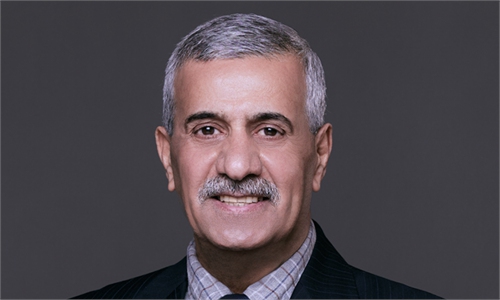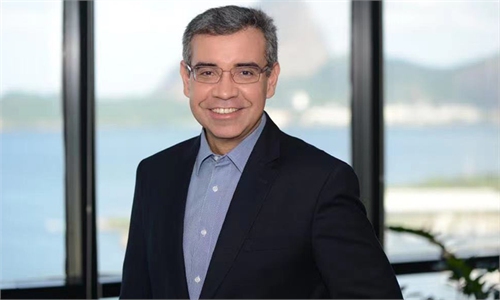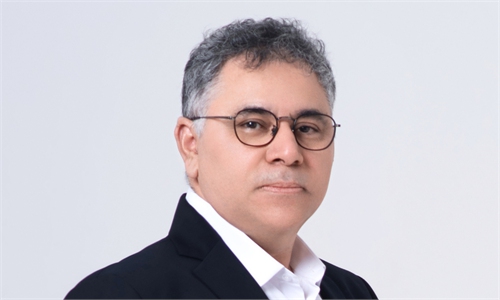
Beat Schneider (Schneider), emeritus professor at the Bern University of the Arts in Switzerland, recently shared his impressions of China over the decades in an interview with the Global Times (GT). Schneider told the reporter that the leadership of the Communist Party of China (CPC) and China's institutional advantages have enabled rapid development of the country's productive forces in a short period, and that Europe should enhance cooperation with China in global governance to promote positive reform of the international order.
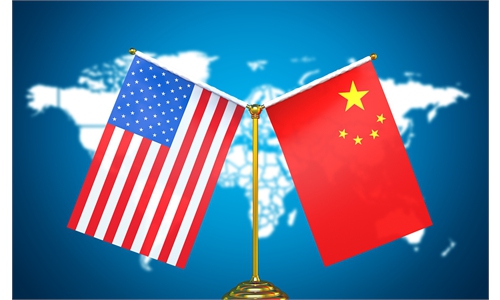
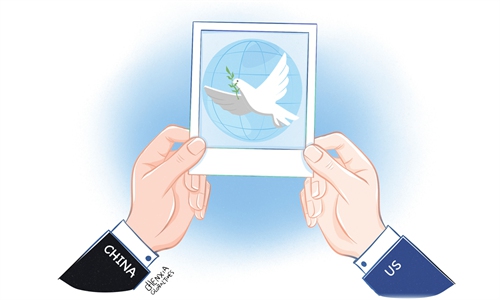
The future trajectory of China-US relations hinges on structural factors of strategic engagement, but it also depends on whether the two societies can rebuild trust and consensus. In this context, people-to-people exchanges serve as a vital link for fostering mutual understanding between the Chinese and American peoples.
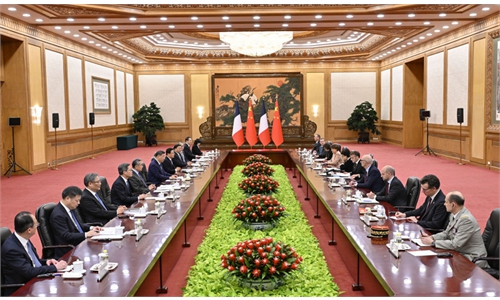
At a crucial juncture where global challenges and opportunities coexist, holding the visit in a bilateral format reflects France's commitment to independent diplomacy and advances the China-France relationship, injecting certainty into an international landscape marked by uncertainty.
In the 17th article of the "Translators' Voices" column, GT interviewed Ao Manyun, Swahili-language translator of Volume I of Xi Jinping: The Governance of China and director of the Tanzania Research Center at the Communication University of China.
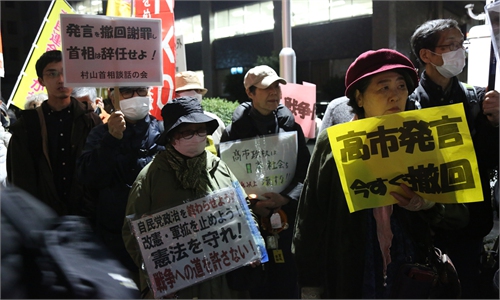
Japanese Prime Minister Sanae Takaichi absolutely should apologize for her remarks. We are demanding a retraction of her remarks, says a Japanese peace activist.
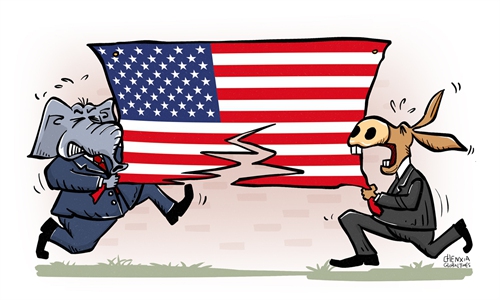
When we look at American politics, it's roughly a puppet show. It's a lot of political theater. And you have to, at some point, start asking the question: Are there conversations happening behind closed doors with individuals that the American public doesn't even get to see, who are writing the scripts that the puppets end up acting out? says a US scholar.
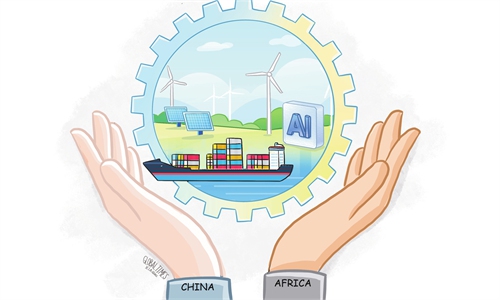
South Africa and China can deepen collaboration in critical minerals, renewable energy and advanced manufacturing. By leveraging China's investment capacity with South Africa's regional leadership, we can accelerate industrialization across the continent. Under the G20 framework, this synergy will become a catalyst for Africa's integration into global value chains, says B20 South Africa Sherpa.
The 30th Conference of the Parties (COP30) to the United Nations Framework Convention on Climate Change is being held in Belém, Brazil, where government officials, business delegates and experts from around the world have gathered to discuss priority actions to address climate change. Global Times (GT) reporter Qian Jiayin interviewed Nick Mabey (Mabey), CEO & Co-Founder of the independent climate think tank E3G, who said that Europe and China can cooperate more closely to better support global climate action.
China acts as both a domestic transition powerhouse and a global enabler in climate action. China can help connect ambition with action, convert global frameworks into country-level delivery, and anchor the “COP of Implementation” in real-world deployment, says UN resident coordinator.
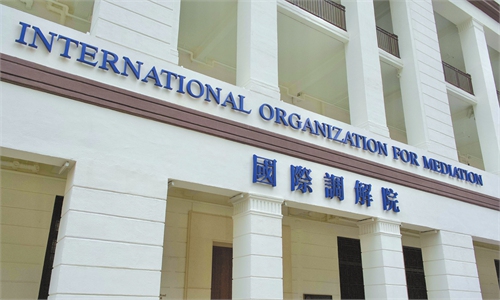
The IOMed is a fully independent and international organization, says Secretary-General Teresa Cheng
Sanae Takaichi's remarks need to be corrected as soon as possible. But if she firmly refuses to retract the relevant comments, that would be truly troubling – after all, when the prime minister thinks and speaks in this way, it is the citizens who suffer. The Japanese people never want this, yet such remarks have emerged, which is truly regrettable, says a Japanese scholar
Today, as we speak of building a “Marco Polo of the new era,” this legacy should guide our approach to global engagement. New-era “Marco Polos” should navigate between cultures. Encouraging such ex-changes means creating open platforms for joint research, educational partnerships and artistic col-laboration. When people experience each other's societies firsthand, stereotypes give way to under-standing, and mutual trust takes root.
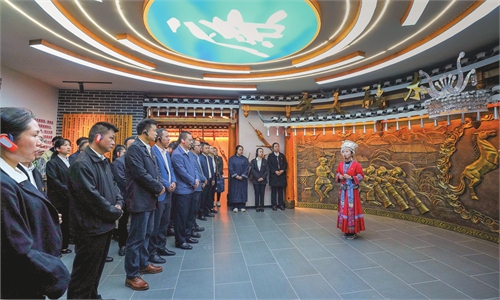
What I actually saw in Xizang was a region of tangible development – modern infrastructure blending with preserved cultural traditions and clear improvements in local livelihoods. This stands in stark contrast to the distorted picture painted by some Western outlets, says former UK MP.
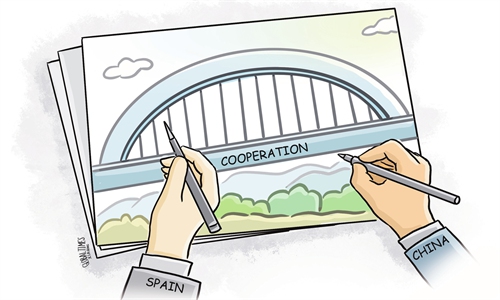
The state visit by Spanish King Felipe VI to the People's Republic of China from Monday to Thursday marks a significant milestone in the trajectory of China-Spain relations.
What can we expect from the GGI? Erik Solheim (Solheim), former under-secretary-general of the UN and former executive director of the UN Environment Programme, shared his views with Global Times (GT) reporter Li Aixin in an exclusive interview.
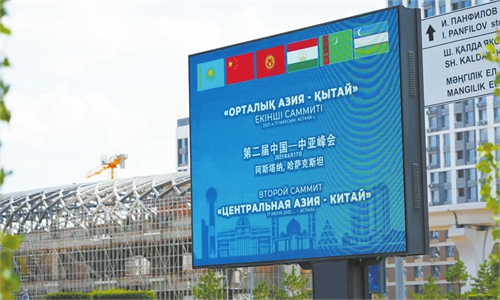
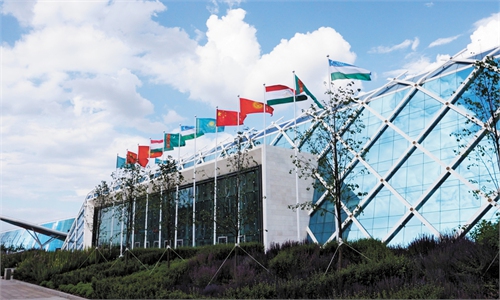
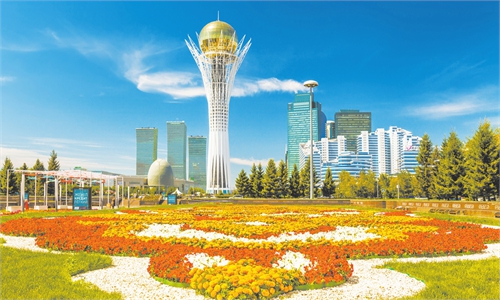
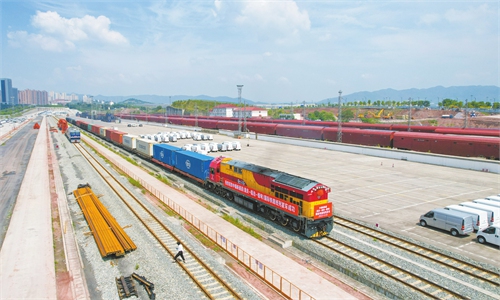
Global Times reporter Chen Qingqing interviewed Rahim R. Hakimov, deputy speaker of the Legislative Chamber of the Oliy Majlis of Uzbekistan and Serik Orazgaliyev, an associate professor at the Graduate School of Public Policy at Nazarbayev University - to talk about the current stage of China-Central Asia cooperation, future development focuses and their views on the recently China-proposed Global Governance Initiative.
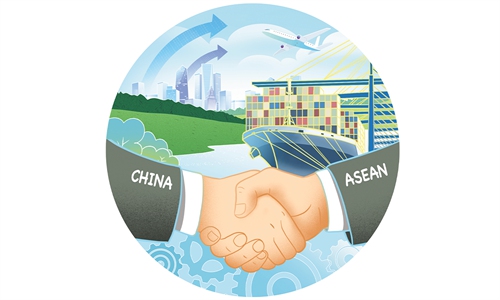
By intertwining their digital futures and green ambitions, China and ASEAN are not only advancing mutual prosperity but also offering the Global South an inspiring model of pragmatic cooperation, inclusive growth and shared destiny.
Global Times (GT) reporter Zhang Ao interviewed John W.H. Denton AO (Denton), secretary general of the International Chamber of Commerce (ICC) who participated in this year's APEC meetings, about the outcome of the gathering as well as China's role in advancing regional economy.
In an interview with the Global Times (GT), Kim Heung-kyu (Kim), director of the US-China Policy Institute at Ajou University, shared his insights on the future direction of China-South Korea relations.
In an interview with Global Times (GT) reporters Xing Xiaojing and Wang Wenwen, Jaemin Lee (Lee), a professor from the School of Law, Seoul National University, said that the unique strength of the APEC lies in these diplomatic events and gatherings where members' leaders and businesspeople can get together to candidly discuss various topics of practical importance.
In an era marked by challenges in global climate governance, the concept of a "Beautiful China" exemplifies both political resolve and institutional innovation. Its global relevance lies not in functioning as a prescriptive model, but in demonstrating that sustainability can be institutionalized as a principle of statecraft.
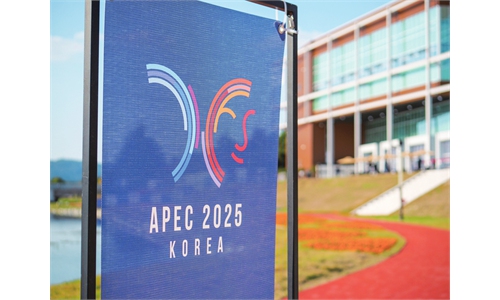
The APEC Economic Leaders' Meeting will be held this week in Gyeongju, South Korea. All 21 economies will come together to discuss pathways to the Asia-Pacific region's shared prosperity.

From Turkey's perspective, rather than fostering ties with those who spread fabricated Western narratives that harm bilateral relations, it is far more valuable to strengthen trade with partners who come to know and see China for themselves: president of the Turkish Chinese Friendship Foundation
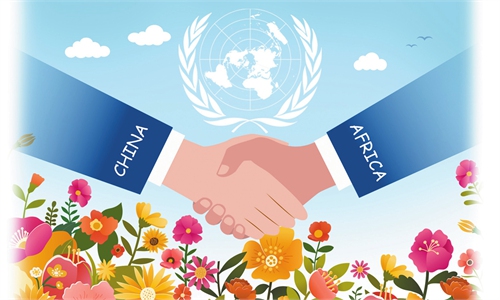
We have seen how the spirit of anti-colonial solidarity that once defined China-Africa relations continues to shape the trajectory of today's multipolar world. We have witnessed the way the Forum on China-Africa Cooperation now operates as a form of multilateralism, reinforcing the work of the UN through its practical implementation capacity and inclusive, participatory character.
On her I-Talk show, Global Times (GT) reporter Wang Wenwen spoke with David Adler (Adler), co-general coordinator of Progressive International, who recently participated in the Gaza-bound Global Sumud Flotilla. He spent five days in Israel's desert prison – one of more than 500 activists sailing to Gaza who were detained by Israeli forces.
From the 14th Five-Year Plan to the upcoming 15th Five-Year Plan, China has demonstrated remarkable strategic resolve and policy continuity. The unique strategy of "leveraging local conditions to develop new quality productive forces" has pioneered a pragmatic approach, maximizing endogenous driving forces, deeply integrating cutting-edge science and technology with local characteristics, and forming a solid and sustainable growth engine.
The general guidelines of the eight-point decision hold universal relevance, as they could help address sensitive challenges faced by political parties worldwide, says Brazilian scholar Marcos Cordeiro Pires.
China is being more faithful to the actual rules of the system than those who created them, which makes every Western violation of its own standards stand out in sharp relief.
Action-oriented support embodies this philosophy, which is why China's approach is seen as more reliable and effective.
China pursues an independent and peaceful foreign policy, along with a defensive national defense policy.
Multilateralism is based on the idea that there are no superior or inferior peoples. Therefore, all countries can make positive contributions to the world´s future. I see the GGI as a laudable attempt by China to empower countries of the Global South in the process of reforming global governance.
What is needed is a program of education to raise awareness of China's contribution and to convey the scale of the war, which lasted a long time during WWII.
The GGI's core vision is to adapt global rules and institutions to the 21st century, where developing countries have a more important role in global affairs.
From the demand side, the world needs a stable, reasonable, and just global governance system. From the supply side, we now have the GGI.
China's confidence and determination to propose the Global Governance Initiative are rooted in its historical experience, cultural heritage, development achievements and systematic advantages. The GGI is expected to enhance global peace, stability, security and development while promoting fairness, equality and cooperation in international relations.
Sovereign equality remains scarce due to power asymmetries and historical inequities in international institutions.
Forgetting the history of war and the immense human suffering it caused increases the risk of a country drifting once again toward armed conflict.
We consider China a huge opportunity – a huge opportunity for cooperation. I think Europe can benefit a lot from working together with China, says Hungarian FM
It is highly symbolic that this initiative was voiced precisely during the SCO meetings, a unique platform where countries with diverse political systems and civilizational trajectories meet at the same table.
As the GGI is gaining traction with more countries coming on-board, it is envisaged that the privileged minority which has been holding sway in global matters for far too long will gradually have its clout eroded, thus paving way for the potential emergence of a more egalitarian order.
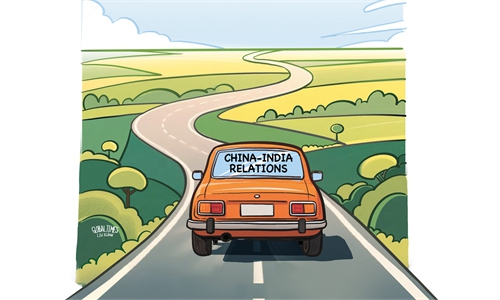
A strong and healthy relationship between China and India is critical for stability and prosperity in Asia. Only their cooperation can truly make it an “Asian Century”.
India and China's collective role in promoting the common denominator of growth should drive their engagement in the Global South.
From the perspectives of infrastructure, education, ecology, livelihoods and religion, five scholars offer their vivid firsthand insights in Xizang Autonomous Region that help the world better understand China's governance approach in the region and discover the story of Xizang in the new era.
India should, and is, perfectly able to play an important role in the SCO. In the current international situation, it would be beneficial to India: Russian scholar
US climate scientists who believe that climate change is a major problem are very distressed by what's happening in the US, a US climate change law professor told @WenwenWang1127 in her #ITalk show. "The US is not a reliable negotiating partner, and certainly doesn't want to act on climate change."
One of the most distinctive obstacles to historical reconciliation in East Asia is the phenomenon of victimhood nationalism in Japan. The “the only country to have suffered from atomic bombings during war” narrative, for instance, operated as a screen memory to obscure the Japanese war atrocities toward neighboring Asians: South Korean scholar
China is developing at a remarkable pace, and I was astonished to learn how Xinjiang has changed during the past two decades: British travel agency head
China's three global initiatives absolutely correspond to that approach, and especially the GCI; opening a true dialogue of civilizations can awaken the minds and hearts of people to arrive at a new epoch in the history of mankind, where we become truly human.
The residents of Taiwan island long for peace and will do everything possible to prevent war.
China is taking the lead in demonstrating how much stronger we are when we work together.
The US and other countries can learn from the technical advances made in China in the development of green energy production.
In the 10th article of the "Translators' Voices" column, Global Times (GT) reporter Wang Wenwen interviewed Dr. Khosraw Ubaidy (Ubaidy), who was a member of the editorial committee of translators of the Dari edition of the book series Xi Jinping: The Governance of China.
It's really just a matter of how well our political processes are set up to get this kind of infrastructure built as quickly and efficiently as possible for taxpayers and residents of the state.
In China, I saw a city designed around the needs of its citizens – technically advanced, intelligently structured – and that kind of urban planning could genuinely enrich the often piecemeal, incoherent and not particularly citizen-friendly city planning we see in Europe.
The reason I decided to make the film about the Dalfram dispute was to produce something for peace, and my main goal was to tell this story so that nothing like this would ever happen again. I think we need to take a lesson from that. We need to really understand how to make peace between countries, says an Australian filmmaker
The Global Times talked to Ulrike Guérot, a Berlin-based German political thinker, about the recently concluded China-EU Summit and her vision for the future of this bilateral relationship.
What struck me most was the novelty of everything – the feeling that you're in a part of the world still growing rapidly. It felt incredibly enterprising, full of people eager to try new things, develop products, build infrastructure and innovate intellectually, said a British scholar who traveled through China for a month. #JourneyThroughChina
I think we are moving toward a more normal relationship - toward normalization.
China and Australia have a very good cooperative economic relationship, which is the foundation of much of our prosperity, and it's something to which we are deeply committed.
In the seventh article of the "Scholars' Perspectives" column, Global Times talked to Evandro Menezes de Carvalho (Carvalho), professor of international law at the Federal Fluminense University, Brazil.
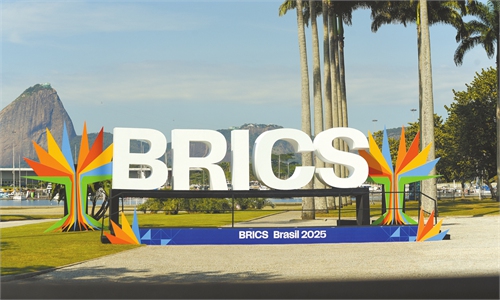
BRICS is not “against” anything; it is “for”: for the development, for a fairer world order, and a larger role for the Global South. It concentrates on specific development problems, which makes BRICS very attractive to other developing countries, says Igor Makarov, an expert of the BRICS Expert Council-Russia.
Since the founding of the People's Republic of #China in 1949, the country has made historic strides in development. What amazes me about the CPC's leadership is its ability to combine long-term development goals with pragmatic choices, learning from many countries and adapting these ideas to China's reality. This blend of strategic vision and practical wisdom constitutes the core strength of the CPC's leadership and a key driver of China's rapid progress.
By 2049, on the centenary of the founding of the People's Republic of China, we will see China as an advanced socialist nation. People will be there to enjoy a society that is democratic, civilized, harmonious, strong and modern.
In a world rife with geopolitical turbulence and cyclical politics, the CPC operates as China's anchor institution. The institutional strength of the CPC gives domestic and international stakeholders a rare commodity today: predictability.
Under pressure on both economic and security fronts, Japan and South Korea are demonstrating increased strategic independence. Deepening cooperation with China offers them a way to expand diplomatic options, safeguard economic interests, and hedge against the risk from the US.
Our principle is clear: All violations of the law will be investigated, and justice will be served — no matter how far the offenders have fled
Currently, the White House is filled with aggressive trade strategists, and it appears preoccupied with the trade deficit as though the US were a business, needing to make a dollar-profit on its international trade.
South Korea and China, the central core countries of the global society, need to work closely together to maintain the banner of free trade and fair competition, which are essential for the sustainable shared prosperity of the global community.
Rattling sabers never help peace efforts - they only raise geopolitical tensions.
China's planning has become more flexible, and, to a considerable degree, it is indicative rather than prescriptive.
The Europeans were caught unprepared by this sudden shift in American grand strategy. They have so far not yet been able to develop a coherent and credible strategic posture to deal with these new realities.
I've lived 28 years in the US and over 30 years in China. I love the people of both countries. And because I understand both, I can say with certainty: Pragmatic, unemotional cooperation is in the best interest of both sides going forward.
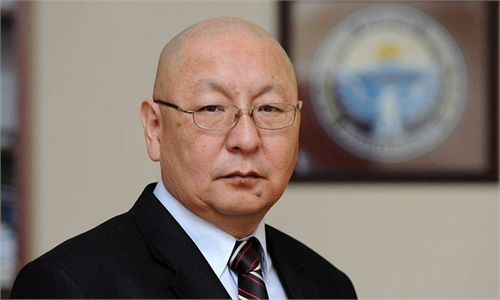
The China-Central Asia Summit is a new mechanism of partnerships that refers to innovative approaches to collaboration between countries, moving beyond traditional models. This new mechanism emphasizes shared goals, clear roles and mutual benefits, fostering more dynamic and effective collaborations between China and Central Asian countries: Kyrgyz scholar
If I were asked here in the US what we can learn from China, I would explain to people that we need a government with a budget organized to use that budget to do the things we need but no one is doing because they aren't privately profitable: US economist Richard Wolff
Ultimately, the China-Central Asia relationship is about co-creation, not domination, and should be evaluated on its tangible outcomes, not on external narratives: Kazakh scholar
Russian and Chinese scholars should work together to correct the historiography of WWII, which will help us fight attempts to falsify this war: Russian scholar
China and Central Asia are united by pragmatism, a desire for stability and a common rejection of a world divided into “blocs and fronts.” In the face of global turbulence, they are not betting on a struggle for dominance, but on mutual development and autonomous policies.
“Following a good blueprint” involves taking a strategic and integrated approach to achieve consistent and cumulative results at each stage of the work.
China's diplomatic approach – grounded in mutual respect, peaceful cooperation and long-term partnership – aligns well with the values and aspirations of Central Asian countries. China's steady and consistent engagement is a reassuring and constructive force in the region, says Turkmen scholar
No matter how the times may change, it's expected that Myanmar and China will remain “Paukphaw” committed to closer cooperation across various fields based on mutual trust and understanding, said a Myanmar scholar on the 75th anniversary of the establishment of diplomatic relations between China and Myanmar.
There has been an incredible level of volatility and unpredictability, and frankly, inconsistency in US policy, particularly US trade policy. It's absolutely erratic. It's chaotic: US expert David Firestein
I think a lot of people would lose their jobs if we are going against the globalized economy, said Ramon van Meer, a small business owner in the US
I'm not arguing from China's position, I'm arguing from a sovereign Australian position – who wants our country to be safe, secure and prosperous, and that requires having good relations with all of our neighbors, especially our biggest neighbor and best trading partner, China.
America must accept that it's not the No.1 country in the world – that it's just one among several large and powerful countries, including China. It needs the courage not just to accept a rising China, but to gradually shed the role of world policeman – because it can no longer manage that task, says a US scholar.
Today, Russia and China together continue to uphold values that are important for all humanity, and maintain that global security can only be achieved through fair principles of global governance.
"I visit China very often these days. What I can see is a dynamism there."
The media campaign against Xinjiang is part of the Global North's plan to try to weaken China.
Greater alignment with China is fundamental to Brazil's destiny.
If I were a parent today, I would prefer my child to study in China. Students overseas often face various forms of discrimination, and the academic and professional environments abroad are not as promising as they once were, said renowned mathematician Shing-Tung Yau.
We need to establish new forms of relations between nations. Russia and China demonstrated an impressive ability to adjust their relationship to the ever-changing international environment, and are making this relationship work ever better with changes.
China and Russia, through their cooperation in AI, can set a great example and contribute to the emancipation of the Global South in the realms of science, culture and education, says Russian expert.
It is symbolic that the leaders of China and Russia will meet during the 80th anniversary celebrations of the victory in World War II. In doing so, they not only honor history but also reaffirm their commitment to preserving an order that prevents the tragedies of the 20th century from being repeated.
“Practice is the sole criterion for testing truth.” It would be helpful to support all forms of promotion by encouraging people living abroad – Westerners as well as overseas Chinese – to visit Xinjiang so they can return with stories to tell and their “eyes full of light.”
The principle of amity, sincerity, mutual benefit and inclusiveness entailed in China's neighborhood diplomacy stands out as a breath of fresh air against the global backdrop of pervasive Western geopolitical diplomacy which is largely interest-driven in the zero-sum perspective, said former Malaysian minister of transport.
The principle of amity, sincerity, mutual benefit and inclusiveness reflects China's foreign policy and is very acceptable to countries of SE Asia, because we want to live at peace between ourselves, says former Malaysian PM Mahathir
China offers Global South countries a space to engage on equal footing, free from historical power imbalances. That is essential for building trust, fostering innovation and shaping a truly inclusive international order, said Hodan Osman Abdi, the Somali Ambassador to China.
The Cambodia-China relationship is a cornerstone of China's neighborhood diplomacy, promoting harmony, development and shared prosperity. Our partnership exemplifies how mutual respect, non-interference and win-win cooperation can lead to enduring peace and regional stability
The China-Malaysia relationship is an example of how countries should handle occasional challenges facing their relationship with neighboring countries.
The ability and willingness of China and Malaysia to set aside differences for the sake of the greater common good demonstrate how trust and win-win cooperation can overcome geopolitical complexities and enhance regional resilience: Malaysian scholar
Vietnam is implementing this theoretical perspective relatively clearly and specifically: Vietnam does not choose sides; Vietnam only chooses justice.