
The growth of organic rice farming in Meihekou, Northeast China's Jilin Province, offers a useful insight into the shifting dynamics of China's consumer market.
By Hu Weijia | 2026/4/9 22:23:21

Christmas may still be months away, but the Christmas goods section of the Yiwu International Trade Market in East China's Zhejiang Province is already buzzing with activity. According to Yiwu Fabu, vendors report that international buyers have been arriving at least a month earlier than usual. "The change is noticeable," remarked the manager of a factory producing Christmas apparel and gifts in Yiwu.
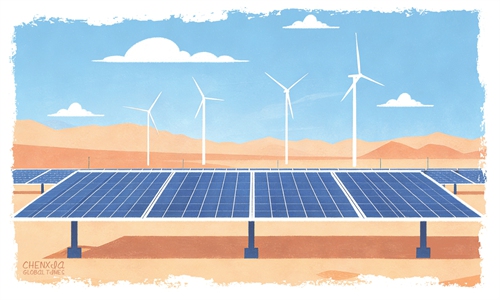
With its extensive wind and solar potential, Northwest China's Xinjiang Uygur Autonomous Region offers a valuable perspective on the development of China's renewable energy sector, providing insight into the broader shifts driving the country's transition to a more sustainable energy future.

During this year's Qingming Festival holidays, some lesser-known spring vegetables began appearing in urban markets, facilitated by advances in cold-chain logistics and preservation technologies. One such example is haicaihua, a plant currently in its peak growing season in Eryuan, Southwest China's Yunnan Province.

As the Qingming Festival approaches, the spring tea harvest is in full swing. In Anji, East China's Zhejiang Province, the hills of tea plantations are blanketed in vibrant green. By early morning, tea factories are already abuzz with activity. According to tidenews.com.cn, freshly processed tea leaves are swiftly packaged, with postal vehicles stationed outside the factories. Within a single day, the spring tea is dispatched to 62 cities, underscoring the efficiency of the supply chain.

As inbound tourism expands from first-tier cities to smaller cities, this represents not just a geographic spread of the tourism market, but also a deepening of foreign visitors' desire to understand China - shifting from checking off visits to landmarks to seeking cultural experiences.

At the 2026 Zhongguancun Forum (ZGC Forum), held from Wednesday to Sunday in Beijing, embodied intelligence once again took the spotlight among other advanced technologies. Beyond eye-catching scenarios of robots in action - from preparing desserts to threading needles - the improved coordination and finesse of the upgraded robots signal a promising shift toward real-world deployment and faster integration into everyday life.

At China's data “factories,” robots learning to wash fruit may seem mundane, but they highlight a larger shift – AI's rapid, inclusive growth is transforming industries and empowering small businesses to innovate. A new era of cost-effective technology is emerging.

As temperatures rise and farming activity intensifies, a drone equipped with the BeiDou navigation system was recently deployed on a farm in Hai'an, East China's Jiangsu Province, to spray pesticides. While this might seem like a minor scene amid the busy spring plowing season, it highlights a much broader trend: the growing accessibility of advanced technology in agriculture in China.

The "spring economy" in China is blooming, with small scenes such as colorful tents and picnic mats reflecting a larger shift in consumer behavior. These everyday moments offer insight into whether China's consumption will plateau or experience vibrant growth.
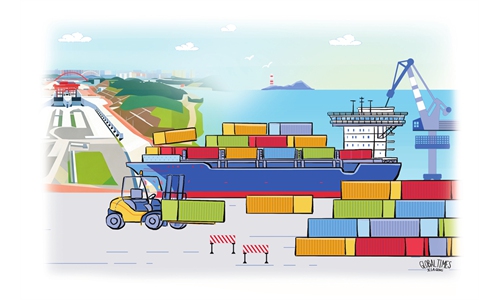
The Pinglu Canal, a flagship project of the New International Land-Sea Trade Corridor and a major river-sea intermodal transport water route in Southwest China, entered the equipment commissioning stage on Wednesday, marking another major step toward full operation, CCTV News reported.

In the remote mountains of Pingwu County, Southwest China's Sichuan Province, at an elevation of 1,500 meters, freshly harvested wild vegetables no longer need to be carried down on foot by villagers. According to CCTV.com, drones now transport the produce from the mountain to the roadside in mere two minutes. The sight of unpretentious wild greens being delivered alongside cutting-edge drone technology - or, more broadly, the juxtaposition of traditional agriculture and modern logistics - offers an insightful snapshot of China's rapidly evolving supply chain and consumer market.

Hauts-de-France, situated in northern France, has long been an important hub for vehicle manufacturing. While the decline of some traditional industries has presented challenges to this French industrial heartland, the rise of new sectors is now offering fresh avenues for growth. Among the most promising is the electric vehicle (EV) industry, which is steadily taking shape. According to CCTV News, investments from some Chinese companies are bringing new development opportunities to this traditional industrial region.
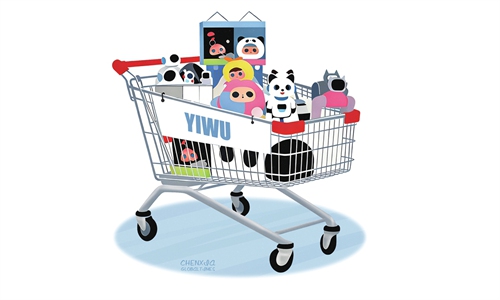
AI is steadily making its way into Yiwu's small commodity market, transforming a range of products, from toys and wearables to household appliances. In recent years, many traditional goods have seen a wave of smart upgrades, reflecting a larger shift in consumer expectations. Plush toys, once driven mainly by price, are now integrating voice recognition and emotion-sensing AI.

In a supermarket in Rizhao, East China's Shandong Province, xiangchun, a seasonal spring vegetable, is selling for 15.9 yuan ($2.3) per jin (500 grams) - a price reportedly lower than in previous years. This more affordable offering has drawn the attention of locals. But it's not just xiangchun; the variety of spring vegetables now available on store shelves reflects broader shifts in China's market.

At an intelligent factory in Gu'an, North China's Hebei Province, a new "artificial intelligence (AI) analyzer for defective grains" - is using high-definition industrial cameras to capture multi-angle images of each corn kernel, while AI algorithms trained on billions of images assess grain quality in under a minute.

China's medical device sector, particularly in high-tech segments, is integrating into global supply chains at an accelerating pace. Several trends illustrate how Chinese manufacturers are positioning themselves internationally.
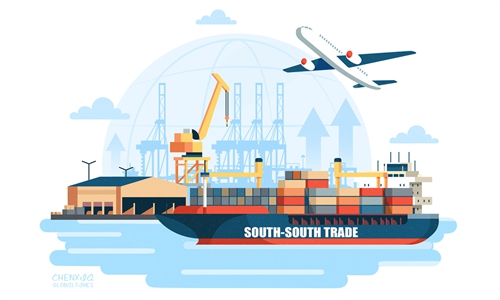
On a Saturday morning in early March, trucks streamed through the gates of the Yiwu Bonded Logistics Center. According to a report released by Yiwu Fabu, the city's official social media account, on Sunday, the center reached a new milestone days earlier when the value of goods entering the zone exceeded 300 million yuan ($43.5 million) in a single day for the first time.

While Western media outlets sometimes depict #China's economy in an overly pessimistic light, rural markets, digital commerce, and emerging consumption patterns tell a different story. Livestreams running on a single internet connection offer a small but telling window into the country's growing consumption-driven momentum.

While Western media coverage often misinterprets China's consumption trends, the real shift is happening at home. Recent interprovincial trade data shows that China is advancing the construction of a more unified national market, with logistics upgrades and digitalization creating tangible opportunities for international suppliers.

In Taicang, a small Chinese city, one German spring manufacturer illustrates a wider trend: beyond debates over trade surpluses or deficits, multinational firms are increasingly responding to the evolving opportunities of China's market – concrete opportunities that extend well beyond the lens of trade balances.
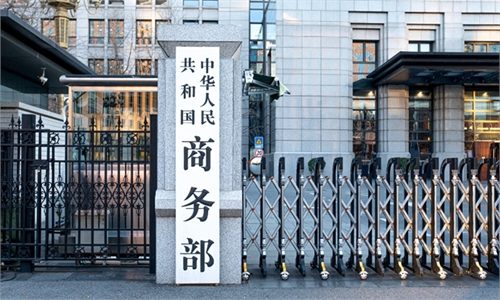
Following the implementation of export controls on dual-use items bound for Japan in January, China's Ministry of Commerce issued an announcement on Tuesday, adding another 20 entities involved in boosting Japan's military capabilities, including Mitsubishi Shipbuilding Co, to its export control list. Another 20 Japanese entities, such as SUBARU Corporation, have been placed on a watch list, as the end users and end uses of dual-use items supplied to them cannot be verified. This operation is targeted, decisive, legitimate and timely, and warrants close attention.

China's new-energy vehicle (NEV) market continues to expand at an impressive scale. Domestic sales reached 13.88 million units in 2025, up 19.8 percent year-on-year, according to the China Association of Automobile Manufacturers. The double-digit growth highlights the sector's scale and scope, as well as its resilience, reinforcing the view that demand remains far from saturation.

Europe's well-established industrial base could give it a practical edge in AI, particularly in applied fields where China and Europe have ample opportunities to collaborate. Yet integrating traditional industries with new technologies still requires further exploration, suggesting the value of incremental approaches.

A recent assessment by South Korea's Ministry of Science and ICT has prompted heated discussion online. The Yonhap News Agency reported that a review of 11 priority sectors and 136 core scientific technologies found that the technological gap between South Korea and China had widened between 2022 and 2024.
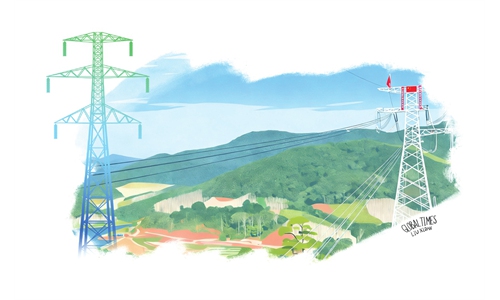
The Chinese and Lao sections of the China-Laos 500-kilovolt power interconnection project were physically connected in recent days, a step that the People's Daily reported on Thursday would pave the way for synchronized operation of the two sections in April. The cross-border power interconnection, which the newspaper likened to an "electricity expressway," could deliver reciprocal benefits as the two systems prepare to run in tandem.
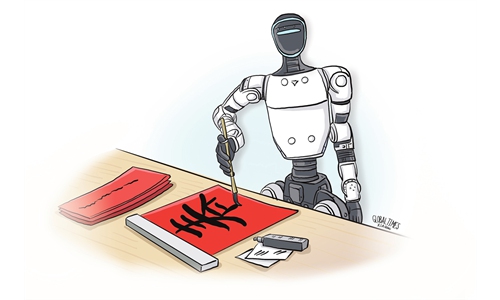
This Spring Festival, humanoid robots writing festive couplets hint at a bigger story – Chinese consumers are shaping demand for intelligent service technologies, revealing the early contours of a vast and open robotics market.

Strawberries shipped from rural China to Dubai in 48 hours tell a small but revealing story – one that begins with a livestream. The larger point lies in how the digital economy is widening access to global commerce.

As China's silver economy emerges as a new blue-ocean market amid the broader trend of national consumption upgrading, one niche segment - elderly-friendly toys - is drawing increasing attention from the market. Following senior education and tourism, another consumption trend related to the elderly population is on the rise.
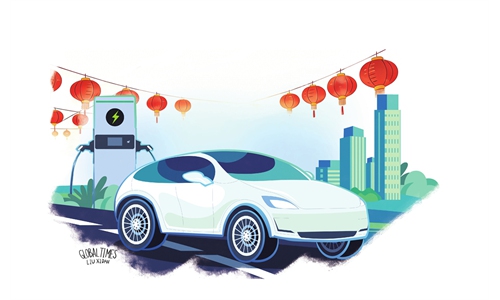
China's annual Spring Festival travel rush has long served as a stress test for the country's transport system. This year, private car travel is again expected to account for the majority of the journeys. According to the Ministry of Transport's preliminary analysis and assessment, trips made by new-energy vehicles (NEVs) are projected to reach a record 380 million during the period.

As the Spring Festival approaches, robot vacuum cleaners can be found on the shopping lists of some Chinese households. Pre-holiday deep cleaning has long been part of family life, but in some cases the task is now shared with machines rather than carried out entirely by hand. The change is easy to miss and difficult to quantify. Yet it points to a broader reorganization of how everyday household tasks are managed, as incremental advances in consumer technology enable machines to take on tasks previously done by hand, helping to create a market centered on automated convenience.

Tech New Year trend of #Huaqiangbei, dubbed as “No.1 Electronic Commercial Street in China,” offers vivid snapshot of #China's ongoing consumption upgrade and rapid iteration of electronics innovation chain, steadily strengthening country's appeal to overseas consumers and global market participants.

Railway infrastructure frequently features in the discussions of international connectivity and development, in part because it sits at the intersection of engineering, logistics, and long-term investment.
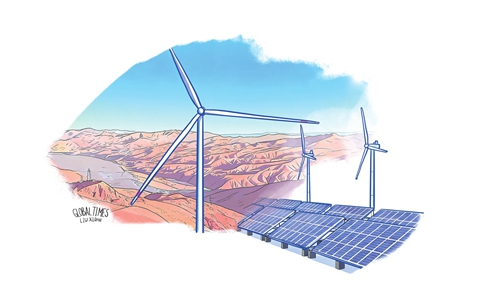
A wind power project in Akqi county, Northwest China's Xinjiang Uygur Autonomous Region, has successfully connected its first batch of turbines to the grid, CCTV News reported on Monday. This milestone is part of Xinjiang's broader efforts to expand its renewable energy capacity. Situated at an elevation of 3,700 meters, the project is reportedly the highest operational wind farm in China's northwest. The project reflects China's growing capability to deploy renewable energy infrastructure in challenging environments, while also contributing to the region's economic development.

The maturation of the rural markets presents greater opportunities for both domestic and international companies. As rural consumers become increasingly connected and their spending patterns evolve, businesses able to adapt to local conditions and new avenues for growth are to be developed, reflecting a broadening and increasingly sophisticated landscape for China's domestic consumption.
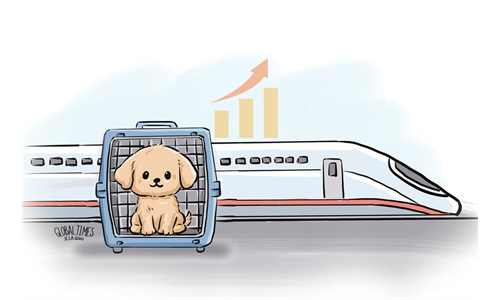
Pet travel surging during Spring Festival is more than a niche trend. It reflects China's shift toward diverse, sophisticated, and emotionally driven consumption – pushing service upgrades and opening space for innovation and foreign brands.

Data released on Wednesday by the China Federation of Logistics & Purchasing (CFLP) indicates that China's cold-chain logistics sector continued to expand in 2025, supported by the steady release of consumer demand, according to CCTV News. Both market scale and infrastructure capacity increased last year.

On Tuesday, the first shipments of import and export goods utilizing the new customs supervision model for sea-rail and water-water multimodal transport underwent customs procedures at ports and logistics hubs in Shanghai, East China's Jiangsu Province, and other regions, according to the General Administration of Customs (GAC).

In China, the Spring Festival is traditionally associated with the custom of wearing new clothes. As the holiday approaches, some consumers again start to refresh their wardrobes, with attention this year drawn to a detail often overlooked: buttons.

With winter in full swing, small heating appliances are emerging as a new highlight of the overseas expansion of Chinese products. From January to November 2025, exports of electric heaters and heated blankets reached 106.15 million units, up 6.18 percent year-on-year, performing strongly across Europe, Japan, South Korea, and Central Asia, according to the People's Daily on Thursday.

A small Ethiopian village's QR-coded livestock reveal a larger trend – digital technologies are transforming how goods are tracked, traded, and valued across global supply chains, opening new economic opportunities for developing countries.

Total trade of Yiwu, the world's largest small-commodity wholesale market, crossed the 800 billion yuan ($115 billion) mark for the first time last year, up 25.1 percent from a year earlier, despite mounting uncertainty, from uneven demand to ongoing supply-chain adjustments. That the city still recorded double-digit growth warrants attention, though not as evidence of exceptionalism. Rather, it invites a closer look at how a trade-oriented city has been navigating a more fragmented and risk-aware global trading environment, and what this suggests about the evolving mechanics of cross-border commerce.

From pea tendrils to Yunnan coffee, China's expanding freight network is unlocking new economic opportunities. As the "corridor economy" evolves, it's enhancing supply chains and opening fresh markets, driving innovation and cross-border trade.

China's electric vehicle (EV) sector boom is creating more growth points within the industry ecosystem, bringing fresh economic opportunities to regions traditionally constrained by harsh climates.

The number of foreign trade entities in South China's Hainan Free Trade Port (FTP) has surpassed 100,000, with 4,709 new registrations recorded between December 18, 2025, and January 10, 2026, following the launch of island-wide special customs operations on December 18, the Xinhua News Agency reported. The reform, which eases entry for overseas goods, expands zero-tariff coverage, and introduces business-friendly facilitation measures, has spurred a rapid market response.
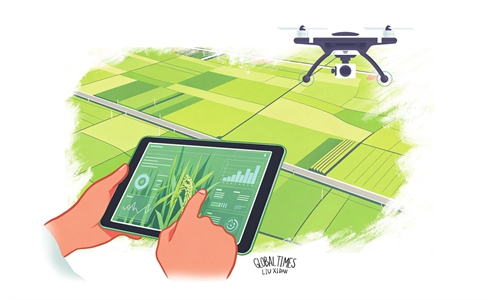
Nanjing Agricultural University recently released Sinong, an open-source large-language model developed for agricultural use. The launch points to a broader trend: advanced digital tools are gradually moving beyond laboratories and entering agriculture, a sector long regarded as technologically conservative.

In 2025, the SCO (Lianyungang) International Logistics Park handled 84.36 million tons of cargo, up 13.52 percent year-on-year, CCTV News reported. Even amid heightened uncertainty in global trade, certain Chinese logistics hubs have remained consistently active. Beyond cargo volumes alone, this activity points to the pragmatic, demand-driven connections between China and other Shanghai Cooperation Organization (SCO) economies, suggesting resilience in regional trade networks despite broader uncertainty.

A freight train loaded with small commodities recently departed the customs-supervised zone of the Yiwu (Suxi) International Hub Port, local business media outlets reported. The departure brought cumulative throughput at the hub past 100,000 standard containers. At first glance, the figure is unremarkable. Yet as a concrete data point from China's small-commodities trading center, it offers a useful lens for understanding how the country's foreign trade is evolving at the operational level - where logistics decisions increasingly influence trade performance.
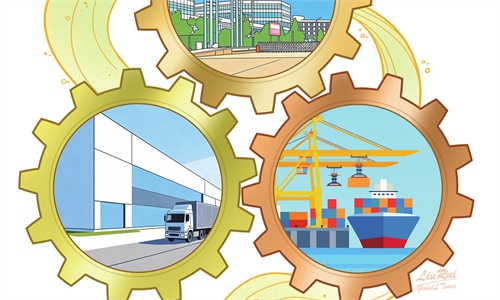
Despite lingering uncertainty across global manufacturing, recent indicators suggest an improvement in Africa's industrial momentum. Data released by the China Federation of Logistics & Purchasing (CFLP) shows that Africa's manufacturing purchasing managers' index (PMI) rose above 50 in December, returning to expansion territory. At a time when global supply chains remain under strain and demand conditions are uneven, this suggests that Africa's manufacturing sector retains room for development, with opportunities emerging even amid broader uncertainty.

As of the end of 2025, China's total flying population - people who have taken at least one flight - exceeded 500 million, making it the world's largest, according to Song Zhiyong, administrator of the Civil Aviation Administration of China, as cited by the Xinhua News Agency. The relevance of this milestone extends beyond scale alone. In a country where an extensive high-speed rail network already serves medium- and long-distance travel demand, the continued expansion of air travel offers a revealing window into the evolving dynamics and layered demand of China's vast domestic market.

Recently, 19.5 tons of fresh coconuts from Haikou, South China's Hainan Province, were transported via Alashankou port to Belarus, marking the first time fresh Hainan coconuts entered the Belarusian market, according to CCTV News on Monday. Although the shipment might appear to be relatively small, it offers a valuable glimpse into the steady expansion of trade between China and other economies participating in the Belt and Road Initiative (BRI). This growth paints a contrasting picture amid the broader volatility in global trade observed in 2025.

As 2026 begins, artificial intelligence (AI) is becoming more visible to the public in increasingly concrete ways. Once largely confined to laboratories, data centers, and specialized industrial settings, AI is now steadily extending into everyday work, consumer activity, and household life. This shift is expected to become more pronounced in 2026, as AI-enabled products move gradually from showcase demonstrations to routine, practical use.

As the New Year holiday approaches, China's festive flower markets are beginning to show signs of renewed activity. CCTV.com reported on Tuesday that in Zhouning county, East China's Fujian Province, orders for locally grown specialty flowers have risen. A manager at a local flower-growing base was quoted as saying that orders are being placed from across China, as well as from overseas markets including Malaysia, Singapore and Vietnam. The story is small in scale and seasonal, but it offers a revealing glimpse into how parts of China's consumer economy are adjusting as the new year draws nearer.

From a distance, changes in China's imports can be easy to overlook. Up close, in specific places and practices, the pattern comes into sharper focus. In 2025, a series of seemingly unrelated scenes - from Horgos on the border with Kazakhstan, to emerging trading models in Yiwu, and even tomato cultivation in Huaibei - together suggested how China's import landscape is being quietly reshaped.

China's fast-growing goods economy and intellectual property (IP) industry, amid the nation's economic high-quality transition and consumption upgrade in recent years, have fostered the rise of domestic IPs with increasing value, and industry players are now focusing more on international markets and collaborations.

The transformation of a single bulldozer can sometimes speak more vividly about an economy's direction than volumes of macroeconomic statistics. The artificial intelligence (AI)-driven upgrading of bulldozers produced by China's Shantui Construction Machinery illustrates how advanced technologies are reshaping Chinese manufacturing, pushing it toward a model that is both more intelligent and more environmentally sustainable.

Hong Kong Exchanges and Clearing Ltd (HKEX) released the annual 2025 Year in Review on Monday. As of December 19, the stock exchange had hosted 106 IPOs that raised a total of HK$274.6 billion ($35.3 billion), with four companies ranking among the world's top 10 listings in 2025.

Rather than signaling an imbalance, China's overseas waste-to-energy engagement reflects the maturation of an industry now capable of contributing to shared green development. In this sense, cross-border waste incineration cooperation is forging a new green link between China and countries in Southeast Asia and beyond.
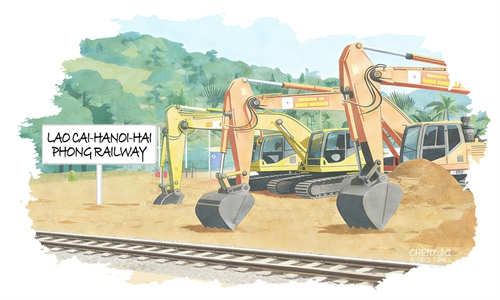
Amid uncertainties shrouding the global trade landscape, the joint efforts by China and Vietnam in advancing railway construction and cross-border interconnection send a strong signal of commitment to openness, cooperation, and mutual benefit.

Shenzhen, in South China's Guangdong Province, processed 56,000 departure tax refund transactions in the first 11 months of this year, a thirteen-fold year-on-year increase. Sales that were eligible for refunds rose 2.4 times, while "buy-and-refund-on-the-spot" sales skyrocketed nearly fortyfold. Incoming travelers from more than 160 countries and regions completed departure tax refund procedures in Shenzhen, local authorities reported on Thursday.

The faster growth of imports in various inland regions highlights a more balanced pattern of opening-up and demand expansion. The growing trend underscores how inland provinces that were not traditionally major foreign trade players are increasingly integrating into global supply chains as China advances high-level opening-up and industrial upgrading.

Ferdinand Dudenhöffer, director of the private Center Automotive Research (CAR) in Bochum, Germany, forecasts that Asian countries (China, South Korea, and Japan) will drive growth in global automotive production and sales in 2026, German media outlet Handelsblatt reported on Monday.

China's ice-and-snow economy is undergoing rapid development. What was once a sector driven largely by major sporting events is evolving into a sustainable industrial ecosystem underpinned by advanced manufacturing, technological innovation, and green development. This shift opens new growth space for global cooperation across the ice-and-snow value chain and provides a lens to observe China's broader transition toward high-quality economic development.

A report by the Workers' Daily on Sunday exposed an emerging shift in China's domestic consumption patterns: while many residents continue to flock to urban shopping centers, or seek warmer places during winter, an increasing number of the younger generations are opting for what has come to be known as "reverse tourism."

China Railway Construction Corp (CRCC) said on Wednesday that it has completed track-laying on the PK330 Bridge, Africa's longest heavy-haul railway bridge, marking a key milestone in Algeria's Western Mining Railway, a flagship project under the Belt and Road Initiative (BRI) that is expected to strengthen transport links and support regional economic development, the Xinhua News Agency reported.

Since the beginning of this year, the Hubin commercial area along the shores of West Lake in Hangzhou, East China's Zhejiang Province, has experienced a surge of "debut stores." This vibrant locale is harnessing its unique setting to stimulate renewed consumer engagement. For foreign brands looking to enter or expand their presence in China, Hubin's concentration of retail debuts offers a valuable lens through which to understand local market dynamics and consumer preferences.

The launch of the HKEX Tech 100 Index on Tuesday offers a timely lens through which to observe how Hong Kong's equity market is adapting to the steady evolution of regional market dynamics. Behind this development is the accelerating growth of technology-driven companies and their deepening engagement with capital markets - an interaction that is gradually exerting a more durable influence on how investors assess opportunities in the region.

Southwest China's Chongqing Municipality is exploring cross-border industrial parks with Southeast Asian economies, reflecting a trend in which inland regions are increasingly linked into cross-border supply chains, creating new opportunities for regional industrial cooperation.

The Chancay-Shanghai sea route has handled 5.35 billion yuan ($760 million) in imports and exports, with cargo throughput reaching 197,000 tons after one year of operation.

Yiwu, the export-driven city in East China's Zhejiang Province, is seeing a noteworthy rise in activity from a different direction: imports. On Wednesday, Yiwu customs cleared a shipment of bonded cross-border e-commerce goods that lifted the city's full-year e-commerce import order count past 100 million for the first time, according to Yiwu Fabu. For a hub best known for its outward trade, the scale of inbound orders is notable - and signals a trend that warrants closer attention.

In early December, fresh Chilean cherries crossed the Pacific and arrived in China. Behind these small red fruits lies a steadily improving import system that coordinates port operations, long-haul shipping, customs clearance, and domestic distribution. More than a seasonal shipment, their journey illustrates the growing scale and sophistication of China's import logistics sector and highlights the structural forces driving its ongoing development.

Amid external technology restrictions and internal economic restructuring, the strong momentum of China's "little giants" signals that Chinese industries are entering a new stage of technology-driven, systematic innovation with growing industrial resilience.

As World Wind Energy Conference 2025 is scheduled to convene on Wednesday in Shantou, a coastal city in South China's Guangdong Province, the event may offer a valuable vantage point for observing China's wind power industry at close range. Shantou provides a concrete example of how incremental advances in wind energy take shape on the ground, offering a clearer sense of the practical forces that guide the sector's development.

A study by the Massachusetts Institute of Technology and open-source artificial intelligence (AI) start-up Hugging Face found that the total share of downloads of new Chinese-made open models rose to 17 percent in the past year, the Financial Times reported on Wednesday, saying that China has overtaken the US in the global market for open AI models, gaining a crucial edge over how the powerful technology is used around the world.

In Chongyang village, East China's Zhejiang Province, an experiment in e-commerce has become a revealing lens on a much larger transformation. According to the Xinhua Daily Telegraph, more than 50 villagers have supplemented their incomes by selling agricultural products through livestreaming; smartphones, the report notes, have effectively become a new kind of farm tool.

The first China (Zhejiang) Cross-Border E-Commerce Import and Export Fair is being held from Tuesday to Thursday at the Yiwu International Expo Center. The fair brings together more than 1,000 domestic and international e-commerce platforms, service providers, and source factories from more than 20 countries and regions, according to a release from Yiwu Fabu, the city's official WeChat account, on Monday.

China's ongoing consumption upgrade and economic transformation are now providing the world economy with fresh momentum amid disruptions from protectionism. This new wave of demand is allowing more regions and more sectors worldwide to benefit – extending even to niche areas such as South Korea's dried seaweed exports.

Is a complete industrial chain the key advantage supporting Shenzhen's robust capability to cultivate unicorn companies at scale? Data from Shenzhen Fabu, the city's official WeChat account, provides evidence.

China's consumption is evolving. New trends such as emotion- and experience-driven spending are creating growing opportunities for global brands ready to adapt. For international businesses, it is unwise to be swayed by some foreign media outlets' pessimistic portrayals. Instead, the key lies in truly understanding the new development of China's consumer market.

The "tech content" of China's capital market is climbing rapidly, signaling a deeper transformation in the country's economic structure. The market's total capitalization has reached 107.32 trillion yuan ($15.08 trillion), with the electronics industry surpassing the banking sector to become the largest, accounting for 12.42 percent of the total - nearly 3 percentage points higher than at the beginning of the year, the Economic Daily reported on Wednesday.

Once a domestic shopping festival, China's Double 11 now straddles two fronts - driving massive sales at home while testing the reach of its cross-border e-commerce network. According to the Xiamen Daily on Monday, the city's cross-border e-commerce supervision center is in its peak export season. Inside the facility, conveyor belts run at full speed as boxes of shoes, apparel, and home goods move through inspection and customs clearance. Each step, from order verification to release, demonstrates how efficiently Chinese products are reaching consumers worldwide.

The 2025 China Robot Industry Development Conference is scheduled to be held in Shanghai from Monday to Wednesday, according to a notice posted on the China Machinery Industry Federation's WeChat account on Sunday. The conference will bring together enterprises, research experts, and industry associations to discuss frontier technologies in robotics, artificial intelligence (AI), and industrial innovation.
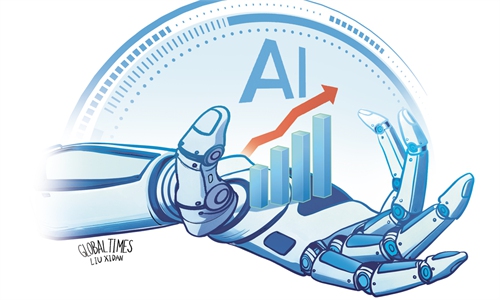
The artificial intelligence (AI) wave is reshaping business operations and growth worldwide. While automation has led to structural adjustments in corporate employment, the expansion of AI-related business is simultaneously creating new sources of revenue growth and generating new job opportunities.

The 2025 6G Development Conference will be held on November 13 and 14 in Beijing, focusing on the creation of a unified global 6G standard and building an open and inclusive 6G innovation ecosystem, the Xinhua News Agency reported. The event will bring together domestic and international experts, representatives of international standards organizations and renowned entrepreneurs to foster global cooperation and exchange.

South China's Guangdong Province on Monday unveiled a new plan to promote tourism, which includes an eye-catching component - technological industry tours. The initiative aims to design high-quality travel routes that connect the region's leading universities, research institutes, technology parks, and major infrastructure projects, offering visitors hands-on experiences with frontier innovations such as artificial intelligence (AI), drones, and autonomous driving.

In the first three quarters of this year, China's high-tech manufacturing sector saw a striking surge in industrial robot production. According to a Sunday report by CCTV News, from January to September, China produced 595,000 industrial robots - surpassing the total output for all of last year. Beneath these numbers lies a broader transformation in Chinese manufacturing, driven by the accelerating adoption of automation and advanced machinery. As competition intensifies and production standards rise globally, factories in China are turning to robotics to enhance efficiency, improve precision, and strengthen their resilience in an increasingly demanding market.

An expo on the senior care industry, currently taking place in Beijing, offers a vivid glimpse into China's expanding silver economy.

While some foreign media outlets claim that China's domestic consumption is sluggish, a closer look tells a different story. From the rise of experience-driven hobbies like fishing to broader lifestyle spending, China's young middle class is reshaping markets with emotion-driven, experience-focused consumption.

More than 100 overseas buyers reportedly arrived in Yiwu, China's hub for small commodities, on a charter flight from Guangzhou following their visit to the 138th Canton Fair. News site zjol.com reported on Tuesday that the group will spend the coming days exploring the newly opened Global Digital Trade Center - Yiwu's sixth-generation marketplace - and participating in cross-border procurement events. The trip linking the Canton Fair and Yiwu offers a glimpse into the multiple dimensions of China's foreign trade, where large-scale manufacturing exhibitions, digital commerce platforms, and other channels increasingly complement one another within an integrated ecosystem.

Not long ago, Shantou's Chenghai district, located in South China's Guangdong Province, received its first "foreign business charter flight," carrying buyers from 14 countries, including Argentina, Belarus, India, and Egypt, CCTV News reported on Monday. On the surface, the attraction seems straightforward: toys. Yet the appeal goes deeper, reflecting the scale and integrative strength of China's manufacturing industry.

As temperatures drop across northern China, many seniors are once again embarking on their annual "migratory bird" journey southward. According to CCTV News on Sunday, the travel peak for these "migratory seniors" began in mid-September and will continue through mid-November, with large numbers of elderly travelers flying daily to southern destinations to enjoy life in warmer climates.

The delivery of China's first self-developed large dual-fuel RoPax ship for export is more than just a single product launch; it demonstrates the solid industrial foundation and robust endogenous innovation that drive China's shipbuilding sector.

In Yiwu, long regarded as a bellwether of China's foreign trade, pearls make a digital sales journey guided by AI and smart displays. This small-scale scene offers a glimpse of how technology is reshaping China's trade and creating new opportunities for businesses worldwide.

Over the coming period, some consumer electronics exhibitions are set to take place in China. Functioning both as trade platforms and as indicators of industry sentiment, these events underscore the measured evolution of China's consumer electronics sector. The steady rhythm of such exhibitions reflects a quiet confidence among manufacturers and investors that innovation-led consumption remains a viable source of momentum in the economy.

As global trade navigates one of its most unpredictable periods in recent memory, the maritime sector has once again become a barometer of the world economy's shifting tides. Against this backdrop, the 2025 North Bund Forum in Shanghai has drawn wide attention as a venue for dialogue on how to advance the development of the shipping industry amid rapid technological change and geopolitical shifts.
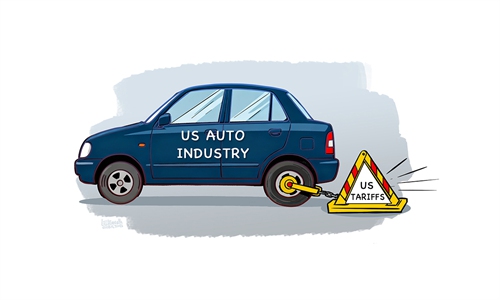
The current US administration, under its "America First" agenda, has implemented a series of unilateral tariff measures. The US government's imposition of high tariffs on Chinese automobiles and auto parts seriously violates WTO rules and widely accepted trade norms.

South Korea received $20.65 billion worth of foreign direct investment (FDI) commitments in the first three quarters of this year, down 18 percent from a year earlier, the Yonhap News Agency reported on Wednesday, citing data from the South Korean Ministry of Trade, Industry and Resources.

China's fast-growing artificial intelligence (AI) industry is extending across sectors and daily life, while legal and regulatory frameworks and application advance in step. A balanced approach to innovation and regulated oversight is driving the healthy and sustainable development of the AI sector.

China's AI is expanding in the Middle East, driven by practical complementarities that benefit both sides. If, as some observers suggest, the US seeks to export its AI and restrict alternative partnerships, such efforts may face obstacles, underestimating the economic realities on the ground.

Xinjiang's high-tech corn – planted with BeiDou and harvested at record yields – is a vivid example of how the region is advancing technological innovation and using technology-driven economic growth to overcome ideologically motivated economic pressure from some Western countries.

The China (Guangxi) Pilot Free Trade Zone recorded a 270.3 percent year-on-year increase in foreign investment from January to August this year, CCTV News reported on Sunday. This figure stands out against the backdrop of a weak global investment climate. It highlights the free trade zone's combined strengths in location, industry and policy and shows that foreign investments are moving in response to favorable conditions, signaling that a new pattern of China's opening-up is taking shape.