What is the deeper significance of the Tongan King planting Juncao in China: Global Times editorial
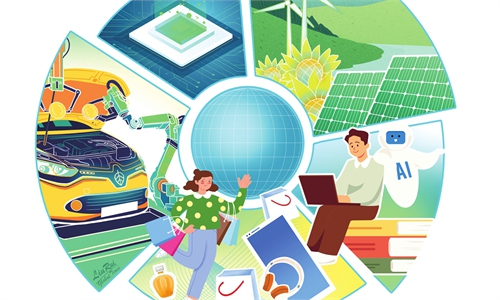
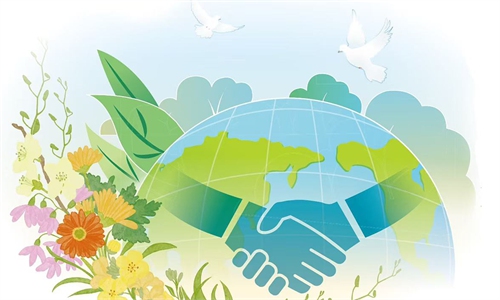
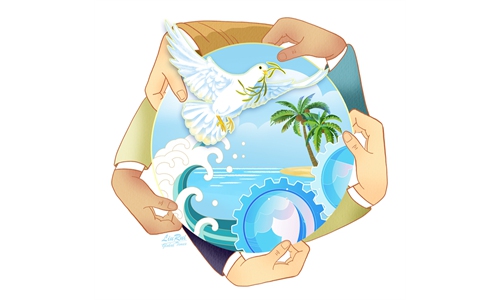
China will use more pragmatic and innovative wisdom, along with warm and determined actions, to work together with other developing countries, including Tonga, to jointly tackle development challenges and share development achievements, injecting a continuous stream of green power into the construction of a community with a shared future for humanity.
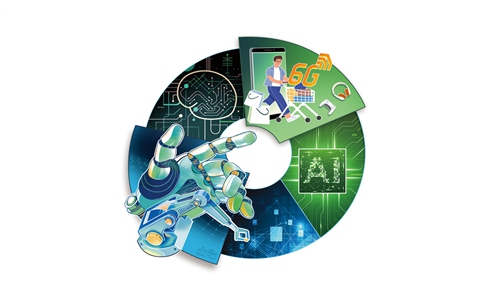
Smearing China's 6G based on security biases is both unfounded and detrimental to its own interests.
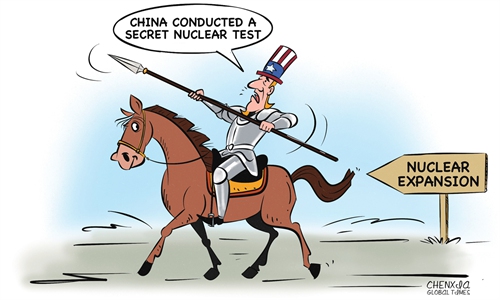
Today, humankind can either step into the security abyss or step back from it by strengthening treaties against the test and spread of nuclear weapons and by putting pressure on the US administration to reconsider its irresponsible and dangerous position on nuclear tests and to return to the strategic arms control negotiating table. It is still not too late to make the right decision.
When I meet newcomers to Xinjiang, I always tell them to put aside the preconceptions and let Xinjiang speak for itself. My impressions have been shaped not by the narratives from the US, but by the people I encountered here, ...
"In China, for China," is not only about winning together with China but also about winning together with the future.
Only by prioritizing the health needs of countries in the Global South, alleviating their financial burdens, and strengthening their health defenses can the global economy truly achieve strong, sustainable, balanced, and inclusive growth.
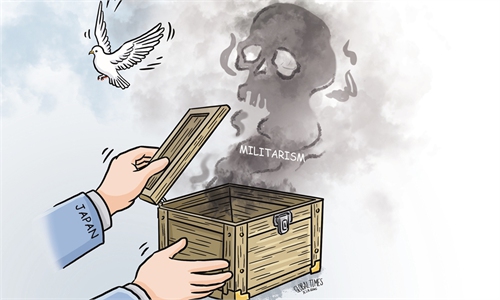
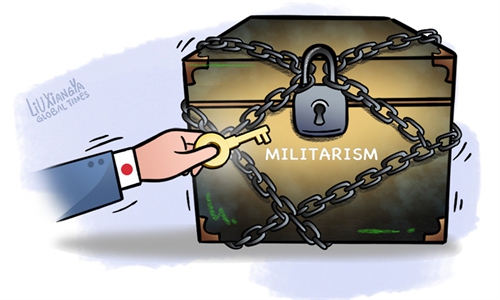
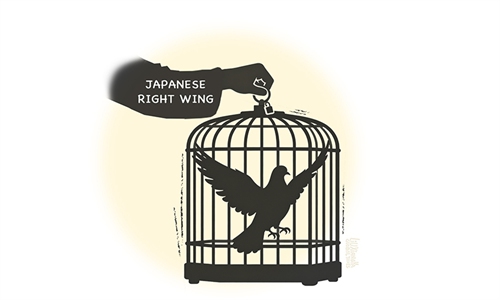
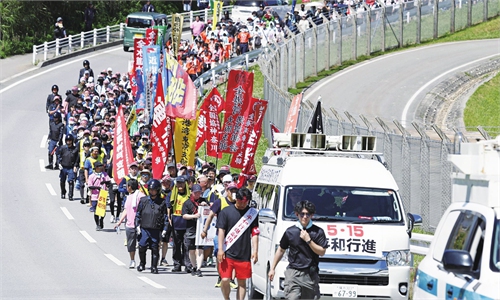
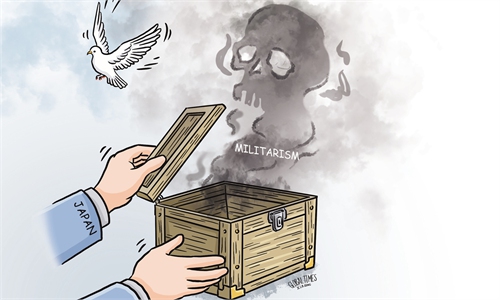
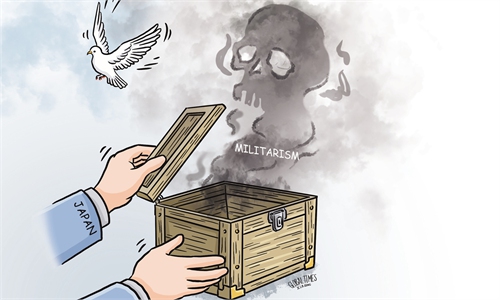
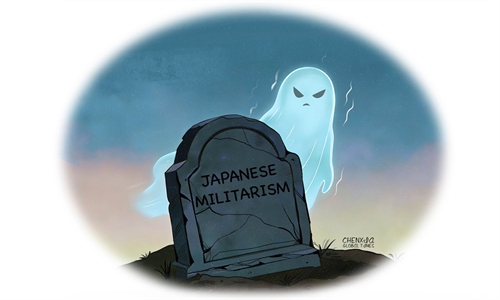
As a defeated nation during the World War II, Japan is now attempting to break free from the constraints of international law, causing the very foundation of its postwar pacifist identity to waver. All nations and peoples who stand for justice bear the responsibility to resolutely prevent any resurgence of Japanese militarism.
We urge Japan to earnestly confront and deeply reflect on its history of aggression, to adopt a responsible attitude and take concrete actions to gain the trust of its Asian neighbors and the international community, and to completely abandon any attempts to turn back the wheel of history.
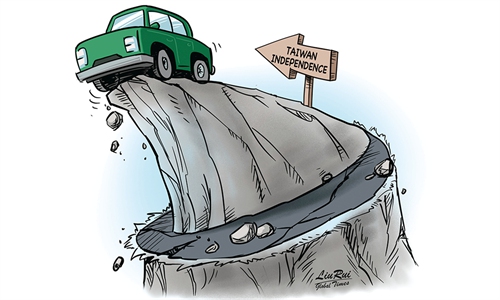
Taiwan's petty calculations regarding joining AUKUS reflect its malicious intention of seeking more room and external support for “independence” on the international stage. However, “Taiwan independence” separatists should recognize that there is no room for reckless actions.
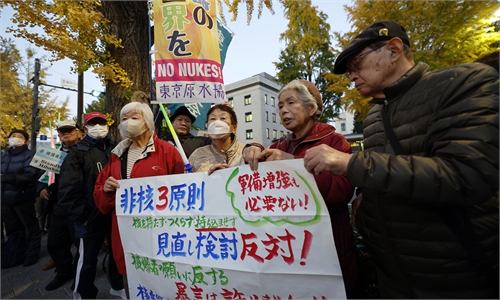
Japan's recent moves to reinterpret collective self-defense, amend its pacifist constitution and debate the “Three Non-Nuclear Principles” represent a pivotal shift in the regional security architecture – one that carries significant risks and threatens to unravel the delicate balance that has underpinned regional stability for decades.
We can learn from the CPC as an effective ruling Communist Party that has adapted the orthodox and classical conception of Marxism flexibly to the complex circumstances of Chinese society. Understanding Chinese society and how the theory has been tailored to these specific conditions offers valuable lessons.
This important phone call between the Chinese and US presidents has helped clarify the correct understanding of the Taiwan question, and pushed for the steady and long-term growth of China-US relations. It also recalibrated the course and provided more momentum for the giant ship of China-US relations to sail forward steadily.
China has showed me an alternative pathway to building a prosperous higher education system – one that differs from Western models.
The Japanese government must face history squarely, respect reality, adhere to the spirit of the constitution, abandon militaristic expansions and stop making erroneous statements on the Taiwan question. Only by returning to peaceful development can Japan truly contribute to stability in East Asia.
When we look at American politics, it's roughly a puppet show. It's a lot of political theater. And you have to, at some point, start asking the question: Are there conversations happening behind closed doors with individuals that the American public doesn't even get to see, who are writing the scripts that the puppets end up acting out? says a US scholar.
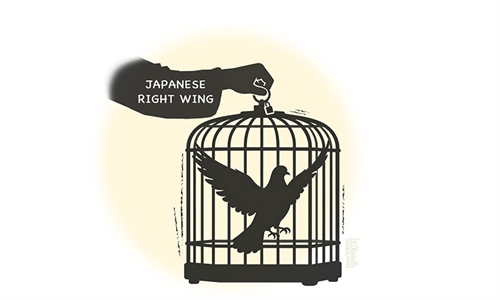
Countries around the world, especially Asian neighbors, should be jointly vigilant about the extreme dangers posed by Japan's “new type of militarism.” History has repeatedly proven that peace is hard-won, must be defended, and that militarism not only endangers the world but is also destined for self-destruction.
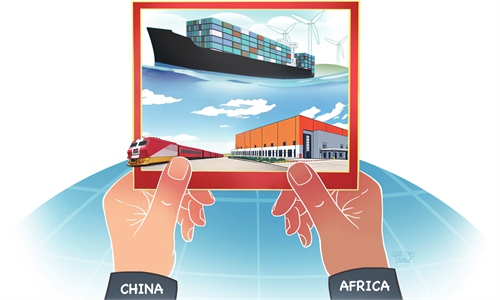
The SGR is running and carrying the nation's ambitions on its rails. We should celebrate this monumental national achievement for what it is: a bold step toward the future Kenya is building for itself.
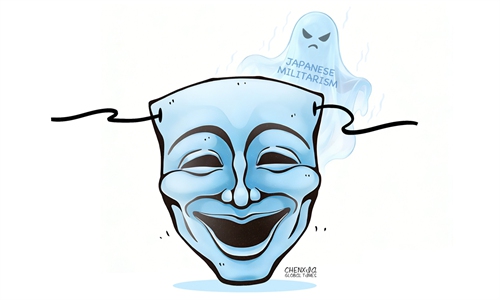
We urge the Japanese side to remove its mask of hypocrisy and take responsible steps that serve its long-term national interests and honor its international commitments. It should reflect on its mistakes and correct them as soon as possible, rather than obstinately persisting in them.
This year's G 20 summit carries symbolic weight beyond its specific declaration. The world is changing. If the US continues to respond with familiar displays of displeasure — boycotts, walkouts, attempts to block consensus – it may eventually discover that fewer and fewer countries feel obliged to coax it back into the room.
China and Sweden have been each other's largest trading partners in Asia and Northern Europe respectively for many years. Dynamic business interactions underscore a deeply complementary and resilient partnership – one that continues to evolve with substantial future potential.
The GGI , fully consistent with the purposes and principles of the UN Charter, has been introduced to meet the needs of our time. It will foster broader consensus within the international community, make the global governance system more just and equitable, and open up brighter prospects for a peaceful, secure, prosperous and advancing human society.
Takaichi's words and actions are essentially an attempt to interfere in China's internal affairs and challenge the one-China principle. The collective anger of the Chinese people is a strong response to the blatant infringement upon the core interests of the nation. Takaichi's provocation is destined to be met with the strongest counterattack.
For the first time since its inception in 1999, the G20 is holding its annual summit on African soil, in Johannesburg. What can be expected from this historic gathering? In an exclusive interview with Global Times, Abner Mosaase (Mosaase), head of international relations at the Gauteng Growth and Development Agency, South Africa, and member of the African National Congress International Relations Committee, told Global Times (GT) reporter Li Aixin that this summit is a chance to ensure that voices and interests of the Global South are not just heard, but will shape the global agenda.
Japanese Prime Minister Sanae Takaichi's absurd claim that a "contingency in Taiwan" could constitute a "crisis of survival" for Japan, implying the possibility of military intervention in the Taiwan question, and her refusal to correct this stance despite China's strong protests, is a serious violation of basic norms of international relations. It has raised concerns and alarm in the international community regarding Japan's strategic direction, and its negative impact has already begun affecting Japan's economy and society.
What the 15th National Games leave behind is not only spectacular performances but also a collective imprint of nationwide participation and shared development, which is an expression of the vitality and spirit of the Chinese people.
China's steady development, consistent commitment to peaceful diplomacy, and mutually beneficial cooperation are winning, and will continue to win broader support from more countries and peoples.
It is clear that the Netherlands' previous approach to Nexperia has been at odds with its own interests. The suspension of the order issued to Nexperia marks the first step taken by the Dutch government. It needs to reflect on the Nexperia case seriously, engage with the Chinese government with sincerity to resolve the issues and secure the future of Nexperia in Europe.
When Chinese astronauts bit into a fresh apple grown in Yan'an, it was an ordinary act that carried an unusual resonance. The apple's journey, from a once impoverished mountainside to the silence of orbit, reflects the same belief that carried a generation through hardship and isolation that change begins with effort, and endurance can turn even the dust of history into nourishment
Japan should be very careful about involving itself once again in hostility toward China. Takaichi's provocations undermine the fragile foundation of China-Japan relations, and continuing on her current path would be a dangerous gamble with the peace and prosperity of the entire region.
South Africa and China can deepen collaboration in critical minerals, renewable energy and advanced manufacturing. By leveraging China's investment capacity with South Africa's regional leadership, we can accelerate industrialization across the continent. Under the G20 framework, this synergy will become a catalyst for Africa's integration into global value chains, says B20 South Africa Sherpa.
This reflects a return to rational decision-making under real-world pressures. It also sends a rare positive signal to the global supply chain.
Takaichi's statements are imposing political costs on Japan.
USCC report reveals the arrogance and anxiety of a major power struggling to adapt to a changing world.
This year marks the 55th anniversary of the establishment of diplomatic relations between China and Italy. When we speak of 55 years of diplomatic relations, we should remember that cultural exchanges between China and Italy began much earlier. In AD 166, envoys of Emperor Marcus Aurelius reached the Han court, initiating a dialogue between two civilizations that had long seen each other as peers rather than strangers. This historical awareness makes cooperation feel natural and deeply rooted.
The 30th Conference of the Parties (COP30) to the United Nations Framework Convention on Climate Change is being held in Belém, Brazil, where government officials, business delegates and experts from around the world have gathered to discuss priority actions to address climate change. Global Times (GT) reporter Qian Jiayin interviewed Nick Mabey (Mabey), CEO & Co-Founder of the independent climate think tank E3G, who said that Europe and China can cooperate more closely to better support global climate action.
The depletion of Indian and foreign talent will have a drastic effect on the US economy in the long run. By constraining the very talent pool that fuels invention, scientific breakthroughs and disruptive technologies, the US risks undermining its own internal dynamism. Such inward-looking measures could erode Washington's technological dominance, gradually leveling the global playing field and reshaping the balance of power in international politics and world affairs.
Takaichi's erroneous remarks have raised concerns within the international community – Japan may bring even greater dangers to the world. Takaichi's presence is extremely dangerous; she is likely to steer Japan toward a more perilous direction, says a Japanese scholar.
No country would tolerate crude interference by foreign leaders in its internal affairs, nor would any accept threats by foreign leaders to use force against it.
Systematically promoting the coordinated development of the "Ryukyu studies" discipline, academic system, and discourse system will also inject new connotations into building a harmonious, inclusive, and open East Asian regional culture.
China acts as both a domestic transition powerhouse and a global enabler in climate action. China can help connect ambition with action, convert global frameworks into country-level delivery, and anchor the “COP of Implementation” in real-world deployment, says UN resident coordinator.

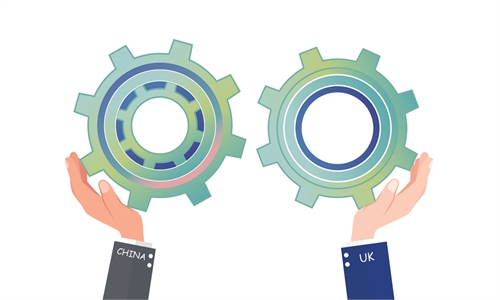
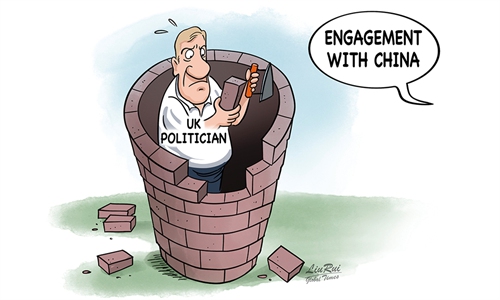
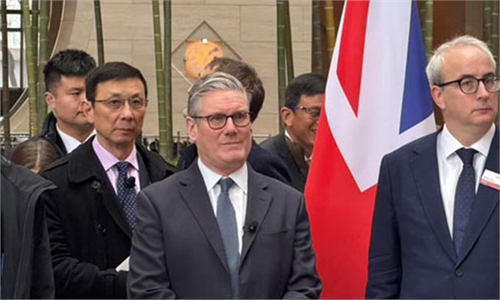
The UK's anxiety does not stem from the so-called security, but the discomfort and alert toward China's technological leadership. A wise option for the UK is to stop indulging in pride and prejudice, but engage in mutually beneficial cooperation with China.
Chinese Ministry of Foreign Affairs Spokesperson Mao Ning posted a video on the social media platform X recently, commenting that it is “high time to recall the 1995 Murayama Statement.” The video features former Japanese prime minister Tomiichi Murayama, who admitted and atoned for Japanese aggression during WWII and offered an apology to the victim countries. The stance expressed in the Murayama Statement – confronting Japan's past aggression with reflection – stands in stark contrast to the discomfort I felt in Hiroshima.
Recently, the South Korean government announced that it has finalized an agreement to build nuclear-powered submarines in partnership with the US. US Chief of Naval Operations Admiral Daryl Caudle on Friday claimed that the US would expect it to play a role in its broader plan to counter China once South Korea fields a nuclear-powered attack submarine. The US-South Korea push for nuclear submarine cooperation is tantamount to lighting a new fuse in Northeast Asia. This development will not only undermine the international nuclear non-proliferation system but also increase the difficulty of denuclearizing the Korean Peninsula, triggering a chain reaction of military competition and strategic instability in the region.
How to restrain her far-right ideology and beliefs is an issue Takaichi must seriously reflect upon and address. Should she continue to let her far-right genes stir up trouble, or even engage in overambitious and unwise actions under the illusion that interfering in Taiwan affairs could hinder China's reunification, she will only become a laughingstock in history.
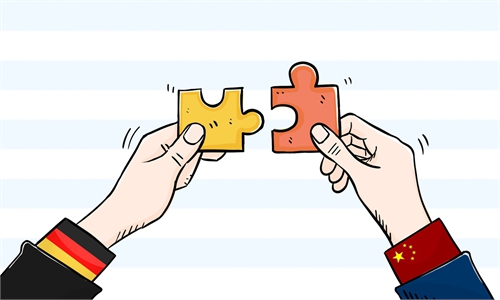
We welcome the German vice chancellor's friendly gesture from the new German government, and we also hope he brings back to Germany and Europe the credible prospects of sustained, mutually beneficial China-Germany and China-EU cooperation.
The blood-stained memory of Taiwan under decades of Japanese colonial rule underscores how sensitive any foreign military intervention - even an implication - in Taiwan island's security is.
Japanese leaders have only one choice: return to the one-China principle and the spirit of the four political documents between China and Japan, and immediately retract their erroneous remarks.
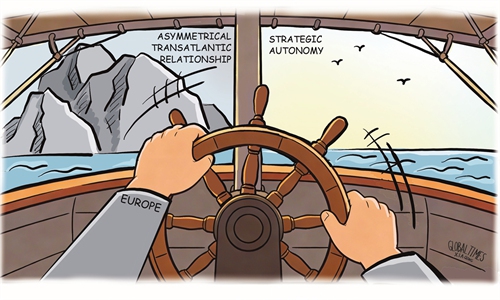
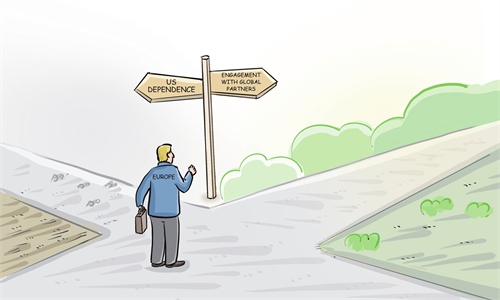
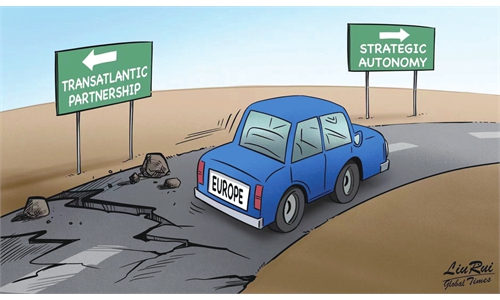
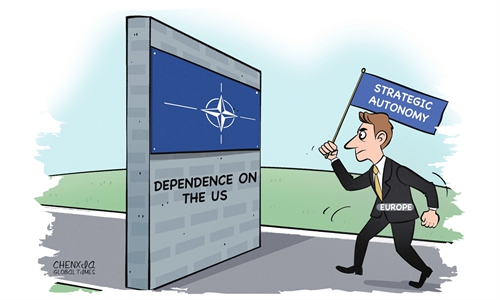
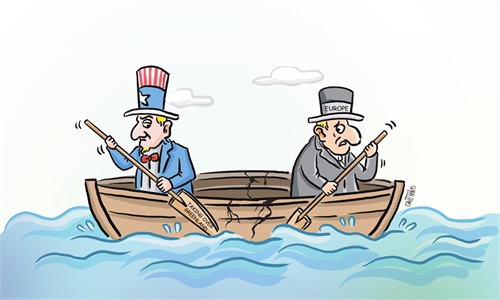
Europe stands once again at a historic crossroads. For centuries it has been both stage and actor in the drama of civilization, the birthplace of democracy and philosophy, yet also the theater of conflict and empire. Today its challenge is not territorial but existential: whether to remain a chessboard where others move the pieces or to become the chess player, the one who shapes its own destiny.
Chinese citizens should indeed avoid traveling to Japan in the near future, and should carefully plan any long-term study, investment, or other arrangements in Japan.
Washington's goal is not to promote Greece's prosperity but to squeeze out China by “replacing” Chinese investment and forcing countries into a binary choice.
Guided by the concept of jointly building a community of shared future in cyberspace and through collective action, the world will cooperate to move toward a new stage of digital civilization characterized by shared opportunities, shared responsibilities and shared value creation.
The IOMed is a fully independent and international organization, says Secretary-General Teresa Cheng
Sanae Takaichi's remarks need to be corrected as soon as possible. But if she firmly refuses to retract the relevant comments, that would be truly troubling – after all, when the prime minister thinks and speaks in this way, it is the citizens who suffer. The Japanese people never want this, yet such remarks have emerged, which is truly regrettable, says a Japanese scholar
Takaichi's dangerous rhetoric exposes the ambitions of Japan's right-wing forces to revive militarism.
We urge Japan to pull back from the brink, abide by the principles set out in the four China-Japan political documents, and truly put into practice the political consensus of being "partners, not threats" to each other, rather than saying one thing and doing another, and certainly not "playing with fire" on the Taiwan question.
Takaichi's blatant remarks carry dangerous signs of the resurgence of Japanese militarism.
Anyone attempting to manipulate the Taiwan question is standing against all Chinese people, including Taiwan compatriots. There is only one outcome waiting for them, that is reaping what they sow and being condemned for generations.
Recently, Japanese Prime Minister Sanae Takaichi blatantly claimed at the Diet that a "Taiwan emergency" could constitute a "survival-threatening situation" for Japan, implying the possibility of armed intervention in the Taiwan Straits. This is a blatant interference in China's internal affairs, a betrayal of the one-China principle, and a flagrant challenge to the post-World War II international order.
If certain forces in Japan continue to “play with fire” on the Taiwan question, the outcome will be tragic, and Tokyo will bear full responsibility.
The Thai King's visit sends a clear message to the world: China is an “unmovable neighbor” and a partner for common development.
Today, as we speak of building a “Marco Polo of the new era,” this legacy should guide our approach to global engagement. New-era “Marco Polos” should navigate between cultures. Encouraging such ex-changes means creating open platforms for joint research, educational partnerships and artistic col-laboration. When people experience each other's societies firsthand, stereotypes give way to under-standing, and mutual trust takes root.
When the world once again listens to the Book of Songs, it may be astonished to rediscover that more than two thousand years ago, these short verses had already posed the very question humanity still struggles with today: How can humankind, in a divided world, rediscover a shared heart?
We can see here the emergence of a new nexus, between China as a civilization-state and the countries of the Global South seeking to rediscover and give expression to their civilizational legacy. The notion of civilization and civilizational inheritance will be one of the central tenets of international relations in a new and evolving global order.
This way of coexistence, based on mutual respect, equality and mutual benefit, between China and Spain, not only aligns with the fundamental interests of the peoples of both China and Spain, but also provides valuable insights for the development and progress of China-EU relations and the world as a whole.
Takaichi's misguided remarks are part of a broader pattern. To truly correct its course, Japan must begin with an accurate recognition of history.
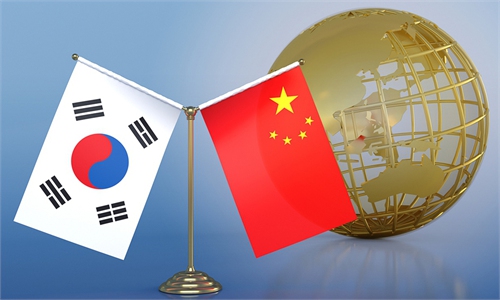
As beneficiaries of economic globalization, China and South Korea should work together to inject new momentum into Asia-Pacific development and jointly promote the building of an Asia-Pacific community.
The “China Shock 2.0” narrative proves to be not only misleading but dangerously myopic, as it blinds us to the transformative structural shifts which are reshaping the global economy and forging a credible path to a sustainable future.
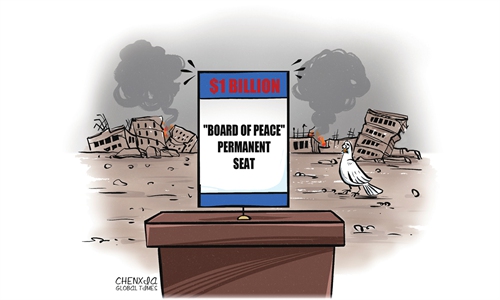
The compensation that the BBC should face goes far beyond the $1 billion demanded by Trump; all victims affected by its malicious editing have the right to demand an apology and compensation from the BBC.
Frank words from COP30 President André Corrêa do Lago in a recent interview with The New York Times captures a long-standing absurdity in global climate politics: Some in the West apply blatant double standards toward China's green development, trapped in a self-contradictory mind-set.
By drawing lessons from China's five-year plans – emphasizing targeted strategies, effective governance, and sustainable development – this approach can help transform the African continent's socio-economic landscape, ultimately fostering growth and wealth for all African nations.
At its core, Hehe philosophy teaches us that balance and peace are active practices, not mere ideals. When nations recognize that security comes from interdependence rather than dominance, global peace becomes possible.
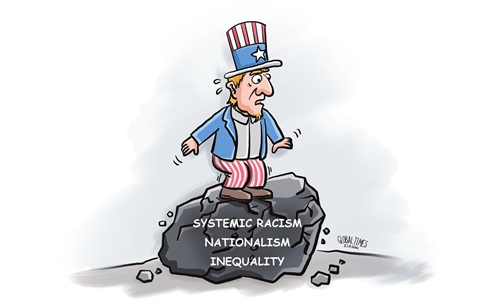
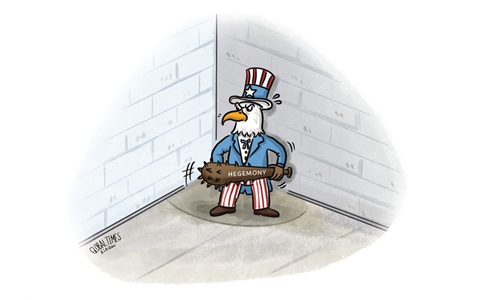
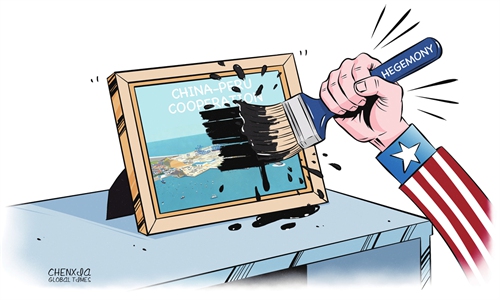
Unless the US abandons the illusion of global hegemony and confront its domestic decay, it risks accelerating its own downfall. Whether the US can survive this decline depends on its willingness to abandon its superiority complex and deal realistically with its problems.
The EU's weakened climate goals send a negative signal to the international community. Once celebrated as a “climate leader,” the EU now faces unprecedented strategic pressure – the most direct manifestation of its standing at the crossroads of global climate governance.
These “security investigations” are completely lacking in evidence and are typical presumptions of guilt.
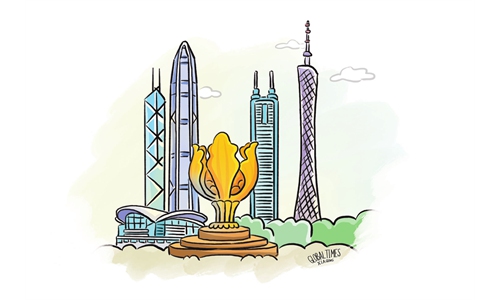
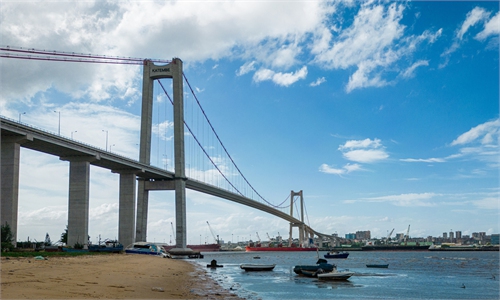
When athletes sprint across the Hong Kong-Zhuhai-Macao Bridge, when spectators travel effortlessly across the region, when institutional barriers quietly dissolve through collaboration – what people witness is not just a sporting spectacle, but a vivid portrait of an international metropolis cluster rising on the success of “one country, two systems.”
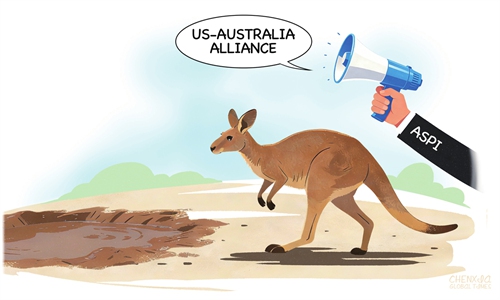
Some in Australia must realize that continuing to fabricate and hype the “China threat” rhetoric harms Australia's long-term interests. Strengthening cooperation on the basis of mutual respect and understanding, coexisting peacefully and achieving mutual benefit is the right path forward for China-Australia relations.
Square dancing is a beautiful example of China's diversity within unity. Public squares in China are transformed into vibrant stages for self-expression and community engagement, where people can gain profound insights into the Chinese people's pursuit of belonging and their interpretation of joy, says an ESCP student after experiencing square dancing.
What I actually saw in Xizang was a region of tangible development – modern infrastructure blending with preserved cultural traditions and clear improvements in local livelihoods. This stands in stark contrast to the distorted picture painted by some Western outlets, says former UK MP.
Attempting to bring the Taiwan question under Japan's national security legal framework – thus binding China's Taiwan region and Japan's so-called security interests together from a legal perspective – represents a serious regression in the Japanese government's position on the Taiwan question.
Ahead of the conference, at the Belém Climate Summit, representatives from multiple countries also arrived in Chinese vehicles. This has became a highly symbolic scene prior to the official opening of the conference. It reflects China's efforts to promote a green, low-carbon transition, and deep involvement in global climate governance.
The Da Yang Hao's voyage signals a healthy normality: scientific cooperation by a rising power that is not conquering, but participating. If the West feels threatened by this, the discomfort lies in its own reflection – in realizing that its historic monopoly on defining the ocean's meaning has come to an end.
As for the Central Asian countries, it is vital for them to maintain the current configuration of power in the region and not turn themselves into disruptive proxy actors.
Innovation in the intelligent era is more than technology and applications; it also depends on the synchronized advancement of governance and institutions. The Wuzhen Summit, as a model for global public goods in the intelligent age, still has a long way to go.
The state visit by Spanish King Felipe VI to the People's Republic of China from Monday to Thursday marks a significant milestone in the trajectory of China-Spain relations.
What can we expect from the GGI? Erik Solheim (Solheim), former under-secretary-general of the UN and former executive director of the UN Environment Programme, shared his views with Global Times (GT) reporter Li Aixin in an exclusive interview.
No hegemony or pressure can stop China's march toward becoming a maritime power, nor can any force hinder China's determination or capability to safeguard global sea-lane security and protect its overseas interests.
The Quad's long-term viability would be challenged if it relies solely on military cooperation without achieving tangible results in political and economic spheres. This could reduce it to a mere formality, with its limping status becoming the norm.
While the potential for cooperation in air pollution control is substantial, the depth and breadth of future collaboration will largely depend on how the Indian government responds to China's goodwill in sharing its experience.
Looking ahead, only by viewing each other with a broader perspective, handling differences with greater maturity, and planning cooperation with a longer-term vision can the two countries get rid of "mutual depletion" and move toward "shared growth," delivering tangible new gains for both their peoples and the world economy.
Global Times reporter Chen Qingqing interviewed Rahim R. Hakimov, deputy speaker of the Legislative Chamber of the Oliy Majlis of Uzbekistan and Serik Orazgaliyev, an associate professor at the Graduate School of Public Policy at Nazarbayev University - to talk about the current stage of China-Central Asia cooperation, future development focuses and their views on the recently China-proposed Global Governance Initiative.
Driving along the tidy streets into Jingdezhen, Jiangxi Province, seeing the porcelain sculptures line the road, you feel the breath of history.
China's institutional opening-up is accelerating, creating ever more opportunities for shared global development. This long-term commitment to high-level opening-up has become a "golden hallmark" recognized, trusted, and embraced by the world, proving that China's concepts and practices not only meet the needs of global businesses but also align with the trend of the times.
To enhance understanding of South Korea and grasp the trajectory of China-South Korea relations, the Global Times, in collaboration with Chinese universities and think tanks, is releasing a series of reports on South Korea.
What truly undermines democracy is the attempt to strip island countries of their right to make independent choices. What Pacific Island nations need is not “democracy preaching,” but genuine respect and the right to development.
The Nexperia case need not have escalated to this point.
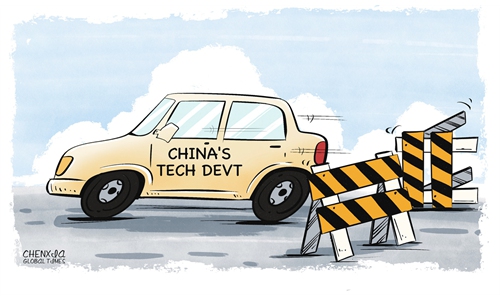
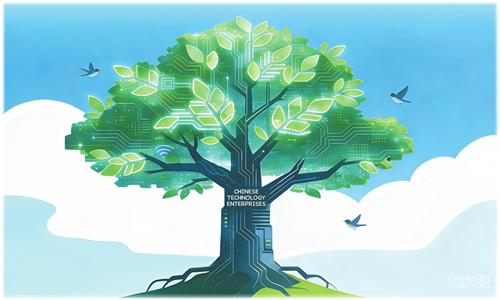
Technology is the core engine driving Chinese modernization and high-quality development.
Not long ago, the US-based Atlantic Council released three reports that cobbled together the "incriminating evidence" of China's "misdeeds" in mining, forestry and fisheries cooperation with West African nations. While leveling these baseless accusations, the think tank also dished out what it called "well-meaning" advice to Africa — all but thinly veiled attempts to counter China. Against the backdrop of Washington's all-out push to suppress and contain China, this sudden burst of "concern" for Africa has left many asking: What is the US trying to achieve?
The Fourth Plenary Session of the 20th Central Committee of the Communist Party of China (CPC) offered the world a critical window into China's strategic trajectory. The session has charted the course for the 15th Five-Year Plan period (2026-30) - years likely to define the next phase of China's modernization and its interaction with a fracturing global order.
The Global Times invites experts and scholars from around the world to discuss the efficacy, global significance of the eight-rules decision and the examples it sets for ruling parties in other countries, especially those in the Global South. In the second article of the series, Global Times (GT) reporter Liu Xuandi interviewed Tichaona Zindoga (Zindoga), founder and director of the think tank Ruzivo Media and Resource Center in Zimbabwe. Zindoga shared his insights on the global implications of the eight-rules decision from the perspective of an African observer.
Recently, several Philippine media outlets turned their attention to a "highly ritualized" but security-illusory quadrilateral meeting.
When assessing the trajectory of China's macroeconomic growth and its underlying strengths, empirical data provides a critical foundation. Among all indicators, total electricity consumption - often described as an "economic barometer" - offers a distinctive perspective for observing the country's economic vitality.
A good neighbor is more precious than gold. For South Korea, China is not a threat but an opportunity; for China, South Korea is not a rival but a partner. Both nations should take pride in each other's success, because when one neighbor prospers, the other becomes safer and more prosperous as well.
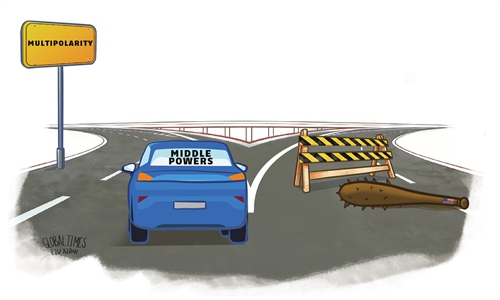
The European Union and emerging economies, such as China and Brazil, are stepping up, advancing global green development and offering pragmatic cooperation. As Washington reverses course, the world's climate agenda is not collapsing - it is evolving toward a more decentralized and multipolar model of governance.
In the 15th article of the "Translators' Voices" column, GT interviewed Burkhard Risse (Risse), member of the translators' team of the German edition of Xi Jinping: The Governance of China and recipient of the 2025 Chinese Government Friendship Award.
China will continue to play a vital role in building the Asia-Pacific community with its steady diplomatic policies, unwavering commitment to reform and opening-up, and pragmatic actions for cooperation, making greater contributions toward the realization of a community with a shared future for mankind.
In recent years, China-US relations have experienced ups and downs. Yet, at every critical moment, head-of-state diplomacy has played an irreplaceable strategic guiding role.
Shenzhou-21 is more than a spaceflight — it is a symbol of a nation that pursues balance, reason and cooperation.
The Global Times (GT) interviewed Kim Heung-kyu (Kim), director of the US-China Policy Institute at Ajou University, and John W.H. Denton AO (Denton), secretary general of the International Chamber of Commerce who participated in this year's APEC meetings, about the outcome of the gathering and their expectations for China's role as a host for next year's meeting.
While congratulating the GEM on its official opening, the international community looks forward to more artifacts being able to "come home," allowing nations that were once colonized to reclaim the narrative rights to their own civilizations, and enabling them to recount their cultural histories more fully.
By intertwining their digital futures and green ambitions, China and ASEAN are not only advancing mutual prosperity but also offering the Global South an inspiring model of pragmatic cooperation, inclusive growth and shared destiny.
Global Times (GT) reporter Zhang Ao interviewed John W.H. Denton AO (Denton), secretary general of the International Chamber of Commerce (ICC) who participated in this year's APEC meetings, about the outcome of the gathering as well as China's role in advancing regional economy.
In an interview with the Global Times (GT), Kim Heung-kyu (Kim), director of the US-China Policy Institute at Ajou University, shared his insights on the future direction of China-South Korea relations.
The Gyeongju APEC meeting comes at a critical juncture for the global economy. From the "ice-breaking" efforts to ease China-US trade tensions, to the firm defense of multilateralism, and the steadfast commitment to inclusiveness and shared benefits, the course of the Asia-Pacific ship is now clearly set.
Asia-Pacific has learned time and again that cooperation pays off better than confrontation.
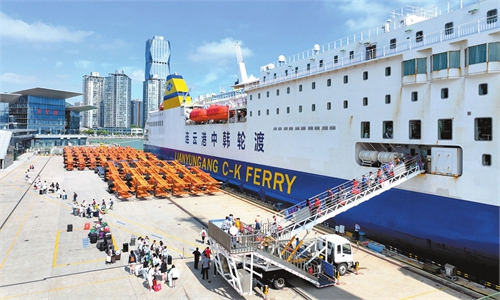
Direct flights between China and India have finally resumed after a five-year hiatus. On October 27, a fully booked flight from Kolkata, India, landed in Guangzhou, China, marking the official resumption of direct air services between the two countries after a suspension of more than five years.A necessary step has been taken toward normalizing relations between the two countries!
The meeting between the Chinese and US presidents in Busan on Thursday will, in hindsight, prove to be of even greater historical significance in years to come. The course of history points to national rejuvenation, and the light of the times illuminates the strength of the motherland.
As the world's most important bilateral relationship, people look forward to China and the US making new and greater contributions to world peace and development under the strong strategic leadership of the two heads of state.
China's 15th Five-Year Plan will likely mark the consolidation of a public goods-driven development era.
Amid profound and complex changes in the development environment, China remains committed to a people-centered approach, high-quality growth, and continuous institutional and technological innovation.
In an interview with Global Times (GT) reporters Xing Xiaojing and Wang Wenwen, Jaemin Lee (Lee), a professor from the School of Law, Seoul National University, said that the unique strength of the APEC lies in these diplomatic events and gatherings where members' leaders and businesspeople can get together to candidly discuss various topics of practical importance.
Against the backdrop of global economic uncertainty, rising protectionism and accelerated technological transformation, how should we write "Asia-Pacific's tomorrow"? "Chinese wisdom" and "Chinese solutions" have become one of the focal points of attention at this APEC meeting.
After reunification, with the powerful backing of the motherland, the well-being of the people in Taiwan will improve, their development prospects will expand, and they will enjoy greater security and dignity. Taiwan will maintain lasting peace, and its people will live in peace and prosperity.
In an era marked by challenges in global climate governance, the concept of a "Beautiful China" exemplifies both political resolve and institutional innovation. Its global relevance lies not in functioning as a prescriptive model, but in demonstrating that sustainability can be institutionalized as a principle of statecraft.
The APEC Economic Leaders' Meeting will be held this week in Gyeongju, South Korea. All 21 economies will come together to discuss pathways to the Asia-Pacific region's shared prosperity.
China's sprint toward carbon peaking is not only a profound domestic transformation, but also carries broad global significance.
A clear trend is taking shape. The Chinese mainland is moving more decisively to punish "Taiwan independence" separatists, while in the US, a growing chorus is advocating a sober, reality-based reassessment of the Taiwan question. For the separatists still lost in their fantasies, the wake-up call has already sounded.
Resolving the Taiwan question and achieving the complete reunification of the motherland is the shared aspiration of all Chinese people and an essential part of the great rejuvenation of the Chinese nation.
The fourth plenary session of the 20th Communist Party of China Central Committee, in its strategic planning and major measures for the 15th Five-Year Plan (2026-30), emphasized the need to promote high-standard opening-up and creating new horizons for mutually beneficial cooperation. This underscores that China, as one of the world's key economies, is continuously injecting certainty into a world facing growing uncertainties.
The call for creating new horizons for win-win cooperation is both a promise and an invitation to imagine globalization once again as a collective enterprise for human progress.
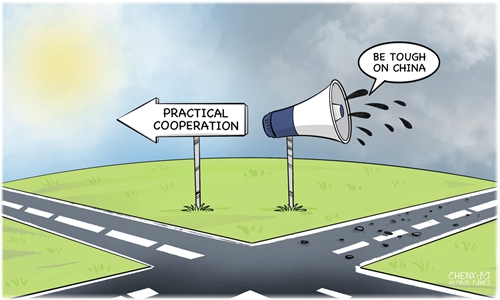
Simply hyping up the idea of "reducing dependence on China" not only casts a shadow over practical cooperation between China and Europe but also does little to help Europe resolve its own "competitiveness crisis."
The scarcest resource today, without which future technological leadership is impossible, is trust between nations and peoples. In this regard, the importance of strategic partnerships in global AI governance and the creation of unified technological ecosystems is growing rapidly.
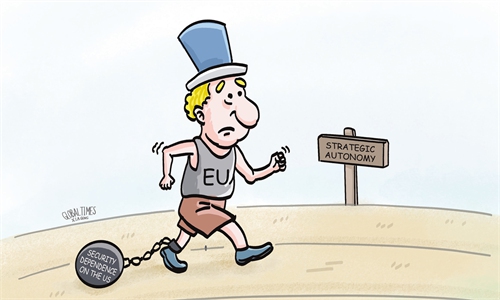
Europe urgently needs to adjust its approach to China and achieve genuine strategic autonomy at the earliest opportunity.
The resumption of direct flights not only marks a beginning, but it also serves as a reminder that, beyond flights, there is much more that should be restored between China and India.
The path to self-reliance and strength in science and technology is neither instantaneous nor straightforward; it demands sustained strategic resolve and a long-term commitment that transcends immediate success.
China's 15th Five-Year Plan can be understood as an effort to harness innovation and policy discipline to deliver stability and opportunity amid global uncertainty.
The advertisement controversy serves as a prism, reflecting the structural dilemmas Canada faces in safeguarding its economic sovereignty while seeking pragmatic cooperation in an asymmetrical power dynamic.
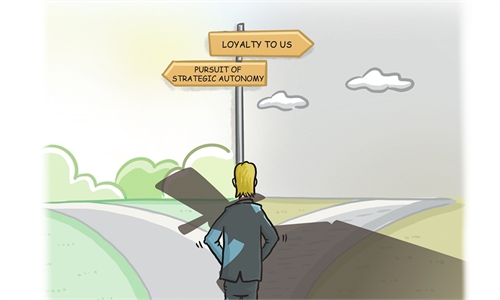
The Takaichi administration will need greater strategic autonomy to navigate Washington's demands - demands that may ultimately test the loyalty and patience of one of America's closest allies.
Both nations, and the global community at large, would benefit from more positive talk and more constructive decisions emanating from Beijing and Washington.
The US government shutdown, which stretched into its fourth week, exacerbated air traffic controller staffing shortages over the past weekend, leading to widespread flight delays and traveler anxiety.
After experiencing turbulence and fluctuations over the past month, China-US economic and trade relations have once again delivered positive news, bringing relief to the world.
Europe's security in a globalized economy depends on moving beyond threat-based reactions to embracing equitable, transparent, and mutually beneficial engagement, not isolation.
Washington's rhetoric of "returning to Southeast Asia" signals less a strategic comeback than a symptom of anxiety over declining influence.
The recently concluded fourth plenary session of the 20th CPC Central Committee underscores a perpetual commitment to enhancing this system, ensuring it remains the engine for China's next phase of modernization and its constructive role in global governance.
Guided by the new development philosophy and coordinated through the Five-Year Plans that embody continuity, stability, strategic foresight and forward-looking vision, we have expanded the institutional space and established effective institutional safeguards.
October 25 marks the 80th anniversary of Taiwan's restoration to China. In 1895, the Qing government was forced to cede Taiwan island to Japan under the unequal Treaty of Shimonoseki, following its defeat in the First Sino-Japanese War. From then to Taiwan's restoration half a century later after the WWII, countless brave Taiwan people devoted their lives to one belief – to defend with blood and sacrifice their identity as Chinese. What is the historical significance to celebrate the anniversary today? Arnaud Bertrand (Bertrand), a French entrepreneur and commentator on economics and geopolitics, shared his views with Global Times (GT) reporter Li Aixin in a recent interview.
People have every reason to believe that as China's economic, technological, defense and overall national strength and international influence continue to grow, it will keep providing confidence, contributing strength, and creating opportunities for the world in the next five years.
The reunification embodies both the unfinished mission of our forebears and the present reality we are actively advancing toward. Establishing Commemoration Day of Taiwan's Restoration in the name of the state is timely and of profound significance.
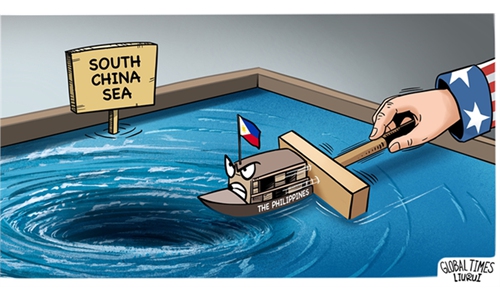
As a responsible major country, China remains committed to preserving the world's ecosystem and bio-diversity. The Philippines and others must stop exploiting this issue and restore peace and tranquility to the region.
The development roadmap unveiled in the communique for China's next five years offers the world something truly rare in these turbulent times – certainty.
The @nytimes acknowledges China's achievements but hunts for flaws – like “debt” or “enormous costs” – to soothe its sour envy. At its heart, this anxiety is a refusal to confront real US issues.
Canberra has both the mandate and the responsibility to honor its commitments to Asia literacy, to reverse declining participation and to ensure that studying Asia's languages and cultures becomes a mainstream priority.
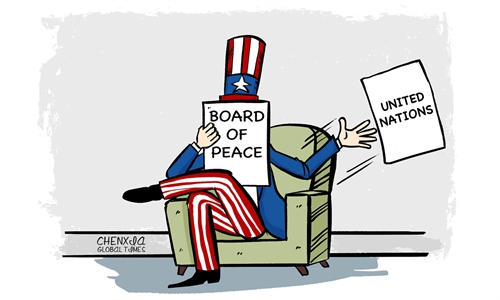
UN's establishment opened a new chapter in global governance, and 80 years later, it now stands at a new starting point. Whether the UN can maintain its central role depends on its ability to achieve transformation and upgrade through reform.
The DPP authorities manipulate the notion of the so-called national identity to mislead the public, inducing historical amnesia and glorifying the colonial past, said a Taiwan scholar amid the anniversary of Taiwan's recovery from Japanese occupation
We hope that European leaders will also adopt a broader strategic vision to recognize the immense potential of China-EU cooperation, allowing the light of reason to pierce through the fog of prejudice and illuminate the path forward for win-win collaboration.
Robust and vibrant tourism exchanges are built on a foundation of mutual trust and positive bilateral relations between two states. Given the Philippines' continued infringements and provocations in the South China Sea, alongside the persistent domestic anti-China sentiment, Manila's e-visa program for Chinese tourists will serve only as a symbolic gesture with limited outcomes.
While intending to shape global standards, the EU's normative power often inflicts self-damage by prioritizing ideals over pragmatic economic and technological safeguards.
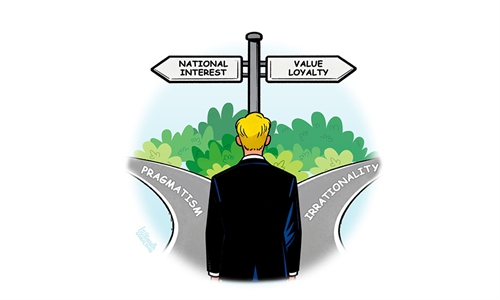
The central problem for Japanese diplomacy today is not that China is growing stronger, but that Japan has become so dependent on the US.
From Turkey's perspective, rather than fostering ties with those who spread fabricated Western narratives that harm bilateral relations, it is far more valuable to strengthen trade with partners who come to know and see China for themselves: president of the Turkish Chinese Friendship Foundation
Countries around the world expect China not only to create miracles in economic development, but also to contribute wisdom and solutions to the reform of the global governance system through its Global Governance Initiative.
Japan must recognize that it cannot economically separate itself from regional cooperation. The path that truly serves Japan's national interests lies not in being dragged into US-led geopolitical gambits, but in returning to a cooperative framework. Otherwise, Japan risks being marginalized from the broader trend of regional integration.
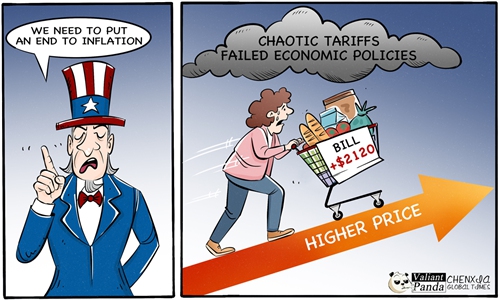
The seismic policy shifts under the new US administration – from announcing a $100,000 fee for H-1B work visas to tightening scrutiny on international students and cracking down on immigration – have led many students and their families to question long-held assumptions.
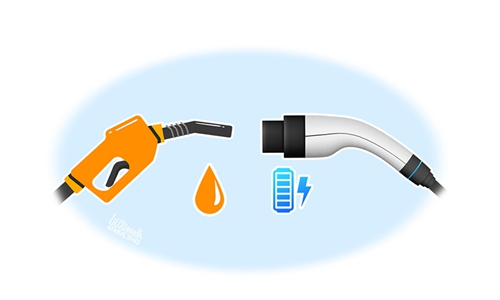
The Financial Times has recently designated China as the world's first major “electrostate.” This observation describes China's profound energy transition, which is also a historic reshaping of the global energy landscape.
India's role is not about replacing any single power but about being a crucial, independent country whose alignment and partnerships will be vital in addressing global challenges, from climate change and digital governance to regional security.
In the long run, what threatens Australia's security is not China's development, but Canberra's own inability to think and act independently. The more Australia allows itself to be used as a tool in US geopolitical games, the less secure it will become.
Perhaps the greatest security challenge facing the UK today is not the imagined fear of China's “enormous power over UK energy grid,” but rather whether its policymaking can free itself from the interference of irrational anti-China rhetoric.
No matter how the external environment fluctuates, the Chinese economy remains confident, capable, and resourceful. As long as we steadfastly follow our path and turn our blueprint into reality step by step, China's development juggernaut will surely forge ahead amid the global storms and waves toward a brighter future.
We have seen how the spirit of anti-colonial solidarity that once defined China-Africa relations continues to shape the trajectory of today's multipolar world. We have witnessed the way the Forum on China-Africa Cooperation now operates as a form of multilateralism, reinforcing the work of the UN through its practical implementation capacity and inclusive, participatory character.
On her I-Talk show, Global Times (GT) reporter Wang Wenwen spoke with David Adler (Adler), co-general coordinator of Progressive International, who recently participated in the Gaza-bound Global Sumud Flotilla. He spent five days in Israel's desert prison – one of more than 500 activists sailing to Gaza who were detained by Israeli forces.
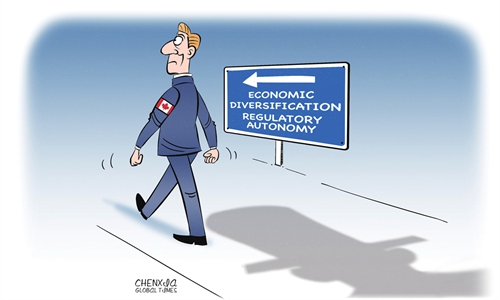
A China that is more efficient in governance, more harmonious and stable in society, and more vibrant in its economy will undoubtedly stand confidently and openly in the East.
From the 14th Five-Year Plan to the upcoming 15th Five-Year Plan, China has demonstrated remarkable strategic resolve and policy continuity. The unique strategy of "leveraging local conditions to develop new quality productive forces" has pioneered a pragmatic approach, maximizing endogenous driving forces, deeply integrating cutting-edge science and technology with local characteristics, and forming a solid and sustainable growth engine.
Suppose the Netherlands truly seeks to resolve the tension with China over Nexperia. It must demonstrate genuine courage to correct its fundamental mistakes rather than merely offering diplomatic pleasantries while hoping the storm will pass. China is simply demanding that the Netherlands honor its own proclaimed values: rule of law, fair competition, and protection of legally acquired property.
We must do everything possible to strengthen green cooperation. It is the most evident and powerful basis on which to rebuild a positive, cooperative and forward-looking partnership between Europe and China: Former Belgian ambassador to China.
As Australian PM Anthony Albanese is set to meet with US President Donald Trump on Monday, an Australian commentator argues that Australia must carefully and diplomatically disengage from an erratic US.
The US cyber intrusion into China's timing center exposes the long-standing offensive cyber hegemony strategy pursued by the NSA and the US Cyber Command. Through successful countermeasures, China has demonstrated to the world its unwavering resolve and ability to safeguard cyberspace security.
The WeSemiBay sends a clear message: the value of technology lies not in building walls, but in building bridges.
I see this week's summit carrying a clear message to young women everywhere: Your time is now. The world shaped by the Beijing Conference belongs to you to advance - with courage, creativity and conviction.
History has repeatedly shown that only a policy mix grounded in rules, multilateralism, and cooperation first can weather economic cycles, stabilize expectations, and secure the future. The sooner Europe returns to genuine multilateralism, the greater the room for China–EU cooperation, the stronger the resilience of European industries, and the greater the confidence in global markets.
This is deeper logic behind the rise of “Chinese standards”: They are supported by China's powerful engineering capacity, meticulous quality systems, and relentless innovation. Whether in high-speed trains racing across land, bridges spanning vast rivers, or spacecraft exploring the universe, each stands as a living advertisement for the excellence of Chinese standards.
Continuity is the unbroken code of Chinese civilization. It shapes the way we view the world and endows today's China with profound historical depth. Therefore, studying China without tracing its historical origins or following its cultural roots means you cannot understand how it flourishes and thrives.
The 14th Five-Year Plan period has been one of steady progress in Chinese modernization. Looking ahead to the 15th Five-Year Plan (2026-2030), China will enter another crucial five years, aiming to realize socialist modernization by 2035.
Yiwu's new marketplace isn't a fortress; it's an invitation. For anyone intent on understanding China today, Yiwu might just be one of the best classrooms, writes @dinggangchina
The sudden shift in the trade atmosphere between China and the US caught many by surprise, yet that's not surprising. The direct trigger for this round of tension was Washington's breach of promises – an all-too-familiar pattern.
The construction of a global knowledge system for China Studies not only deepens understanding of Chinese civilization but also fosters mutual comprehension and exchanges among diverse civilizations. It transcends mere academic course, serving as a bridge that promotes dialogues and mutual trust.
The 15th Five-Year Plan period will crucial for China to achieve a comprehensive green transformation of its economy and society. By then, green and low-carbon industries will have emerged as a strong pillar of economic growth, and the green upgrading of traditional industries will be largely completed.
Where public sentiment leads, the path is steadfast. The vow “Taiwan Must Return,” once again proclaimed in Silent Honor, will resonate so loudly that this thunderous proclamation must transform from a historical pledge into living reality.
The weaponization of digital communication devices and technologies is provoking a fierce backlash.
As a living example of civilizational dialogue, the World Conference on China Studies itself vividly embodies the mutual learning and exchange among civilizations. Its ongoing success demonstrates China's determination to engage with the world with greater openness and confidence, and to participate in the construction of the global knowledge system.
During China's 14th Five-Year Plan (2021–2025), technological innovation has served as the core driving force behind China's economic development, achieving historic breakthroughs in key technologies, industrial upgrading and green transformation. China's economy is steadily shifting from factor-driven growth to innovation-driven growth.
The Carnegie report, steeped in Cold War thinking, reflects outdated concepts and an anachronistic mind-set, lacking strategic foresight. Its underlying premise centers on maximizing the mobilization of US allies to sustain and reinforce the US-manipulated alliance system against China. It fails to understand the world and utterly misreads China.
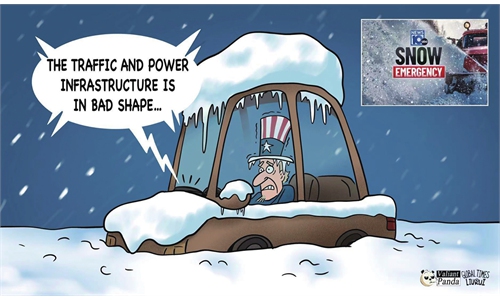
The US government shutdown is not the cause of the chaos — it is the mirror reflecting it. A nation that can no longer agree on truth, reason or shared purpose cannot govern itself.
This summit sent a clear message to the world: regardless of how the international situation changes, genuinely promoting gender equality and realizing women's all-round development remain a shared global mission and moral responsibility.
In today's complex and turbulent international environment, the choice for the world is clear: either revert to the colonial-era paths of protectionism and unilateralism or forge a new path of openness, inclusiveness, and shared prosperity. The Netherlands needs to recognize the trend of history; otherwise, it will only be lifting a rock to drop on its own feet.
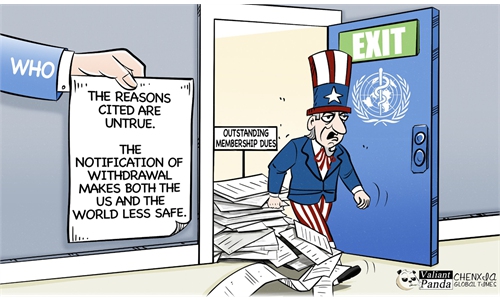

Canada's federal government is now facing backlash for its decision to impose a 100 percent tariff on Chinese electric vehicles (EVs). Ottawa's protectionist policies against China, taken in lockstep with the US, are undermining the very foundations of Canada's economy.
China's five-year plans show that the core of Chinese modernization has always been anchored on one fundamental goal: ensuring a happy life for the people.
The general guidelines of the eight-point decision hold universal relevance, as they could help address sensitive challenges faced by political parties worldwide, says Brazilian scholar Marcos Cordeiro Pires.
At present, China-US economic and trade relations once again stand at a crossroads. A truly healthy and stable economic and trade relationship should be built on mutual respect, fairness, and reciprocity, not on the reckless use of tariffs that undermine established rules.
The two-party system in the US now resembles a judo match where both sides grip tightly. As of Sunday, the US federal government has been shut down for 11 days. In this “judo match,” there are no winners – only a wounded nation and a divided society.
The formulation and implementation of the five-year plans not only fully demonstrate the CPC's governing philosophy of scientific, democratic and law-based governance, but also its ability to effectively mobilize the forces of government, market and society around shared development goals, thereby building consensus and fostering synergy.
We should be in a position to walk this difficult and lengthy path by helping each other, not by fighting each other – this is the most important GGI message to the international community.
Obviously the Chinese government has spent incredible sums for the development of those remote, sparsely populated areas to give the people in Xizang equal opportunities and similar living conditions as in other parts of China.
As the US continued to pursue unilateral policies that strain the international system, China hosted the Shanghai Cooperation Organization (SCO) Summit and a commemoration of the 80th anniversary of the victory of the World Anti-Fascist War. To many observers worldwide, such contrast invites reflections on several pressing issues concerning the future of global governance.
Since taking office over a year ago, Lai has shown through his actions that he is the true architect of Taiwan's “invisible barrier lake.” All Taiwan compatriots must unite and work together to completely resolve Taiwan's "hidden dammed lake" to prevent a catastrophic disaster.